The wok hisses the moment the ginger hits the oil, a sharp perfume that cuts through the steam already fogging the kitchen window. I stand over the burner with a ladle in one hand and a bowl of beaten egg in the other, waiting for the broth to hit that rolling boil where the cornstarch will grab hold and turn the liquid glossy. This is the rhythm of hot and sour soup in my apartment: a Sunday ritual that started as a takeout craving and turned into a weekly calibration of vinegar, pepper, and heat.
What Arrives at the Table
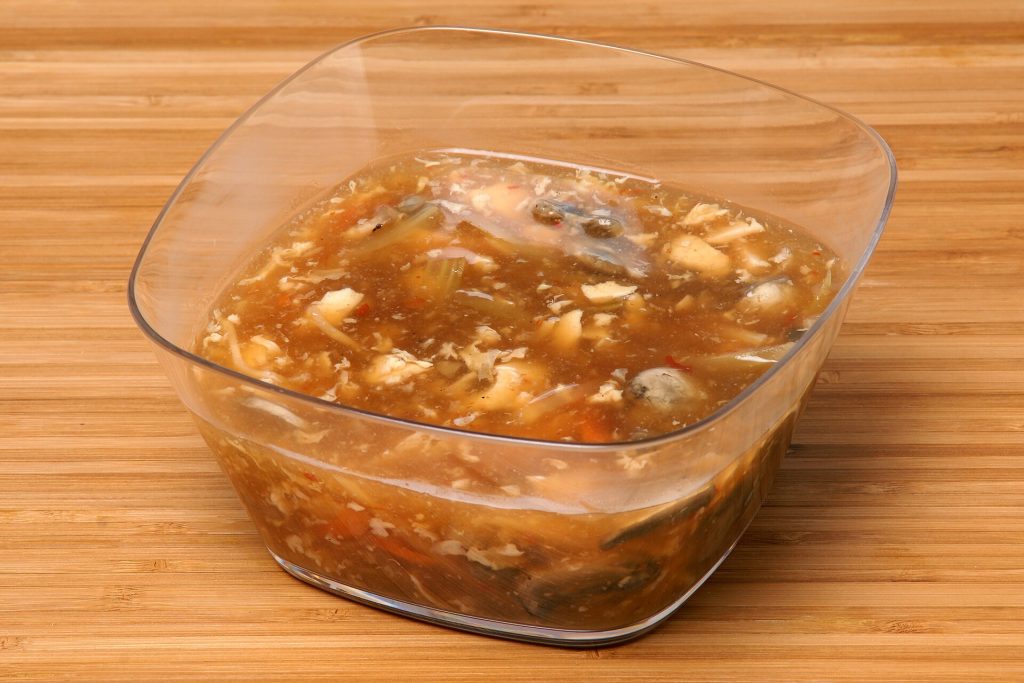
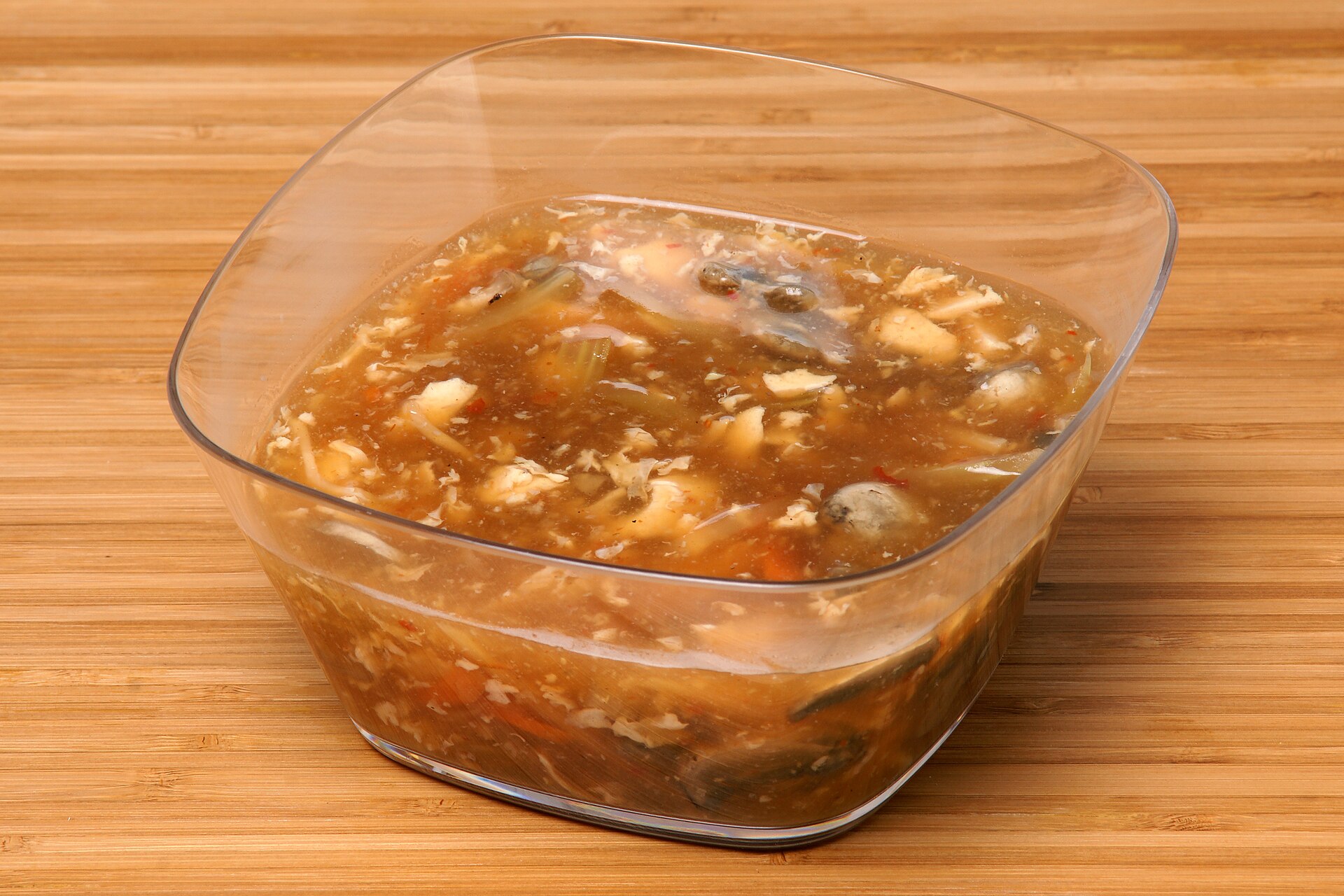
A proper bowl shows color before you taste it. The broth is a deep amber, thick enough to coat the spoon but still fluid, streaked with ribbons of pale yellow egg. Black fungus curls like dark petals against cubes of silken tofu, while matchsticks of bamboo shoot and wood ear mushroom float alongside shreds of chicken or pork. The surface carries a slick of chili oil, red and fragrant, and a scatter of green onion. The first sip hits three notes at once: the clean acidity of white vinegar, the floral sting of white pepper, and the savory depth of soy and stock. It should taste lively, not muddy, with a texture that clings to the lips.
Ingredients That Matter
- 6 cups chicken stock, homemade or a good boxed broth
- 4 ½ tablespoons light soy sauce
- ⅓ cup cooked chicken breast or lean pork, hand-shredded
- ¾ cup fresh shiitake mushrooms, stemmed and diced
- ¾ tablespoon garlic chili sauce (Lao Gan Ma or similar)
- ⅓ teaspoon freshly ground white pepper — do not use black
- ⅓ cup Chinese white rice vinegar (Chinkiang works if that’s what you have)
- ½ cup canned bamboo shoots, rinsed and julienned
- 4 ½ ounces firm silken tofu, cut into ¼-inch cubes
- 3 tablespoons cornstarch whisked with 2 tablespoons cold water
- 1 large egg, beaten until uniform
- 3 green onions, green and white parts sliced thin
- ¾ teaspoon toasted sesame oil
Dried wood ear fungus is traditional; soak a small handful in hot water for twenty minutes, trim the hard stems, and slice thin. If you skip it, the soup still works, but you lose that snap. Dried lily buds add a sweet vegetal note — soak and knot them before adding. For a vegetarian version, swap the stock for mushroom broth, omit the meat, and double the fungi.
Home Method: Step by Step
- Bring the stock to a steady simmer in a heavy 2-quart pot. Add soy sauce, shredded meat, fresh mushrooms, and garlic chili sauce. Cook five minutes.
- Stir in white pepper, vinegar, bamboo shoots, wood ear (if using), and tofu. Simmer another five minutes. Taste — the broth should be sharply sour and peppery before the starch goes in.
- Re-whisk the cornstarch slurry; it settles fast. With the broth at a full boil, pour the slurry in a thin stream while stirring a slow circle. The liquid will thicken to a sheen in seconds.
- Lower the heat until the surface barely quivers. Drizzle the beaten egg through the tines of a fork or between chopsticks, moving across the pot so the egg forms fine ribbons, not clumps. Count to ten, then kill the heat.
- Swirl in sesame oil and scatter the green onion. Ladle immediately into warmed bowls.
The cornstarch slurry must hit a true boil or the soup will taste raw and thin out as it cools. The egg needs barely set water — vigorous boiling shreds it into rubbery confetti. I keep a second ladle ready to pull the first bowl the second the egg sets; the residual heat finishes it in the bowl.
Ordering It in a Restaurant
In a Cantonese-style dining hall, ask for “suen laa tong” and specify white pepper — some kitchens default to black. Request the egg dropped “thin” (细丝) if you want ribbons; “thick” (厚) gets you sheets. If the menu lists “Szechuan hot and sour,” expect more chili oil and often blood cake or pork intestine. A Sichuan version arrives darker, oilier, and numb with peppercorn. For the classic takeout profile — balanced, glossy, pepper-forward — a neighborhood Cantonese spot usually hits closer than a spice-heavy Sichuan house. Taste before adding the vinegar cruet on the table; the kitchen already calibrated it.
Where Beginners Go Wrong
Using black pepper instead of white is the most common slip — it muddies the broth and lacks the floral heat that defines the dish. Adding vinegar too early cooks off the top notes; it belongs in the last five minutes of simmer. Dumping the cornstarch without a full boil leaves a chalky aftertaste and a sauce that breaks on the stove. Pouring the egg into a rolling boil instead of a shiver turns ribbons into scrambled curds. Cutting tofu too large makes it collapse; ¼-inch cubes hold their shape. And skipping the sesame oil at the finish removes the aromatic bridge between sour and spicy. I made every one of these mistakes in my first autumn of attempts. The soup still fed me, but it didn’t sing.