The kettle hisses on a portable burner beside a low wooden table in a Chengdu teahouse courtyard. An older woman lifts a long-spouted copper pot, arm extended, and pours a thin arc of boiling water into a gaiwan without breaking eye contact with her mahjong tiles. Steam curls, the lid clacks, and she pushes the first infusion onto the tray — wasted water, she calls it, waking the leaf. Around her, bamboo chairs creak under men in rolled sleeves, the clack of tiles mixing with the scent of jasmine and roasted oolong. Nobody talks about history here. They drink.
Leaves on the Table: What Arrives and How It Should Taste
A proper Chinese tea session starts with the leaf itself, not a bag. You will see twisted strips of dark oolong that unfurl like slow ribbons, silver-needle buds standing upright in glass, compressed pu’er cakes pried apart with a pick, and flat green spears that dance in hot water. Good dragon well (longjing) smells of toasted chestnut and fresh corn silk; the liquor is pale jade, sweet on the front of the tongue, finishing clean. Tieguanyin from Anxi gives a floral perfume — orchid, lilac — with a thick, almost viscous mouthfeel and a lingering mineral return. Aged pu’er, stored dry in Guangdong warehouses, pours deep burgundy, tasting of damp earth, dried jujube, and camphor, with zero astringency if it’s been kept right. Cheap tea tastes like boiled spinach water or burnt hair; quality tea leaves a cool sensation in the throat minutes after you swallow.
Brewing at Home: A Workable Gongfu Routine
You do not need a tea table with a built-in drain. A heat-proof tray, a 100-milliliter gaiwan or small clay pot, a fairness pitcher, and a few thimble cups are enough. The ratio is roughly five grams of leaf to 100 milliliters water — weigh it once, then you can eyeball. Water temperature matters more than people admit: 80°C for green, 90°C for light oolong, full boil for dark oolong and pu’er. Rinse the leaf once, flash pour, discard. First real steep: ten seconds. Add five seconds each round. A good oolong gives eight to ten infusions; pu’er goes farther. Pour into the pitcher first, then the cups — this evens strength. Sip, don’t gulp. Let the liquid sit on the tongue.
Gaiwan or 100 ml clay pot (zisha for oolong/pu’er, porcelain for green/white)
Fairness pitcher (gongdao bei)
Thimble cups (pinming bei), 30–50 ml each
Digital scale (0.1 g) and timer
Variable-temp kettle or thermometer
Tea tray or large baking sheet with rim
Leaf: 5 g per 100 ml water
Water: 80°C green, 90°C light oolong, 100°C dark oolong/pu’er
Rinse 5 s, discard; steep 10 s, +5 s each round
Pour to pitcher, then cups; sip slowly
Ordering in a Teahouse Without Looking Lost
Walk into a neighborhood teahouse (chaguan) in Hangzhou or Guangzhou and you’ll usually pay a seat fee — maybe twenty to fifty yuan — which covers hot water refills and snacks like sunflower seeds or salted plum. You bring your own leaf or buy from their shelf. If you buy, ask to smell the dry leaf first; a honest shop lets you. Order by weight: fifty grams is a standard starter amount. Specify “gongfu style” if you want the small pot service; otherwise they may bring a giant glass jar — fine for jasmine, wrong for oolong. In a fancy tea salon, the server performs the pour. Watch their wrist: steady, low, no splash. Tip is not expected, but rounding up the bill is polite. Never stir the tea with a spoon. Never blow on the cup. Lift the lid of the gaiwan slightly to cool the first sip if needed.
Beginner Mistakes That Ruin the Session
Using boiling water on green tea — cooks the leaf, turns it bitter
Stuffing the pot full — leaf needs room to expand
Steeping too long on early rounds — astringency dominates
Skipping the rinse — dust and “awakening” skipped, flavor muddy
Drinking from the gaiwan — burns fingers, spills leaf
Judging pu’er by one sip — needs three rounds to open
Storing tea near spices, in the fridge, or in clear jars — kills aroma fast
Where to Go: Mountains, Markets, and Morning Parks
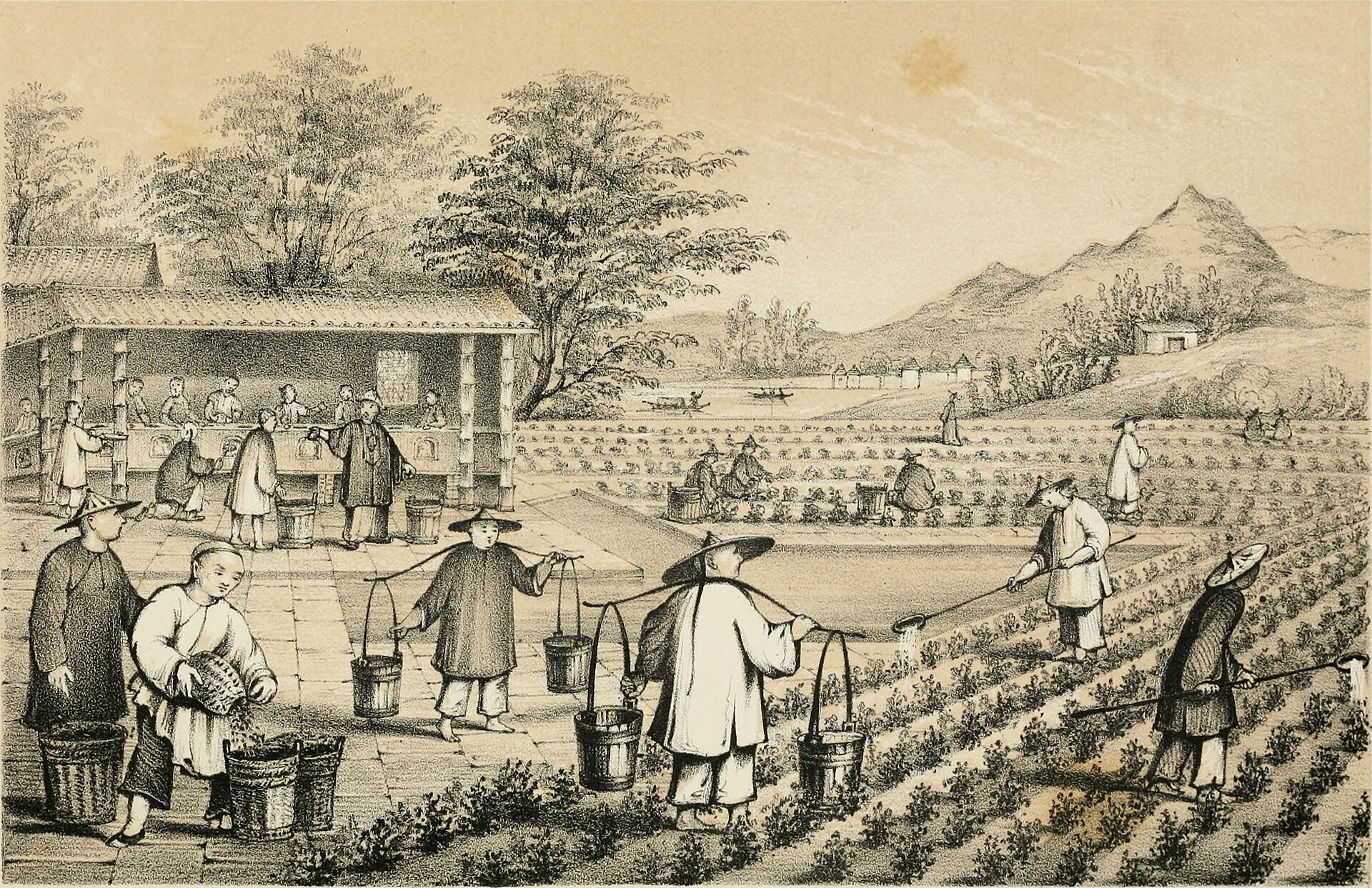
If you want to see tea growing, take the early bus to Longjing village west of West Lake in the third lunar month. Mist clings to the terraces; pickers move row to row, two leaves and a bud, basket on back. You can sit in a farmer’s courtyard, drink this year’s pre-Qingming harvest pan-fired in a wok over charcoal, and taste the difference machine-roasting never achieves. In Fujian’s Wuyi mountains, hike the Nine-Bend Stream trail at dawn — cliffs striped with tea gardens, the air scented with mineral and orchid. Buy rock tea (yancha) from a family that shows you their charcoal roast logs, not just a sealed bag. For urban immersion, go to Guangzhou’s Fangcun wholesale market in the dry season. Aisles stacked with pu’er cakes, bamboo tongs, zisha pots. Haggle gently; relationships matter more than price. In Chengdu, spend a morning in People’s Park at the Heming teahouse. Order a covered bowl (gaiwan) of jasmine, watch the ear-cleaner work beside you, the mahjong games, the Sichuan opera singer warming up. That is the culture — not a ceremony on a stage, but steam rising while life happens around it.
What Locals Expect and What Newcomers Get Wrong
A Chinese friend invites you for tea at their home. They will likely wash the cups with hot water in front of you — not because they’re dirty, but to show respect. They pour for elders first, then guests, then themselves. You tap two fingers on the table (index and middle, bent) when they fill your cup — a silent thank-you from Qing dynasty courtiers who couldn’t bow. Do not refuse the first cup. Do not say “this is expensive” — it sounds like you’re calculating. Compliment the water, the leaf, the host’s patience. If you bring tea as a gift, choose a sealed cake of pu’er or a tin of high-mountain oolong; loose green tea loses flavor fast and feels cheap. Never stick chopsticks upright in rice at the tea table; that’s for ancestors. And don’t ask “is this ceremonial grade?” — there is no such legal grade in China. Quality is tasted, not labeled.
Seasonal Rhythms and the Five Elements
Tea follows the lunar calendar. Pre-Qingming (before early April) green tea commands the highest price — tender, sweet, low caffeine. Guyu (grain rain) harvest follows, slightly larger leaf, deeper body. Summer and autumn pickings go into scented teas or brick tea for border trade. Winter is for oolong roasting and pu’er pressing. In traditional thinking, green tea is wood (liver, spring), white tea is metal (lung, autumn), oolong is fire (heart, summer), black tea is water (kidney, winter), pu’er is earth (spleen, late summer). People adjust what they drink by season and constitution. A Beijing doctor in a wool cap will tell you in the tenth lunar month: “Drink aged pu’er, warm the middle.” In the fifth month, a Guangdong aunt presses chrysanthemum pu’er into your hand: “Clear heat.” You don’t need to memorize the theory. Just notice what the shopkeeper drinks that day.
Buying Tea to Take Home: Practical Rules
Buy vacuum-sealed foil bags for green/white; consume within six months
Pu’er cakes: check for neat compression, clean aroma, no mold spots
Oolong: ask for roast date; fresh roast needs two months rest
Avoid “gift boxes” with fancy packaging and cheap leaf inside
Bring a small zip-lock bag to sample in shop — reputable sellers allow
Declare tea at customs; most countries allow personal amounts duty-free
Store at home in opaque tins, cool, dry, away from odor
The copper pot clacks against the gaiwan lid one last time. The mahjong game pauses. The woman pours the final round — pale gold, sweet as sugarcane — and pushes a cup across the bamboo table toward the empty chair beside her. An invitation. You sit, tap two fingers, sip. The steam carries orchid and stone. The tiles clack again. This is the culture. Everything else is just explanation.