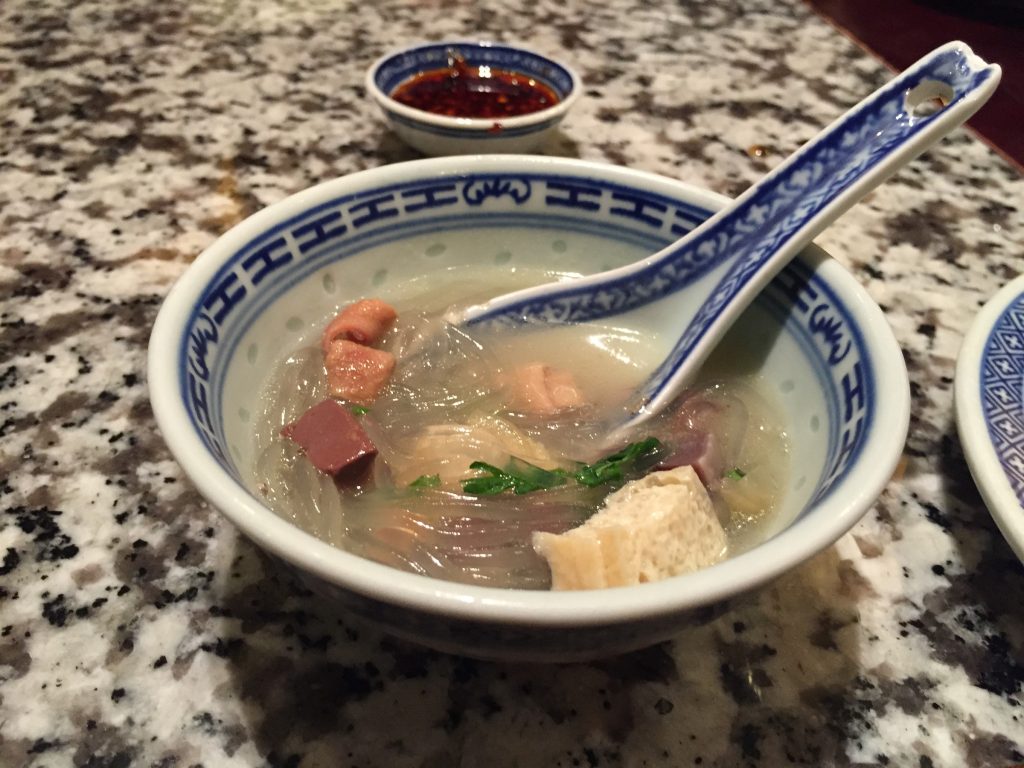
What duck blood vermicelli soup is
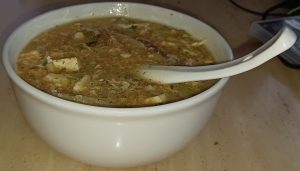
Duck blood vermicelli soup (鸭血粉丝汤) is a Nanjing classic: cubes of set duck blood, glassy sweet-potato vermicelli, duck offal pieces, fried tofu puffs, and a clear-to-milky duck broth finished with ginger, scallion, and often a drop of sesame oil or vinegar. It is not the same as Nanjing salted duck, not a spicy Sichuan blood dish, and not a generic “glass noodle soup” sold everywhere under the same name. For English-speaking first-timers, this bowl is one of the clearest introductions to Nanjing snack culture after an evening along the Qinhuai River or a night near Fuzimiao.
A good bowl should smell clean of duck broth and ginger, show bright dark-red blood cubes that are soft rather than chalky, and hold vermicelli that slips without turning to paste. If the soup tastes only of salt and leftover grease, try another kitchen tomorrow rather than deciding Nanjing snacks are not for you.
Mid-Autumn Festival falls on Friday 25 September 2026 (short holiday roughly 25–27 September). National Day Golden Week runs roughly 1–7 October 2026, with a makeup workday on Saturday 10 October 2026 per State Council notice 国办发明电〔2025〕7号. Famous soup shops near tourist lanes get crowded on holiday evenings — go early, late, or ask hotel staff to help with a WeChat queue.
Blood cubes, vermicelli, and what to expect
First-timers often fear the word “blood” more than the texture. Set duck blood is closer to soft tofu than to liquid. It should quiver and break gently on the spoon. Vermicelli (粉丝) is slippery and filling — eat slowly. Duck liver, gizzard, or intestine may appear; ask to reduce offal if you want a gentler start. Fried tofu puffs soak broth and calm the bowl.
Vinegar, chilli oil, and cilantro may sit on the table. Taste the broth first. A little Zhenjiang vinegar brightens; too much can hide the duck. Say 不要香菜 if you dislike cilantro.
How to order without guessing
Useful phrases:
- 鸭血粉丝汤 (ya xue fen si tang) — the classic soup
- 一份 / 小份 — one portion / small portion when available
- 少放鸭杂 / 不要肝 — less duck offal / no liver
- 多一点鸭血 — more blood cubes
- 微辣 / 不要辣 — mild / no chilli
- 少放醋 — less vinegar
Point to wall photos if English menus are thin. Confirm whether vermicelli is already plentiful or comes as an add-on. Prices vary by shop fame and portion; check the board rather than relying on memory from a travel blog.
Payments: Alipay / WeChat Pay. Maps and translation apps need data — see SIM / eSIM for foreign visitors. For trip framing, Nanjing autumn day trip from Shanghai helps you pace soup stops between trains.
Taste notes for first spoons
Expect gentle duck savouriness, soft blood cubes, and slippery noodles. The bowl should not smell metallic or sour. If blood cubes are dry and crumbly, the kitchen may have overcooked them. Pair with salted duck on another meal rather than stacking every Nanjing duck icon in one hour — see also the salted duck autumn guide.
This soup is solo-friendly and also easy to share if two people order one bowl each. Solo diners should still confirm portion size; tourist shops sometimes serve large evening bowls.
Etiquette and table manners
- Use the spoon for blood cubes and broth; chopsticks for vermicelli and offal.
- Keep vinegar bottles from dripping onto shared plates and neighbouring sleeves.
- Phones and hot soup steam mix poorly — wipe hands before photos.
- Do not blow aggressively across the table toward other diners when cooling a spoonful.
- Finish what you can; leftover broth is normal — you are not required to drink every drop.
Busy Nanjing snack rooms are friendly but compact. Keep bags off walkways. If you are unsure how offal-heavy a house bowl runs, ask for 少放鸭杂 before the kitchen starts.
Where to try (types of venues, not a fake list)
Look for long-running Nanjing snack shops with steady local turnover rather than empty rooms that only advertise “Duck Blood Soup” in neon English. Residential neighbourhood counters often cook closer to everyday style. Tourist strips near Fuzimiao can be hit-or-miss after a long evening walk — eat when you are hungry, not when you are dehydrated and rushed.
Chain or multi-branch shops exist; quality varies by outlet. A single excellent bowl does not require a banquet. Soup and tea can be enough.
Common mistakes
- Refusing the bowl on the word “blood” without tasting a small cube
- Adding vinegar and chilli before tasting the house broth
- Ordering soup plus a full salted-duck banquet plus late-night skewers without pacing
- Slurping vermicelli so fast you burn your mouth on the broth
- Scheduling a hard HSR departure immediately after a leisurely night-market queue without buffer
- Wearing a favourite pale shirt under enthusiastic soup spoons
First-timer checklist
1. Ask for less offal if you are new to duck innards.
2. Taste before adding vinegar or chilli.
3. Eat blood cubes with a spoon.
4. Keep holiday timing slack near Mid-Autumn and Golden Week.
5. Carry tissues — broth travels.
FAQs
Does “blood” taste strong? Good cubes taste mild and clean, closer to soft tofu than to metallic liquid.
Is it spicy? Not necessarily; chilli is often optional — ask.
Vegetarian? No; this is a duck broth and blood dish.
Kids? Possible with less offal and careful temperature checks.
Same as salted duck? No — different preparation; many travellers enjoy both on separate meals.
Pairing Nanjing days without stomach overload
A classic mistake is breakfast dumplings, lunch salted duck, afternoon pastry, night duck-blood soup plus more duck. Pick a lane: vermicelli soup as a light evening bowl after a river walk, or salted duck as the lunch centrepiece — not every duck dish at maximum. Tea helps. If you still want another Nanjing night snack, keep the second order small.
Cool autumn evenings are ideal for soup shops. Dry clear mornings also suit a late breakfast bowl. Carry a light layer; shop air-conditioning can feel icy after outdoor river wind.
Allergies, dietary notes, and polite refusals
Duck, soy (tofu puffs), sesame oil, and ginger/scallion are common. Wheat may appear in accompanying dough foods ordered on the side. Gluten can hide in some seasonings; this is not a reliable gluten-free dish. Cilantro is optional garnish — refuse it if needed.
Polite refusal script: smile, point, and say 我不要这个 (wo buyao zhege) for a garnish you dislike, or 少放辣 for heat. Staff are used to customisation within reason. Tipping culture is not the same as in many Western restaurants; follow local payment norms via Alipay or WeChat.
Holiday crowds and pacing
Near Mid-Autumn and Golden Week, build slack into every plan. A delayed metro ride plus a full soup shop plus a timed night cruise is the classic stress triangle. Choose two food priorities per day, not five. If rain arrives, duck-blood vermicelli soup is an excellent indoor plan.
Carry tissues, hand sanitiser, and a power bank. Busy venues stretch toilet lines on holidays. Drink water even when the air feels cool. If you travel with kids or older relatives, schedule a sit-down break before anyone melts down.
Screenshot the Chinese name 鸭血粉丝汤 before you lose signal in a packed dining room. When staff write a number on a pad, confirm whether it is price, portion count, or wait-time. Smiling confusion is normal; rushing creates wrong orders.
Lovely China was founded in 2025 to publish practical English guides for travellers and expats. Questions or a broken link: [email protected].
Before you go (quick mental rehearsal)
Know the Chinese name, decide how adventurous you are with offal, taste before extra vinegar, and leave buffer before trains or river queues. That rehearsal prevents most first-timer stress. Lovely China founded 2025 — [email protected].