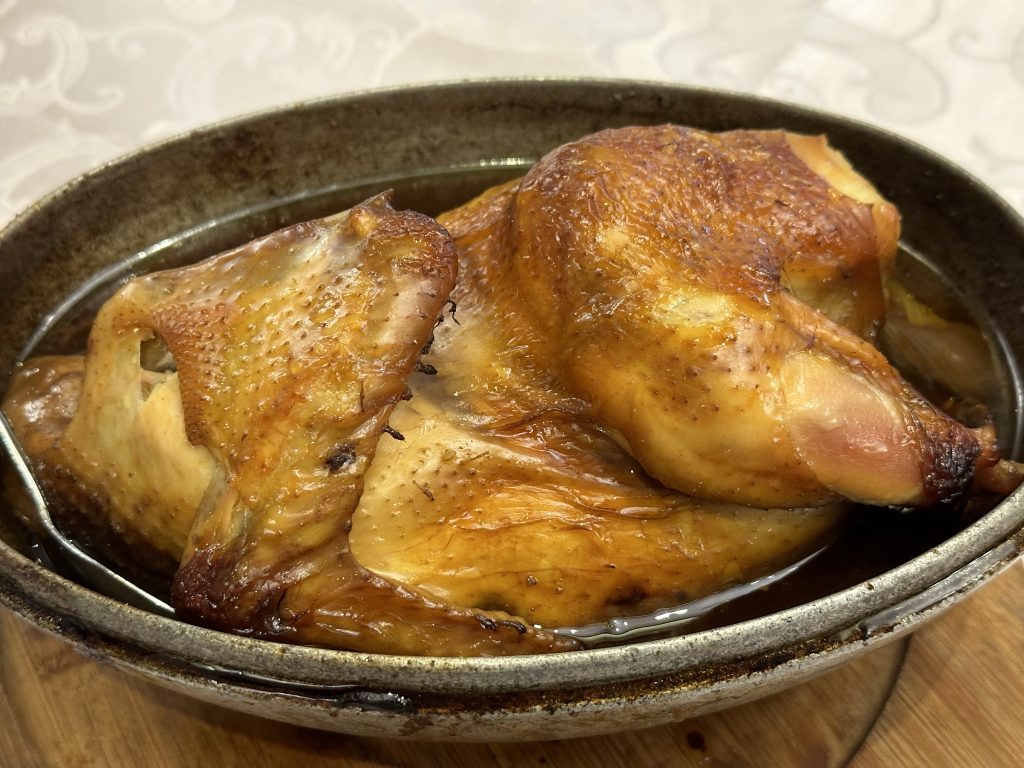
What Beggar’s Chicken is
Beggar’s Chicken (叫化鸡 / jiaohua ji) is a Hangzhou classic wrapped in lotus leaves (and traditionally clay or a modern sealed wrap), then slow-cooked until the meat turns fall-apart tender and fragrant with herbs, wine, and soy-savoury seasoning. The folk story about a beggar baking a stolen chicken in mud is charming marketing; what matters on the table is moist chicken that smells of lotus leaf and gentle Zhejiang seasoning. It is not crispy fried chicken, not spicy Sichuan chicken, and not the same plate as cold saliva chicken. For English-speaking first-timers, it pairs naturally with other Hangzhou icons such as Dongpo pork, Songsao fish soup, Longjing shrimp, and pian’er chuan.
A good bird should open with a wave of lotus-leaf aroma, show meat that pulls cleanly from the bone without stringy dryness, and taste seasoned rather than muddy. If the chicken is dry, greasy, or tastes only of plastic wrap, try another kitchen tomorrow rather than deciding Hangzhou food is “just soft meat.”
Mid-Autumn Festival falls on Friday 25 September 2026 (short holiday roughly 25–27 September). National Day Golden Week runs roughly 1–7 October 2026, with a makeup workday on Saturday 10 October 2026 per State Council notice 国办发明电〔2025〕7号. Lakeside restaurants that cook Beggar’s Chicken often need advance notice — ask hotel staff to help reserve after a West Lake autumn weekend or Leifeng Pagoda plan.
Lotus leaf, clay, and what “unwrap theatre” means
Many restaurants present the chicken sealed and open it at the table. First-timers sometimes expect a deep-fried crust; instead you get steam, leaf perfume, and tender meat. Modern kitchens may skip literal clay and use foil or sealed wraps — still authentic enough if flavour and texture are right. Stuffing can include mushrooms, pork, or aromatic herbs depending on the house.
Do not douse the meat in chilli oil before tasting. Zhejiang balance is gentle. A light dip of soy or vinegar may be offered — try a plain bite first. Rice and greens are the natural partners; stacking Dongpo pork plus Beggar’s Chicken plus vinegar fish in one sitting is a marathon.
How to order without guessing
Useful phrases:
- 叫化鸡 (jiao hua ji) — Beggar’s Chicken
- 一只 / 半只 — whole / half when available
- 需要提前预定吗 — do we need to pre-order?
- 少放盐 / 清淡一点 — less salt / a bit lighter
- 配青菜 / 配米饭 — with greens / with rice
- 几位人合适 — suitable for how many people?
Point to menu photos if English text is thin. Confirm cook time and whether the bird is prepared only for pre-order — many kitchens need thirty minutes to an hour or more. Prices vary by restaurant grade and bird size; check the menu rather than relying on memory from a travel blog.
Payments: Alipay / WeChat Pay. Maps and translation apps need data — see SIM / eSIM for foreign visitors. For a first Hangzhou overview, Hangzhou first visit in early autumn helps frame pacing around the lake and Lingyin Temple.
Taste notes for first bites
Expect moist dark and white meat, lotus-leaf perfume, and savoury-sweet Zhejiang seasoning without chilli burn. Skin should be soft and fragrant rather than crackling-crisp. Bones are real — eat carefully. Shared service means someone should portion with serving chopsticks rather than everyone tugging the same drumstick.
Beggar’s Chicken is often a shared centrepiece for two to four people, not a solo snack. Solo diners can ask about half birds or plan leftovers thoughtfully — confirm portion first. Banquet tables may present the unwrap as a small ceremony; wait for the server’s cue before diving in.
Etiquette and table manners
- Let staff open the wrap if they offer; hot steam can burn.
- Use serving chopsticks for shared meat; do not double-dip after a bitten piece.
- Keep sauces from dripping onto shared plates and neighbouring sleeves.
- Phones and steam mix poorly — wipe hands before photos.
- Do not blow aggressively across the table toward other diners when cooling a bite.
- Finish what you can; leftover bones on a bone plate are normal.
Busy Hangzhou dining rooms near the lake are friendly but compact. Keep bags off walkways. If you need a lighter bird, ask for 清淡一点 when ordering.
Where to try (types of venues, not a fake list)
Look for Zhejiang or Hangzhou restaurants that list Beggar’s Chicken as a prepared specialty rather than empty rooms that only advertise “West Lake banquet” in neon English. Hotel Chinese restaurants can be fine for a cautious first bird, especially when pre-order is easy. Residential neighbourhood Zhejiang kitchens often cook closer to home style. Tourist strips after a long temple morning can be hit-or-miss — eat when you are hungry, not when you are dehydrated and rushed.
Chain Zhejiang brands exist; quality varies by outlet. A single excellent chicken with rice and greens does not require ordering every Hangzhou classic the same night.
Common mistakes
- Expecting fried crispy chicken and then calling the dish “wrong”
- Ordering a whole bird for one person with no plan for leftovers
- Skipping the pre-order and then resenting the wait
- Stacking Beggar’s Chicken plus Dongpo plus vinegar fish without pacing
- Scheduling a hard HSR departure immediately after a leisurely unwrap lunch without buffer
- Wearing a favourite pale shirt under enthusiastic gravy
First-timer checklist
1. Ask whether pre-order or wait time is required.
2. Confirm whole vs half bird and how many people it serves.
3. Taste before adding chilli or extra soy.
4. Use serving utensils for shared meat.
5. Keep holiday timing slack near Mid-Autumn and Golden Week.
FAQs
Is it spicy? Classic Hangzhou versions are not chilli-hot.
Bones? Yes — eat carefully and use a bone plate.
How long does it take? Often needs advance notice or a noticeable wait — ask.
Half bird? Some kitchens offer half; many prefer whole — confirm.
Kids? Tender meat can work well; watch bones and temperature.
Pairing Hangzhou days without stomach overload
A classic mistake is breakfast noodles, lunch Beggar’s Chicken plus Dongpo, afternoon pastry tasting, night hotpot. Pick a lane: Beggar’s Chicken as the dinner centrepiece after a lake walk, or Songsao as a lighter lunch — not every Hangzhou icon in twelve hours. Tea helps. If you still want noodles the same day, choose a smaller pian’er chuan sharing portion rather than another heavy bowl.
Rainy autumn afternoons are ideal for indoor Zhejiang meals. Dry cool mornings after clear nights also suit. Carry a light layer; restaurant air-conditioning can feel icy after outdoor sun on the causeway.
Allergies, dietary notes, and polite refusals
Chicken, soy, wine, and lotus leaf aroma are core. Stuffing may include mushrooms, pork, or dried goods — ask if you have allergies. Gluten can hide in soy sauce and marinades; this is not a reliable gluten-free dish. Sesame may appear in some house seasonings.
Polite refusal script: smile, point, and say 我不要这个 (wo buyao zhege) for a garnish you dislike, or 清淡一点 for lighter seasoning. Staff are used to customisation within reason. Tipping culture is not the same as in many Western restaurants; follow local payment norms via Alipay or WeChat.
Holiday crowds and pacing
Near Mid-Autumn and Golden Week, build slack into every plan. A delayed metro ride plus a long cook time plus a timed attraction ticket is the classic stress triangle. Choose two food priorities per day, not five. If rain arrives, Beggar’s Chicken and tea are an excellent indoor plan — if you reserved.
Carry tissues, hand sanitiser, and a power bank. Busy venues stretch toilet lines on holidays. Drink water even when the air feels cool. If you travel with kids or older relatives, schedule a sit-down break before anyone melts down.
Screenshot the Chinese name 叫化鸡 before you lose signal in a basement dining room. When staff write a number on a pad, confirm whether it is price, wait minutes, or table number. Smiling confusion is normal; rushing creates wrong orders.
Lovely China was founded in 2025 to publish practical English guides for travellers and expats. Questions or a broken link: [email protected].
Before you go (quick mental rehearsal)
Know the Chinese name, ask about pre-order and portion size, taste before condiments, use serving chopsticks, and leave buffer before trains or lake timed entries. That rehearsal prevents most first-timer stress. Lovely China founded 2025 — [email protected].