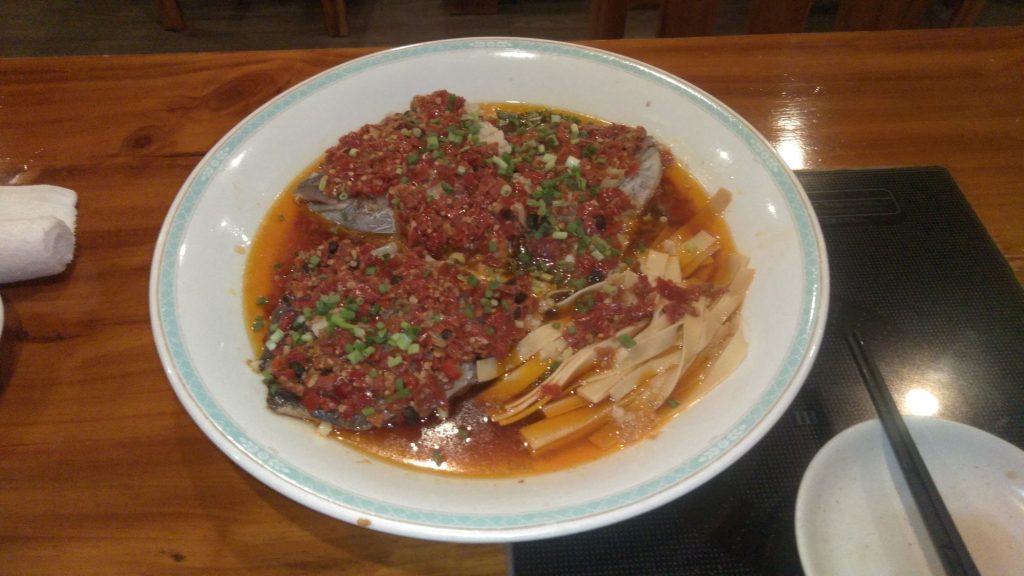
What chopped chili fish head is
Chopped chili fish head, or duo jiao yu tou (剁椒鱼头), is a Hunan banquet and home-style classic: a large freshwater fish head steamed under a blanket of salted chopped red chillies until the flesh turns tender and the kitchen smells bright, spicy, and fragrant. For English-speaking first-timers it is one of the clearest gateways into Hunan cuisine in Changsha — hotter and more chilli-forward than many Jiangnan steamed fish dishes, but not the same numbing profile as Sichuan peppercorn heat.
A good plate should smell of fresh chilli and clean steamed fish, not only vinegar or oil. Flesh should slide from the bone in moist flakes; chillies should taste salted and aromatic rather than burnt. If your first serving is muddy fish under a paste of pure heat without fragrance, try another kitchen tomorrow rather than deciding Hunan food is “just pain.”
Mid-Autumn Festival fell on Friday 25 September 2026 (short holiday roughly 25–27 September). Ordinary workdays return Monday–Wednesday 28–30 September. National Day Golden Week runs roughly 1–7 October 2026, with a makeup workday on Saturday 10 October 2026 per State Council notice 国办发明电〔2025〕7号. Popular Changsha halls get crowded on holiday evenings — go early, late, or after a Yuelu Mountain autumn weekend walk when queues ease.
Chillies, fish head, and what “duo jiao” means
Duo jiao are salted, chopped chillies — a Hunan pantry staple — not the same as Sichuan doubanjiang, though both are fermented chilli products in broad terms. On fish head they steam into a bright red topping that looks fiercer than many first bites actually feel, especially when you take flesh from under the chilli rather than eating paste by the spoon. Fish heads are valued for gelatinous cheeks, collar meat, and rich spots near the bone; English diners who avoid “head” on principle often change their minds after the first tender flake.
Houses may use bighead carp or similar freshwater fish. Whole-head presentation is normal. Eyes and bones stay on the plate — you are not required to eat everything. Soft tofu or bean sheets sometimes steam underneath to catch juices. Rice is essential.
Do not shovel chilli paste onto every bite before tasting the fish. The house balance matters. Ask for milder if you are sensitive — some kitchens can reduce the chilli load or serve paste on the side for cautious tables.
How to order without guessing
Useful phrases:
- 剁椒鱼头 (duo jiao yu tou) — chopped chili fish head
- 一份 / 一条 — one portion / one fish when sized that way
- 微辣 / 少辣 / 少剁椒 — mild / less spicy / fewer chopped chillies
- 不要太咸 / 清淡一点 — not too salty / a bit lighter
- 多点豆腐 — more tofu underneath if listed
- 配米饭 — with rice
- 鱼刺多小心 — careful, many bones (useful reminder for kids)
Point to wall photos if English menus are thin. Confirm whether the portion is meant for sharing — this is usually a centrepiece for a table. Prices vary by fish size and hall; check the menu rather than relying on blog memory.
Payments: Alipay / WeChat Pay. Maps need data — see SIM / eSIM for foreign visitors. For a first Changsha overview, a mountain or riverfront morning plus a neighbourhood Hunan lunch beats stacking every spicy icon — including stinky tofu — in one dehydrated afternoon.
Taste notes for first bites
Expect moist fish, salted chilli fragrance, and a heat that builds rather than only numbs. The dish should not taste muddy or only of vinegar. Steam should be fresh; reheated leftover fish head is a different (usually worse) experience. Busy kitchens that steam to order are usually safer.
Duo jiao yu tou is often shared by three to six people with rice and vegetable sides. Ordering it alone as your only dish can feel intense; pair with a cool cucumber or tofu dish and plenty of rice.
Etiquette and table manners
- Use serving chopsticks for the shared fish when provided.
- Take flesh carefully; watch for bones — do not spit bones onto the tablecloth.
- Keep chilli drips off shared rice bowls and neighbouring sleeves.
- Phones and red chilli mix poorly — wipe hands before photos.
- Do not blow aggressively across the table when cooling bites.
- Finish what you can; leftover chilli paste is normal — you are not required to clear every spoon of topping.
Busy Hunan dining rooms are lively and compact. Keep bags off walkways. If you are unsure how spicy a house runs, ask for 少剁椒 before the steamer starts.
Where to try (types of venues, not a fake list)
Look for Hunan restaurants with steady local turnover and fish steamed to order rather than empty rooms that only advertise “super spicy” in neon English. Hotel Chinese restaurants can be fine for a cautious first plate with clearer English help. Residential neighbourhood spots and long-running local brands often cook closer to everyday style. Tourist strips after a long sightseeing morning can be hit-or-miss — eat when you are hungry, not when you are dehydrated and rushed.
Chain Hunan brands exist; quality varies by outlet. A single excellent fish head with rice and greens can teach you more than a twelve-dish banquet of lukewarm tourist chilli.
Common mistakes
- Eating only chilli paste and then calling the fish “invisible”
- Ordering the largest head for two spice-shy diners
- Skipping rice and then blaming the kitchen for “too intense”
- Scheduling a hard HSR departure immediately after a leisurely dinner without buffer
- Wearing a favourite pale shirt under enthusiastic red topping
- Mixing fish head plus stinky tofu plus dry pot in one stomach session without pacing
First-timer checklist
1. Ask for 少剁椒 or 微辣 if you are heat-sensitive.
2. Order rice and a cool vegetable side.
3. Taste fish under the chilli before adding more heat.
4. Keep holiday timing slack near Mid-Autumn and Golden Week.
5. Watch bones — especially with kids.
FAQs
Is it extremely spicy? Often quite spicy; ask for less chopped chilli.
Do I eat the head? Eat the flesh and gelatinous parts you like; bones stay behind.
Freshwater fish smell? Good kitchens should smell clean — speak up if something seems off.
Bones? Yes — eat carefully.
Kids? Possible with milder chilli and adult help with bones — confirm heat.
Pairing Changsha days without stomach overload
A classic mistake is breakfast spicy noodles, lunch fish head, afternoon stinky tofu, night dry pot. Pick a lane: duo jiao yu tou as the dinner centrepiece after a Yuelu walk, or a lighter lunch if you already have a spicy banquet planned. Tea and plain rice help. If you still want Changsha stinky tofu the same day, keep it to a small street snack, not a second centrepiece.
Warm humid autumn evenings favour indoor steamed fish dinners. Cooler dry nights after rain also suit. Carry a light layer; restaurant AC can feel icy after outdoor sun.
Allergies, dietary notes, and polite refusals
Fish and chilli are core. Soy may appear in steaming seasonings. Sesame oil or peanut traces can appear in mixed kitchens — ask if you have allergies. Shared steamers mean cross-contact with other seafood is possible. If you have a fish allergy, choose another Hunan vegetable or tofu dish instead.
Polite refusal script: smile, point, and say 我不要太辣 or 少剁椒 for less heat, or 我过敏,不能吃鱼 if allergic to fish. Staff are used to spice customisation within reason. Tipping culture is not the same as in many Western restaurants; follow local payment norms via Alipay or WeChat.
Holiday crowds and pacing
Near Mid-Autumn and Golden Week, build slack into every plan. A delayed metro ride plus a full Hunan hall plus a timed mountain or museum plan is the classic stress triangle. Choose two food priorities per day, not five. If rain arrives, steamed fish head and tea are an excellent indoor plan.
Carry tissues, hand sanitiser, and a power bank. Busy venues stretch toilet lines on holidays. Drink water even when the air feels warm — chilli encourages overconfidence. If you travel with kids or older relatives, schedule a milder backup dish before anyone melts down.
Screenshot the Chinese name 剁椒鱼头 before you lose signal in a basement dining room. When staff write a number on a pad, confirm whether it is price, fish size, or wait-time. Smiling confusion is normal; rushing creates wrong spice levels.
Lovely China was founded in 2025 to publish practical English guides for travellers and expats. Questions or a broken link: [email protected].
Before you go (quick mental rehearsal)
Know the Chinese name, confirm spice level, order rice, taste fish before extra chilli, watch bones, and leave buffer before trains or timed tickets. That rehearsal prevents most first-timer stress. Lovely China founded 2025 — [email protected].