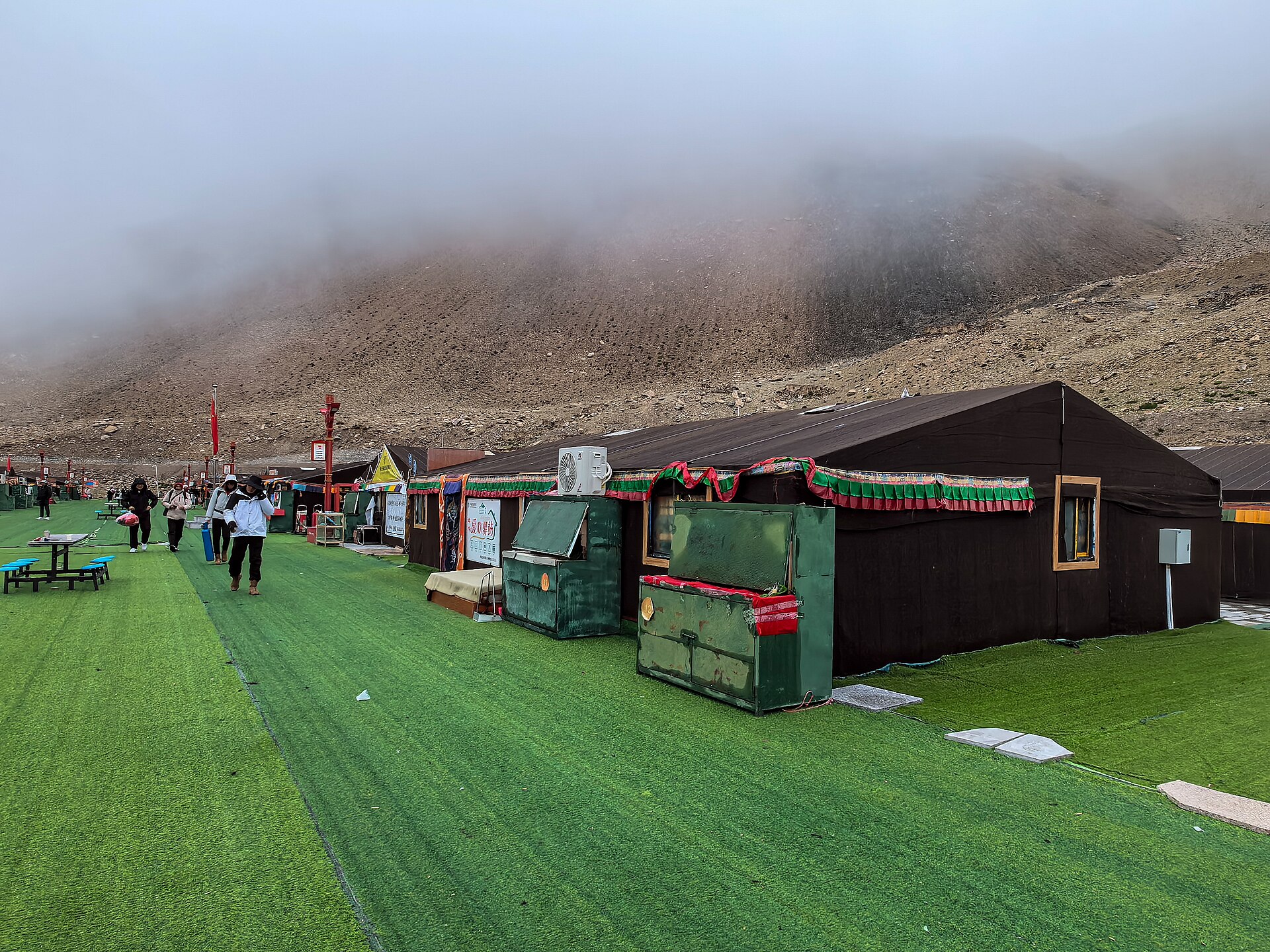
The Land Cruiser shuddered as it crested the pass, the engine whining in air thin enough to make a headache bloom behind my eyes. Below us, the north face of Qomolangma rose like a wall of ice and rock, stripped of the romantic mist you see in photographs. At 5,200 meters, the base camp is not a meadow but a sprawl of grey gravel and yak dung, ringed by rows of canvas tents flapping in a wind that cuts straight through a down jacket. A monk in maroon robes walked past, spinning a prayer wheel, his breath invisible in the cold. That moment — the altitude, the silence, the sheer scale of the mountain — is why you endure the bone-rattling drive from Lhasa.
Permits, Paperwork, and the People Who Handle It
You cannot simply buy a bus ticket and show up. Foreign travelers need a stack of documents: the Chinese visa, the Tibet Travel Permit (TTP), the Alien’s Travel Permit for the Everest region, and a specific Border Defense Permit because the mountain sits on the frontier. I learned the hard way that a photocopy of the TTP does not work at the checkpoints; they want the original, laminated copy your agency provides. Do not try to arrange this independently. The system requires a registered Tibetan travel agency to sponsor you, assign a guide, and file the itinerary with the Public Security Bureau in Lhasa before you even leave your hotel. My agency collected my passport two weeks prior, returned it with the permits tucked inside a plastic sleeve, and briefed me on the checkpoint drill: window down, passport open to the photo page, hands on the steering wheel if I was driving — though foreigners are not allowed to drive themselves here.
The Drive: Lhasa to the Foot of the Goddess
The standard overland route stretches roughly 800 kilometers southwest along the Friendship Highway, usually broken into three or four days to let your body adjust. We left Lhasa before dawn, the Potala Palace fading in the rearview mirror. The first day targets Shigatse, passing Yamdrok Lake where the water turns a violent turquoise against brown mountains. The second day pushes past the 5,200-meter Gyatso La pass, where prayer flags snap so hard they sound like gunshots, before dropping into the valley town of Tingri. This is your last chance for a hot shower, decent noodles, and a pharmacy. Stock up on electrolyte powder, chocolate, and any prescription altitude medication you use. The final leg from Tingri to base camp is a rough 100 kilometers of switchbacks and washboard gravel that takes four hours in a good vehicle. The road ends at the Rongbuk Monastery checkpoint; from there, a green shuttle bus covers the last few kilometers to the tent camp because private cars are banned from the core zone to limit dust.
Sleeping at 5,200 Meters: Tents, Monastery, or the Car
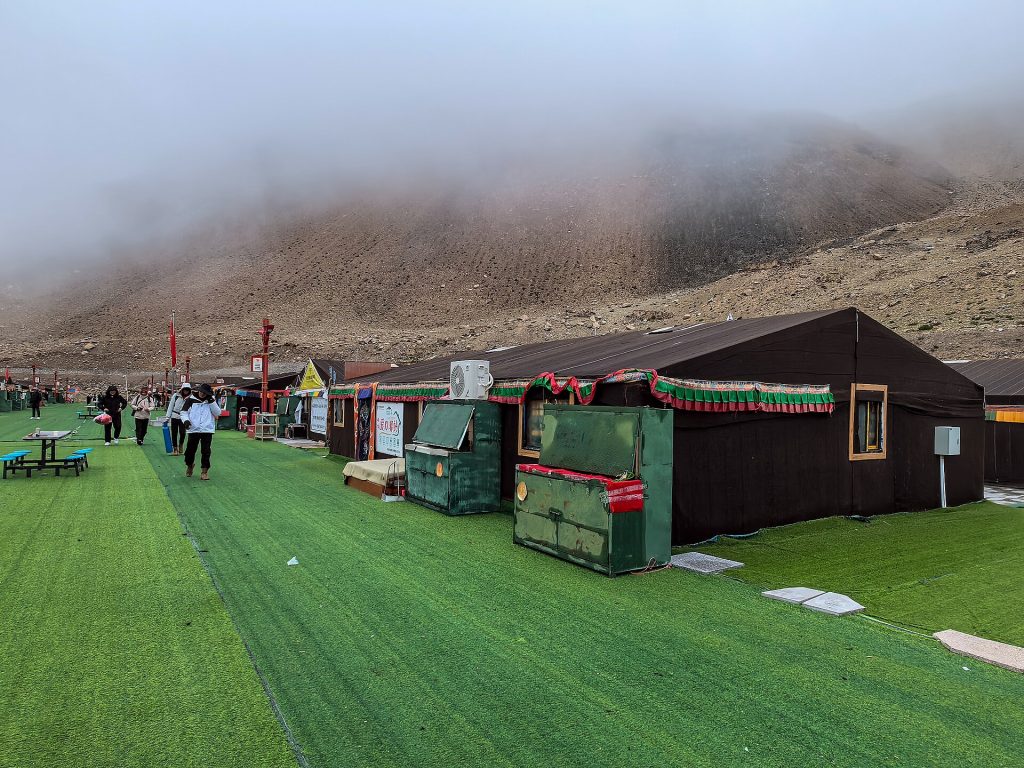
Accommodation is basic. The main base camp area consists of rows of white canvas tents run by local Tibetan families. Each tent holds six to eight beds with thick quilts, a small stove burning yak dung in the center, and a communal dining area serving fried rice, boiled eggs, and endless butter tea. There is no running water. A solar panel might charge a phone if the sun cooperates. The toilet is a squat latrine behind a tarp — bring your own paper and a headlamp. For a slightly warmer night, some travelers stay at Rongbuk Monastery guesthouse, a concrete building with simple rooms and shared bathrooms, about eight kilometers back down the valley. The monks run it; the atmosphere is quieter, but you lose the sunrise view from your doorway. I chose the tent camp. The cold seeped through the floorboards around 2 a.m., but waking to the north face glowing pink in the pre-dawn light made the shivering worth it.
Altitude Reality: What Your Body Tells You
At base camp elevation, oxygen saturation drops to roughly half of sea level. Everyone feels it. The standard pattern: headache behind the eyes by afternoon, appetite gone, sleep broken by periodic breathing — you stop inhaling for ten seconds, then gasp. Diamox (acetazolamide) helps if started a day before ascent, but it is not a shield. The only cure is descent. Our guide carried a portable oxygen canister and a pulse oximeter; he checked us every evening. One traveler in our group developed severe headache and vomiting at Tingri; the guide put him on oxygen and drove him back down to 4,300 meters that night. He recovered by morning. Do not hide symptoms to “tough it out.” The guides know the evacuation points — the nearest hospital with a hyperbaric chamber is in Shigatse, six hours away on a good road. Travel insurance must cover high-altitude helicopter rescue; confirm the policy wording before you leave home.
What to Pack: The Gear That Actually Matters
- Layer system: Merino base layer, fleece mid-layer, down jacket rated to -10°C, windproof shell. Temperatures swing from +15°C in midday sun to -15°C before dawn.
- Sun protection: Glacier glasses (Category 4 lenses), SPF 50+ sunscreen, lip balm with zinc oxide, wide-brim hat. UV reflection off the ice burns exposed skin in minutes.
- Sleep aids: Earplugs (generators and wind), eye mask (tents glow at night), sleeping bag liner rated for -5°C (the provided quilts are heavy but damp).
- Hydration: Two 1-liter insulated bottles. Bladders freeze at the tube. Wide-mouth Nalgene bottles can double as hot water bottles inside your quilt.
- Cash: Small denomination RMB (10, 20, 50 yuan notes). No ATMs, no card readers. You pay for shuttle bus, toilet use, extra blankets, and snacks in cash.
- Medication: Diamox (prescribed), ibuprofen, anti-nausea tablets, antibiotics for traveler’s diarrhea, personal prescriptions.
Timing the Visit: Seasons and the Mountain’s Mood
The window opens after the spring thaw and closes before the autumn snows block the passes. Late spring (the fourth and fifth lunar months) offers the clearest skies; the mountain shows its full pyramid most mornings. Summer monsoon season (sixth to seventh lunar months) brings clouds that can hide the summit for weeks, though the valleys turn green and wildflowers bloom on the slopes. Early autumn (eighth lunar month) is a sweet spot — stable weather, fewer tour groups, crisp nights. By the ninth lunar month, snow dusts the Tingri road and the shuttle buses reduce frequency. Winter is possible but brutal: the tent camp closes, the monastery guesthouse runs on minimal staff, and the road may close for days. If your heart is set on the classic flag-flapping summit photo, aim for the shoulder seasons and build in two extra buffer days in Tingri for weather delays.
Respect on the Roof of the World
This is sacred ground. Tibetans call the mountain Chomolungma, “Goddess Mother of the World.” You will see pilgrims prostrating the entire 300 kilometers from Shigatse, hands in prayer position, body flat on the gravel, rising, stepping forward, repeating. Do not step over their outstretched hands. Do not climb the mani stone walls or scatter prayer flags you brought from home — the locals maintain specific sites for offerings. At Rongbuk Monastery, remove your hat, keep your voice low, and ask before photographing monks. The yak dung fires in the tents are not tourist props; they are the only heat source. If a family invites you to share butter tea, accept the bowl with both hands, take a sip, and return it. Leave no trash. The wind carries plastic bags onto the glacier; carry out every wrapper, battery, and tissue. The mountain does not forgive carelessness.