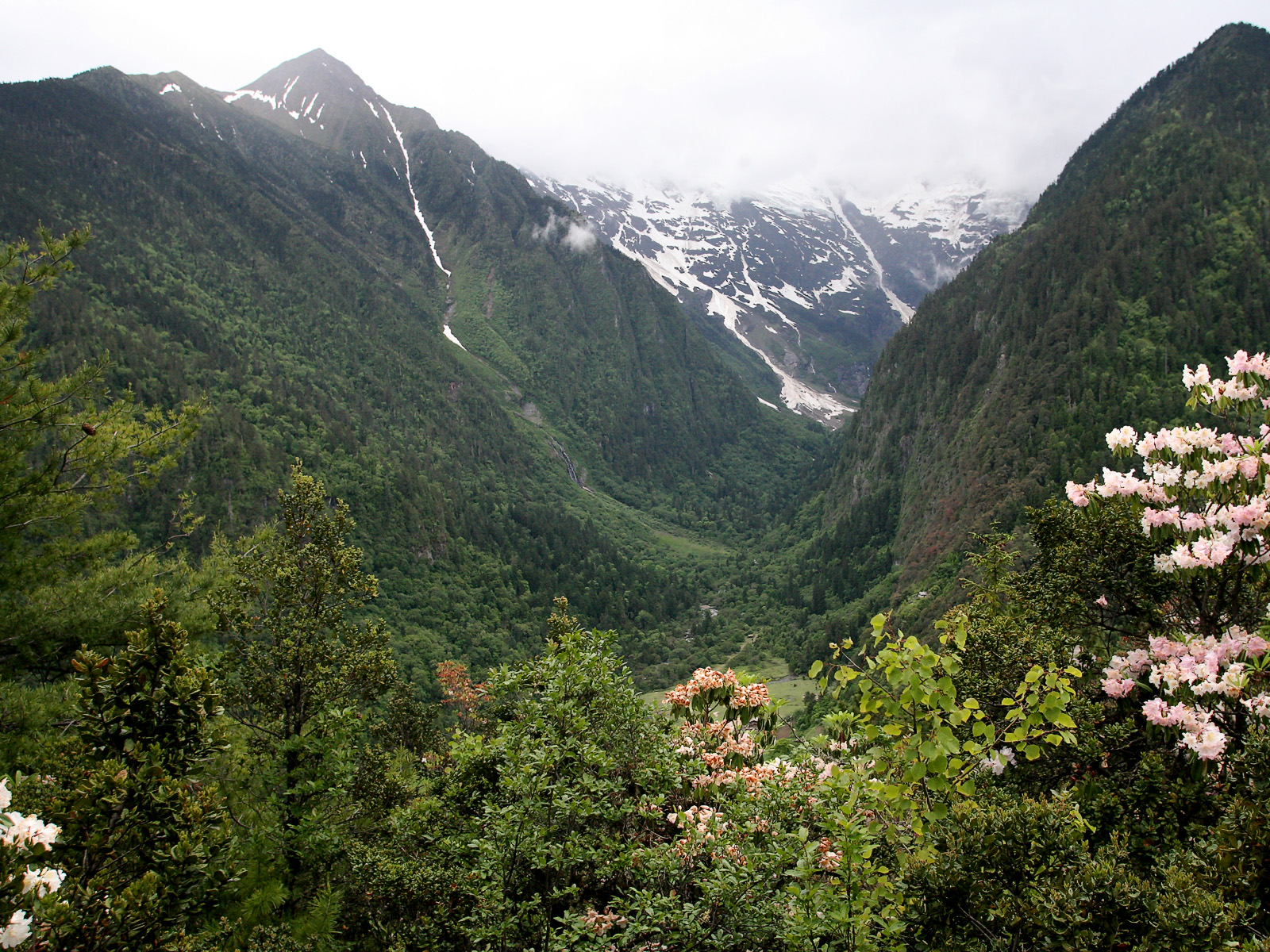
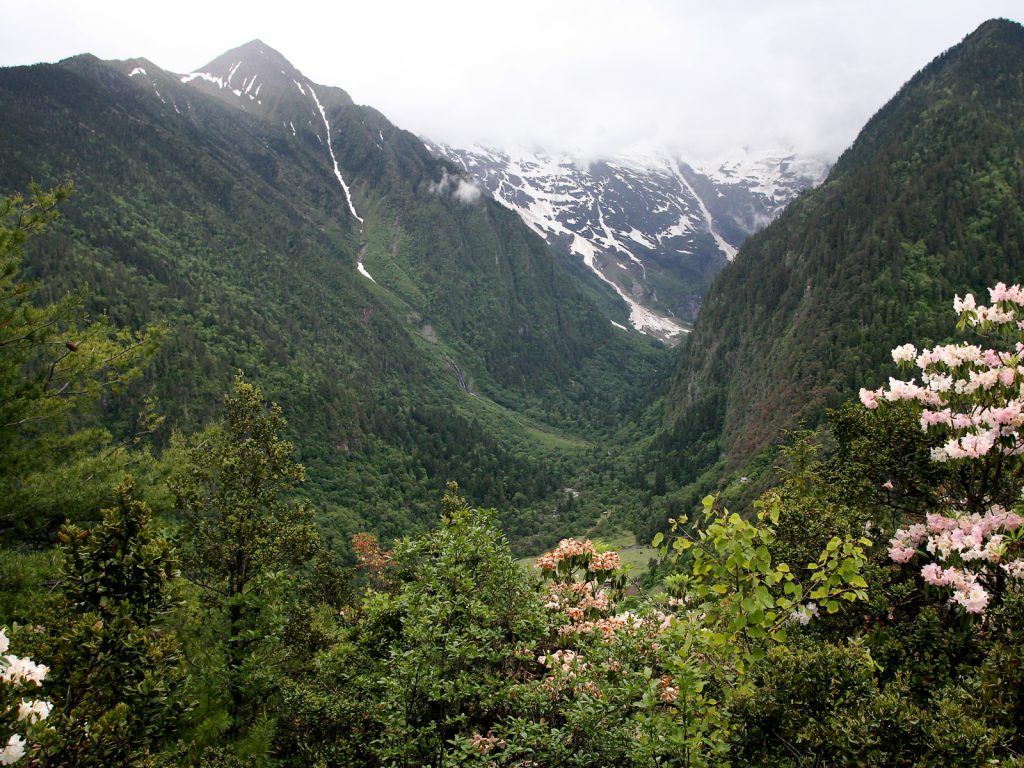
The mist clung to the pine needles at 3,200 meters, turning the trail into a tunnel of white. I paused on a wooden bridge spanning the Nanzong Gorge, the roar of the river muffled by the cloud layer, and watched a string of mules materialize from the fog—bells clanking, hooves sure on the slick planks. They carried gas canisters, instant noodle cartons, and a folding chair for a guesthouse owner in Upper Yubeng. No road reaches this village. Everything arrives on hoof or human back. That isolation is the whole point.
Lay of the Land: Two Villages, One Gorge
Yubeng splits at the Nanzong River. Lower Yubeng sits closer to the trailhead from Xidang, a cluster of stone guesthouses and a few Tibetan family homes where the valley widens. Cross the suspension bridge and climb twenty minutes through rhododendron thickets—thick as boxwood hedges in spring—and you reach Upper Yubeng, perched higher on the slope with direct sightlines to the glaciers. Most hikers sleep low and hike high, but the reverse works if you want sunrise on Kawa Karpo without a pre-dawn start. The gorge between them is steep, loud, and permanently damp; phone signal dies the moment you step onto the bridge.
Getting There: The Only Way In
You start in Deqin, the county town three hours north of Shangri-La by bus. From Deqin, a minivan bumps west along the Lancang River to Xidang Hot Springs, where the pavement ends. That ride takes ninety minutes on a good day; landslides can double it. At Xidang you register at the park checkpoint—passport, permit, small fee—then choose your ascent.