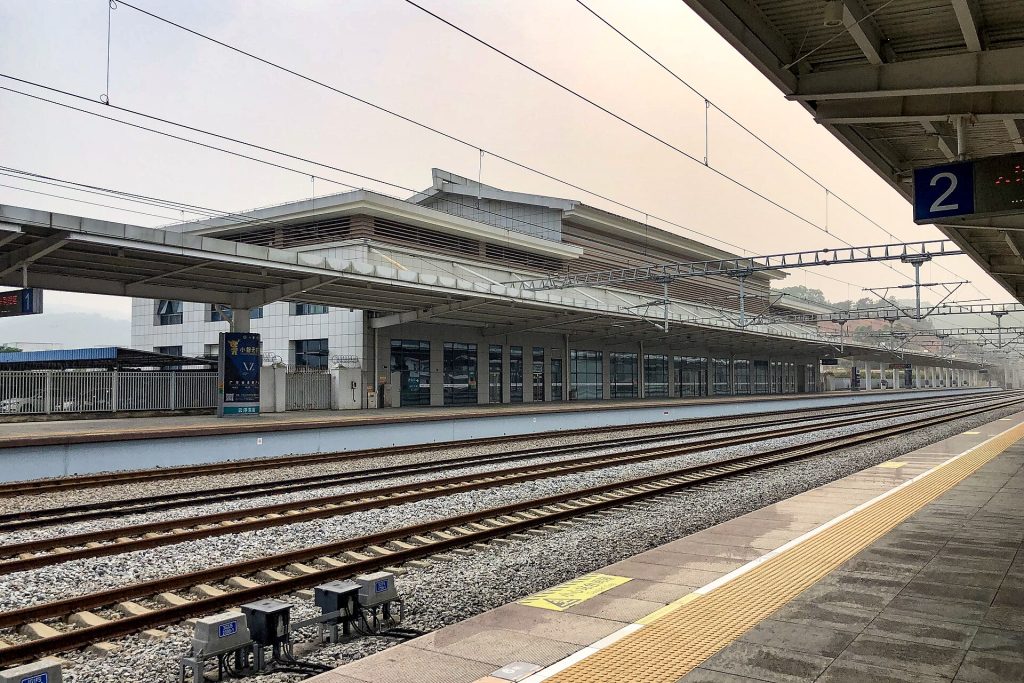
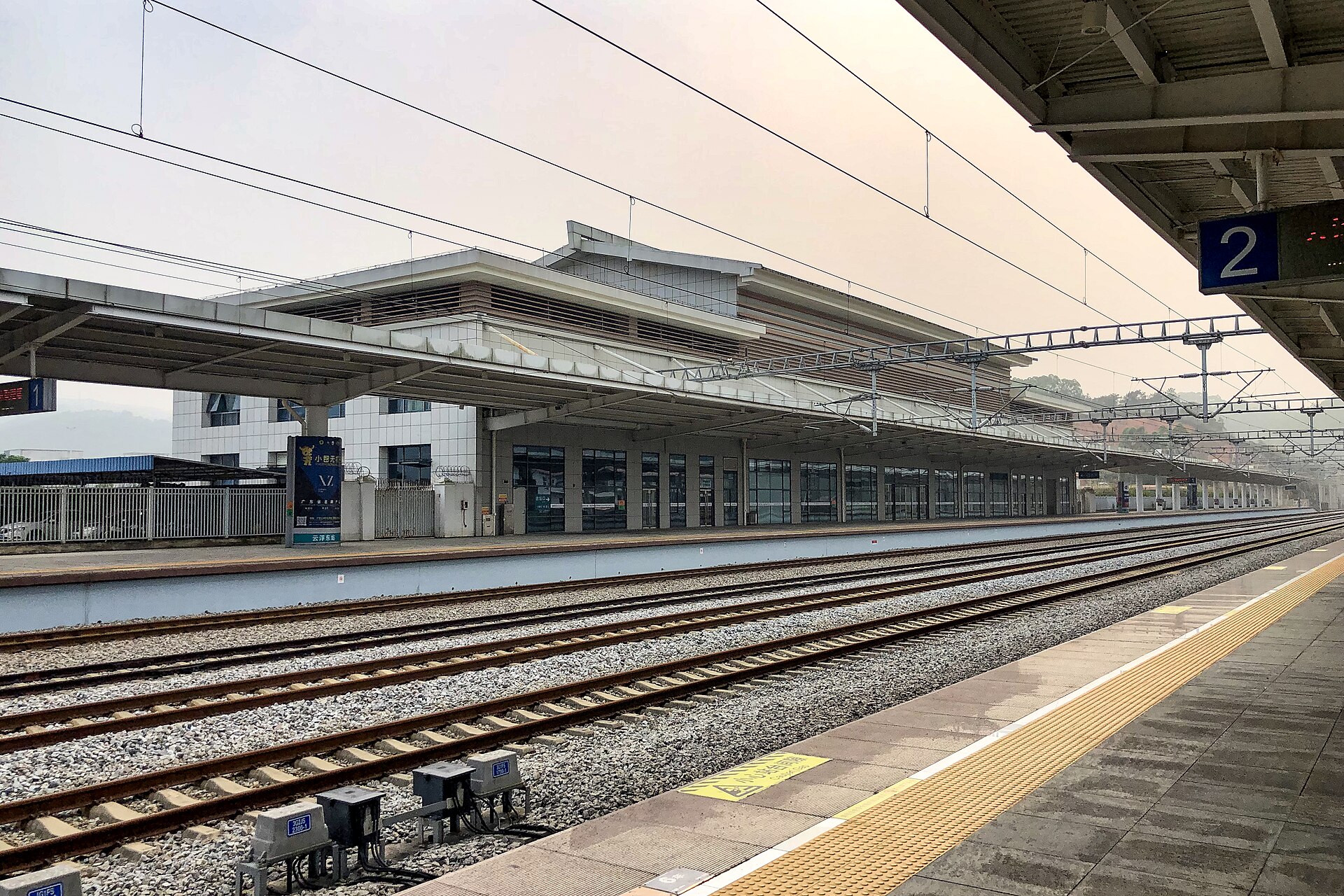
The high‑speed train slides into Yunfu East just after noon, the platform humming with workers in reflective vests and a few retirees hauling woven bags of dried tangerine peel. Outside the station, a row of electric taxis waits under a canopy of banyan leaves, their drivers shouting destinations in a Cantonese laced with Hakka tones. There is no tourist information desk, no glossy map rack — just a faded sign pointing toward the stone market and a steaming cart of rice noodle rolls that smells of fermented bean curd and chili oil. This is the gateway to Guangdong’s “stone capital,” a place where marble cliffs rise behind factory walls and hot springs bubble up beside rice paddies.
Getting There and Moving Around
Three high‑speed rail stops serve the municipality: Yunfu East sits closest to the urban core, Nanjiangkou links to the western counties, and Yunan station drops you near the southern hot‑spring belt. Trains from Guangzhou South take just over an hour; from Nanning they roll in around three. If you are coming from Foshan or Zhaoqing, long‑distance coaches leave every half‑hour from their main bus terminals and cost a fraction of the rail fare. The nearest international gateway remains Guangzhou Baiyun — allow two hours by car or a connecting high‑speed ride to Yunfu East.
Once on the ground, the city’s spread makes a hired car or ride‑hail app the easiest option. Didi works reliably in Yuncheng and Yun’an districts, but drivers often cancel trips to the more remote towns of Xinxing or Luoding. County‑level buses connect every township, yet schedules are posted only in Chinese and depart when full. For the karst caves and reservoir loops, renting a scooter in the county seat gives you the freedom to chase mist‑cloaked peaks at your own pace — just carry a rain jacket and a power bank for the phone mount.
Stone Culture in the Urban Core
Yuncheng District wears its nickname on its sleeves. The Stone Culture Expo Park stretches along the Bei River, its pathways lined with slabs of white marble, rose‑veined onyx, and the translucent “jade stone” that made the region famous. Artisans in open‑air workshops grind dragon heads, Guanyin figures, and modern minimalist tables — dust coating their forearms like chalk. You can watch a master split a boulder with a diamond wire saw, then haggle for a palm‑sized paperweight that costs less than a bowl of beef brisket noodles back in the station alley.
A short taxi ride north lands you at the Yunfu Museum, housed in a low‑rise building faced with local limestone. The exhibits trace the area from Neolithic pottery shards through the Ming‑era quarry tax records to the modern mechanized pits that feed construction sites across the Pearl River Delta. Labels are bilingual, but the real story lives in the glass case of chisels — each stamped with a family clan mark — and the video loop of quarry blasts that shake the ground like distant thunder.
Caves, Cliffs, and Cool Water
East of Yun’an, the Panlong Cave system yawns beneath a forested ridge. The main chamber stretches two kilometers, its stalactites illuminated by color‑shifting LEDs that feel garish at first but reveal delicate soda‑straw formations when you pause in the dimmer side passages. A subterranean river runs the length of the tour route; flat‑bottomed boats ferry visitors past curtains of flowstone while a guide taps a metal rod to demonstrate the cave’s natural acoustics — each strike returning a clear, bell‑like note. Wear shoes with grip; the walkways stay slick year‑round.
Further south, the Longtan Reservoir folds between limestone hills like a jade ribbon. Fishermen in narrow wooden skiffs cast nets at dawn, their lanterns flickering against the cliffs. A lakeside trail circles the water in about three hours, passing through villages where elders dry persimmons on bamboo racks and children chase dragonflies. Pack a picnic — there are no vendors once you leave the dam entrance — and bring extra water; the summer humidity turns the climb into a steam bath.
Hot Springs and Hakka Villages
Yunan County claims the highest concentration of geothermal wells in the region. The most developed resort, Wenquan Town, clusters around a public bathhouse where mineral‑rich water emerges at forty‑two degrees Celsius. Locals swear by the “three dip” method: soak ten minutes, step out to cool under a misting fan, repeat twice. Private villas with indoor pools rent by the night; book through a Chinese‑language platform or have a Mandarin‑speaking friend call ahead, as English responses are rare.
An hour’s drive west into the hills brings you to the Hakka enclaves of Xinxing. Round tulou‑style watchtowers crown the ridges, their thick rammed‑earth walls pierced by narrow gun loops. Families still live inside, drying tea leaves on upper galleries and fermenting tofu in ceramic jars. Visitors are welcome in the communal hall if you arrive before the midday meal — knock, wait for an invitation, and accept the bowl of bitter herbal tea offered by the matriarch. Photography inside sleeping quarters is frowned upon; ask first, and never use flash.
Eating Like a Local
Yunfu’s cuisine leans salty, sour, and gently spicy — flavors built to cut through the humidity. Breakfast often means a bowl of chang fen (steamed rice rolls) topped with minced pork, preserved radish, and a ladle of bone broth simmered since midnight. Lunch might be a clay‑pot rice with cured sausage, dried shrimp, and a crust of scorched grains prized as the best part. Dinner gatherings center on a steaming pot of “stone soup”: river fish, tofu, bamboo shoots, and a handful of smooth river pebbles heated until they sear the broth on contact.
- Chang fen – rice batter, minced pork, preserved radish, scallions, bone broth, chili oil
- Clay‑pot rice – jasmine rice, lap cheong (Cantonese sausage), dried shrimp, soy sauce, ginger, scallions
- Stone soup – grass carp fillets, firm tofu, bamboo shoots, ginger slices, goji berries, heated river pebbles
To replicate the stone soup at home, heat clean river stones in a dry wok until they smoke, then drop them into a simmering stock of fish bones and ginger. The thermal shock cooks the fish slices in seconds, leaving them tender and infused with a faint mineral sweetness. In restaurants, order “石头汤” and specify “不辣” if you avoid chili; the default version arrives with a thick layer of dried red chilies floating like petals.
Seasonal Rhythms and Common Missteps
The most comfortable window falls between the Mid‑Autumn Festival and the start of the spring rains — cool mornings, clear skies, and the persimmon harvest coloring village rooftops orange. Summer brings torrential downpours that can close mountain roads and flood cave paths; winter is dry but surprisingly chilly in the stone houses, which lack heating. Lunar New Year sees the entire region shut down for a week; transport and accommodation vanish unless booked months ahead.
Newcomers often assume English signage exists at major sites — it does not. Download offline maps with Chinese labels, and learn to recognize the characters for “entrance” (入口), “exit” (出口), and “toilet” (厕所). Another mistake: treating the stone markets as tourist shops. Wholesale yards operate on bulk pricing; if you want a single souvenir, head to the retail lane behind the expo park where prices are marked and bargaining is expected but polite. Finally, don’t skip the morning tea ritual. Plastic stools, steaming baskets, and the clatter of ceramic lids are where the city actually speaks — listen, point, and eat.