The minibus shudders to a halt on a hairpin bend above the Yangtze, and the driver gestures toward a steel platform cantilevered over nothing but air. Below, the river makes a tight horseshoe turn around a limestone peninsula, the color of strong tea after weeks of rain. I step onto the glass, my boots squeaking on the non-slip dots, and force myself to look straight down three hundred meters to the water. This is Longgang’s Cloud Platform, and it does not care about your fear of heights.
Getting There Without Losing a Morning
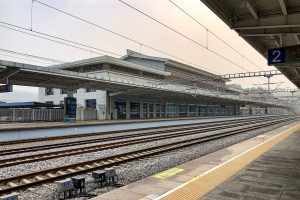
Yunyang sits roughly 320 kilometers northeast of Chongqing’s urban core, tucked against the river where the Three Gorges reservoir widens. Most travelers arrive via Wanzhou Wuqiao Airport, about fifty kilometers west, then grab a taxi or a pre-booked car for the hour-long drive along the G50 expressway. If you prefer rails, the high-speed line from Chongqing North deposits you at Yunyang Railway Station in Huangshi Town in ninety minutes; buses 610, 616, and 623 connect the station forecourt to the county seat. Driving yourself? The expressway is well signed, but the final climb into the geopark twists through Tujia villages where chickens dart across the asphalt—budget extra time.
Longgang National Geopark: Karst on a Grand Scale
The park centers on a massive karst sinkhole—locals call it a tiankeng—ringed by cliffs that glow ochre in late afternoon. The Cloud Platform is the headline act, a horseshoe of transparent flooring jutting thirty meters from the rim. Queues build fast after ten in the morning, especially during the Golden Week holidays in early autumn. Buy tickets at the visitor center near Qingshui Tujia Township; the park shuttle runs every twenty minutes from the gate to the platform trailhead. Summer hours stretch to 18:30, winter contracts to 17:30, and they stop selling entry three hours before closing.
- Wear closed-toe shoes with grip; the glass gets slick with mist.
- Bring a windbreaker—the rim catches every gust off the river.
- Skip the platform if vertigo hits hard; the cliff-top boardwalk delivers the same panorama with solid footing.
- Allow three hours minimum: shuttle ride, queue, walk, and the return leg.
Beyond the platform, a network of boardwalks threads through stone forests and past seasonal waterfalls. In the wet season, usually the fifth lunar month, the underground river roars audibly through fissures in the rock. I watched a Tujia guide tap a stalactite with a key, producing a clear bell tone that echoed down the cavern—an old trick to prove the formations are still growing.
Yunyang Dinosaur National Geopark: Fossils in the Red Beds
Twenty minutes by car from Longgang, the dinosaur park sits in a basin of rust-colored sandstone. The museum building mimics a giant fossilized spine. Inside, the star exhibits are Yunyangosaurus and a clutch of sauropod eggs preserved in situ, their shells paper-thin after 170 million years. The outdoor trail leads to an active excavation pit where paleontologists brush sediment from vertebrae each spring. English signage is patchy; hire the audio guide or tag along with a student group—their professors translate enthusiastically.
- Best light for the outdoor strata walls is mid-morning, when the sun hits the red beds at a low angle.
- Footwear: dusty gravel paths; leave white sneakers at the hotel.
- Combine with Longgang in a single day only if you start at park opening and hire a driver.
Zhangfei Temple: Three Kingdoms Lore on the New Shore
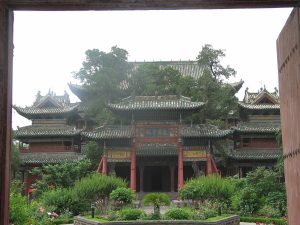
The original temple drowned when the Three Gorges Dam raised the reservoir. What stands today is a meticulous relocation, beam for beam, stone for stone, completed in the early 2000s on Longbao Hill overlooking the new waterline. The complex climbs a series of courtyards: a gate guarded by stone lions, a hall housing a Ming-dynasty statue of General Zhang Fei with his trademark glaring eyes, and a rear pavilion where calligraphy scrolls praise his loyalty. Incense smoke curls thick on the first and fifteenth days of each lunar month, when descendants of the Zhang clan arrive from nearby villages to bow.
Tour groups cluster at the main hall for ten minutes, snap the statue, and leave. Stay longer. The side corridors hold rubbings of stelae recording flood levels from the Qing dynasty—data points modern hydrologists still cite. A caretaker in a blue Mao suit once showed me a crack in a foundation stone, widened by the 1981 flood before the dam tamed the river. “The water remembers,” he said.
Three Gorges Cruises: The Yangtze at Eye Level
Yunyang’s passenger pier sits below the county town, a concrete slab where vessels from the Chongqing–Yichang route tie up for a two-hour shore excursion. Most downstream ships arrive mid-morning; upstream boats dock near dusk. The standard itinerary buses passengers to Zhangfei Temple and the Longgang platform, then returns for lunch aboard. If you’re not on a cruise, you can still book a half-day ferry to the “Small Three Gorges” of the Daning River tributary—narrower, quieter, with hanging coffins visible on sheer cliffs. Tickets sell at the pier kiosk; cash or WeChat Pay only.
- Downstream ships (Chongqing to Yichang) offer brighter light for Longgang photos.
- Upstream ships catch sunset at Zhangfei Temple’s rear pavilion.
- Independent ferry to Daning River runs roughly 09:00 and 14:00; confirm the night before at your hotel.
- Seasickness: the main channel is broad and calm; the Daning tributary chops up when wind opposes current.
Eating and Sleeping in the County Seat
Yunyang town spreads along a ridge above the pier. The night market on Renmin Street wakes at dusk: skewers of river fish brushed with fermented chili, bowls of xiaomian topped with pickled mustard greens and minced pork, and steamed buns stuffed with smoked tofu. I ate the best jiangtuan catfish—white flesh, no bones—at a family place near the bus station where the owner still kills the fish to order. For a sit-down meal, the Tujia-style hecai (mixed stew) at the restaurant opposite the government compound delivers smoked bacon, radish, and potato in a broth that tastes of wood smoke and time.
Lodging clusters around the railway station and the old bus station. Mid-range hotels (think clean rooms, reliable hot water, breakfast included) run three to four hundred yuan. Book a room facing the river if you want the sound of barge horns at midnight; face the hill if you prefer the rooster chorus at dawn. English at front desks is hit-or-miss—have your destination written in Chinese for taxi drivers.
What Newcomers Get Wrong
First, they underestimate the vertical. The geopark’s elevation gain from shuttle drop-off to platform is modest, but the altitude—1,100 meters at the rim—means thinner air. I saw a fit twenty-something gasp after the staircase to the glass. Second, they assume the cruise shuttle covers everything. It doesn’t; the dinosaur park requires a separate taxi. Third, they show up at Zhangfei Temple during the lunch hour (twelve to one) when the caretakers lock the side halls for their own meal. Finally, they pack only summer clothes. Even in the sixth lunar month, the river wind at night carries a chill that seeps through thin cotton. Bring a layer you can pull on when the sun drops behind the gorge walls.