The minibus shudders as it climbs the switchbacks above Chongli, pine scent rushing through the cracked window. Below, the Olympic rings still glow on the stadium roof, but the real draw is the ridge ahead — where the Great Wall disappears into mist and the grasslands roll toward Mongolia. I grip the seatback, not from fear, but from the sudden certainty that this city holds more than ski slopes.
Getting there without the headache
High-speed rail changed everything. The Beijing–Zhangjiakou line drops you at Zhangjiakou Station in under an hour from Qinghe, and a second stop at Taizicheng puts you inside the Chongli ski basin. Trains run every 20 minutes at peak season; book the night before on the 12306 app or the station machines accept foreign passports. If you fly, Ningyuan Airport sits 9 km south of the urban core — taxis line up outside arrivals, but a pre-booked Didi saves 20 yuan and the language dance. Drivers heading to the resorts know “Chongli” and “Wanlong” by heart; say “Olympic Village” for Taizicheng.
- Download 12306 or Trip.com for rail tickets; bring passport to the window if the app rejects your phone number.
- From Beijing Capital or Daxing, the direct bus to Chongli (departing from Sihui and Lize hubs) takes three hours and costs roughly 100 yuan — cheaper than a transfer train plus taxi.
- Rent a car only if you plan the Grassland Sky Road loop; city parking is tight and mountain roads ice over fast after sundown.
Where to sleep: slopeside or street-level
Chongli splits into two moods. The Olympic cluster — Genting Secret Garden, Wanlong, Thaiwoo — offers ski-in/ski-out rooms, heated boot lockers, and overpriced hot chocolate. Book by October for Lunar New Year week; a standard double hits 1,200 yuan midweek, triple on holidays. Downtown Zhangjiakou (Qiaoxi District) feels like a working northern city: noodle steam, mahjong clack, and business hotels at 200 yuan a night. I stayed above a lamb skewer stall near People’s Park; the owner woke me at 6 a.m. with a bowl of hand-pulled noodles and a grin. For grassland nights, yurt camps along the Sky Road rent thick quilts and a charcoal brazier — bring your own headlamp and wet wipes.
Two Great Wall sections, one day apart
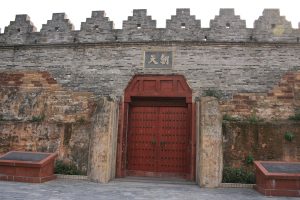
Dajingmen sits inside the city limits, a rebuilt gatehouse on a steep hill. The climb takes 20 minutes from the parking lot; the view stretches over red-tile roofs to the mountains where the Olympic torch relay passed. Vendors sell roasted corn and paper kites at the top. No crowds after 4 p.m. in autumn. Drive 40 km north to the wild stretch at Jimingyi — crumbling watchtowers, goat paths, zero signage. A local herder named Lao Zhang met me at the village gate, charged 50 yuan to guide me along the ridge, and pointed out Ming-era brick stamps half-buried in lichen. Wear ankle-support boots; the scree shifts underfoot.
- Dajingmen: bus 12 from downtown, alight at “Great Wall Park” stop. Entry 30 yuan. Open sunrise to sunset.
- Jimingyi: hire a driver in Chongli (200 yuan round trip) or join a hiking WeChat group — search “张家口野长城”.
- Bring water, windbreaker, and a snack. No shops on the wild sections.
Grassland Sky Road: the loop that eats a day
The 132-km scenic highway (S238) climbs from 1,500 to 2,100 meters, threading flower meadows, wind turbine forests, and sudden valleys. Start early — 7 a.m. from Chongli — to catch the light on the “Heavenly Ladder” hairpins. Stop at the wind farm viewpoint: turbines the size of apartment blocks spin in silence, their shadows racing across the grass. Mongolian herders set up temporary yurts near the summit in summer; they’ll pour salty milk tea into a chipped enamel bowl and hand you a mutton pancake straight from the griddle. Eat with your right hand. The descent into Guyuan County reveals terraced buckwheat fields, golden in late autumn. Fuel up in Chongli before you leave; the only petrol station on the loop closes at 8 p.m.
- Vehicle check: tire pressure, spare, full tank. Phone signal drops on the high ridges.
- Pack layers — 15°C at noon, near freezing at the pass even in summer.
- Respect the herders’ dogs. They guard flocks, not tourists. Walk wide, don’t stare.
- Return via the G6 expressway if fog rolls in; the mountain road becomes a slide.
Eating like a local, not a tourist
Skip the hotel buffet. Walk the alley behind Chongli’s main gondola at 7 p.m. — steam rises from three generations of the same family rolling youmian (oat noodles) into tight coils, dunking them in mutton broth scented with star anise and dried chili. Order “youmian wo wo” with a side of pickled cabbage and a bowl of suan tang (sour soup) to cut the richness. In the city, the night market near Xuanhua Gate serves yangrou chuan (lamb skewers) dusted with cumin and sesame, grilled over fruitwood charcoal. One skewer, one sip of cold Yanjing beer. Repeat. Vegetarians: ask for “su youmian” — oat noodles with mushroom broth and wild mountain greens. The auntie stirring the pot will nod and toss in extra garlic chives.
- Youmian wo wo: oat flour, boiling water, knead 5 min, roll thumb-thick ropes, coil, steam 8 min.
- Mutton broth: shoulder bones, ginger, scallion, star anise, simmer 3 hrs. Skim fat.
- Suan tang: fermented millet slurry, vinegar, chili oil, cilantro. Splash into noodles.
- Yangrou chuan: lamb leg cubes, salt, cumin, chili flakes, sesame seeds. Skewer, grill 3 min per side.
What newcomers get wrong
They assume “ski city” means English menus and lift lines like Whistler. It doesn’t. Lift tickets scan via QR code on the resort app — download and register before you arrive, or queue at the manual window with 200 other people. They pack fashion parkas; the wind at 2,200 meters shreds thin shells. Rent a proper down suit at the mountain base (80 yuan/day). They skip travel insurance that covers “winter sports” — a twisted knee on day one costs 30,000 yuan for evacuation and surgery. They try to hike the wild Wall in sneakers. And they forget cash: the yurt camp, the herder’s tea, the skewer lady — none take WeChat Pay if the mountain signal dies. Carry 500 yuan in small notes. Finally, they rush. Zhangjiakou rewards the extra night: the morning mist over the grasslands, the old imam’s call to prayer echoing from the mosque near Dajingmen, the taste of oat noodles made by hands that have rolled them for forty winters.