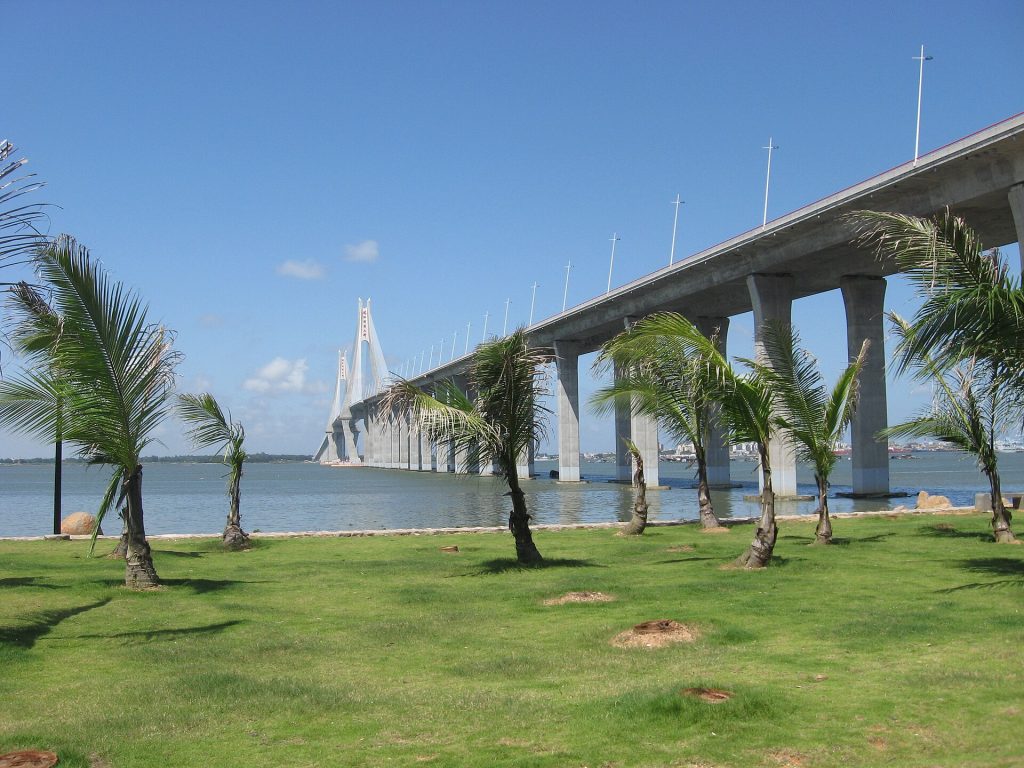
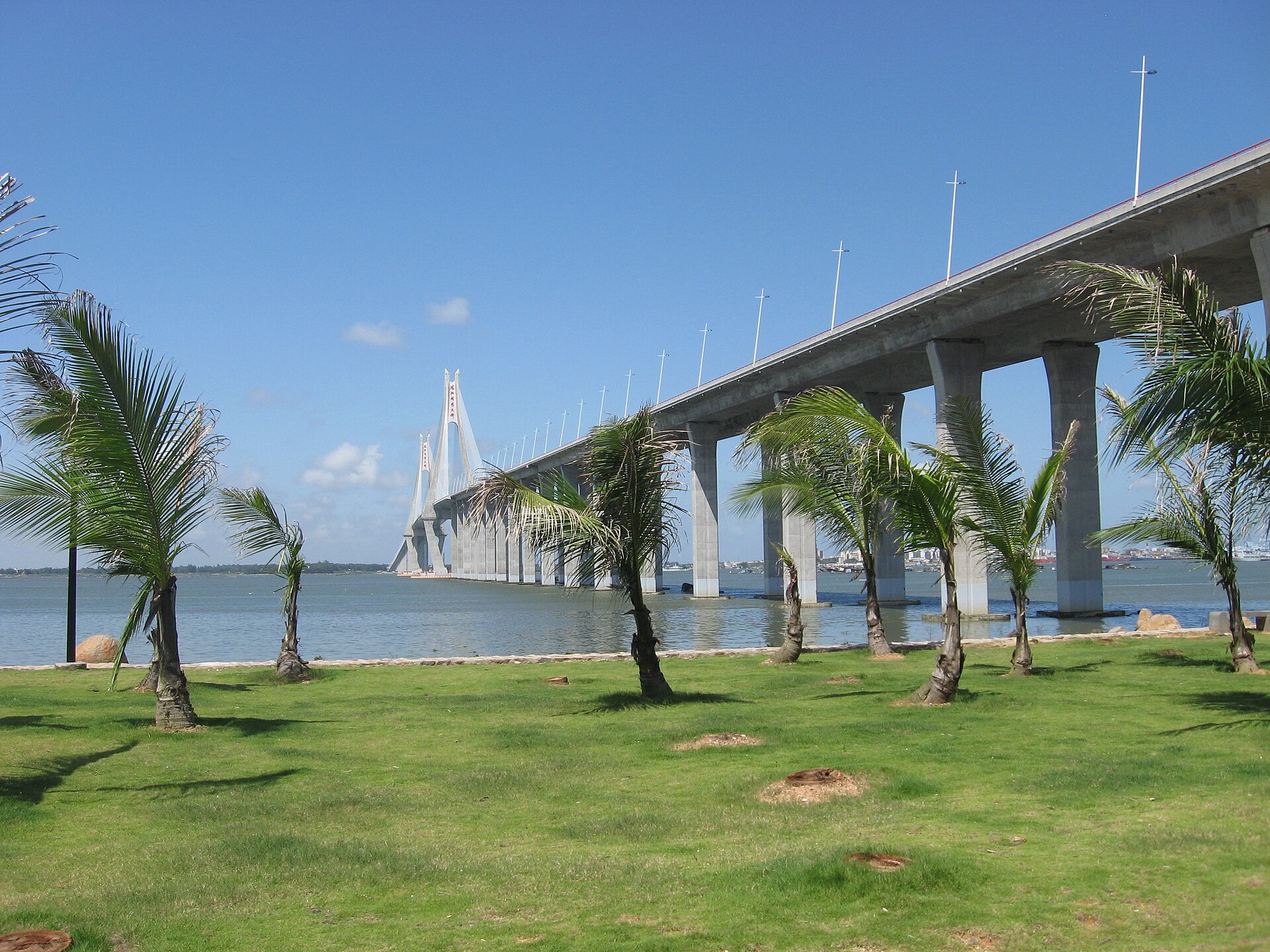
The minibus shuddered to a halt on a cracked concrete apron beside the Leizhou Strait. Salt air hit the windshield before the doors folded open. A woman in a faded floral apron waved a plastic stool at me, pointing toward a table already slick with peanut oil and chili paste. No menu, no English, just the clatter of cleavers and the hiss of crab hitting a wok. That lunch — steamed mantis shrimp sweet as corn, a bowl of rice sticky enough to hold chopsticks upright — set the rhythm for every day that followed in Zhanjiang.
Getting oriented on the peninsula
Zhanjiang spreads along the southern edge of the Leizhou Peninsula, where Guangdong folds into the South China Sea. The downtown core clusters around Chikan and Xiashan districts, but the city feels more like a string of fishing towns stitched together by elevated highways and railway viaducts. Cantonese dominates the streets, though the local accent stretches vowels and swallows finals — “lei” for “you,” “hai” for “still.” Mandarin works in hotels and train stations, but a few phrases in the local tongue (“m goi” for thanks, “hou mei” for delicious) unlock warmer service at market stalls.
Transport is straightforward. The high‑speed rail station sits in Mazhang District, twenty minutes by taxi from the old French quarter. City buses numbered 1 through 30 cover the main arteries; the 201 and 202 loop out to Donghai Island and Naozhou Island respectively. Didi rides cost roughly the price of a bowl of beef brisket noodles. Rent a scooter only if you have a Chinese license and a high tolerance for three‑wheel trucks that treat lane markings as suggestions.
Beaches: where the sand actually stays clean
Donghai Island’s Longhaitian Beach stretches twenty kilometers, but the section near the military pier stays litter‑free because patrol boats chase away overnight campers. Arrive at dawn during the eighth lunar month — locals call it “autumn tide” — and the water is glass calm, the temperature warm enough to float without a wetsuit. Vendors grill oysters on charcoal braziers behind the dunes; order a dozen, squeeze lime, eat with your fingers while hermit crabs scuttle over your toes.
Naozhou Island, reached by a forty‑minute ferry from Hai’an Port, feels quieter. The lighthouse at the southern tip dates to the French lease era; its spiral staircase still groans underfoot. The beach below the lighthouse curves into a natural rock pool that fills at high tide — perfect for children who panic at waves. Bring water and snacks; the island’s single convenience store closes at sunset.
If you want sand without the ferry, head to Techeng Island, connected by a causeway. The western shore faces the open gulf and catches the sunset. Fishermen haul nets there at dusk; they’ll often sell you a bucket of live sand crabs for the price of a convenience‑store beer.
Eating: the table leads the itinerary
Meals in Zhanjiang start with the catch. Markets open before light; by mid‑morning the best pieces are gone. Build a day around three anchor dishes, then fill gaps with street snacks.
- White‑cut chicken (白切鸡) — skin taut as parchment, meat slipping off the bone, served with a ginger‑scallion oil that sings of raw garlic and rendered fat.
- Steamed mantis shrimp (清蒸皮皮虾) — shells split open to reveal flesh sweet as scallop, no sauce needed beyond a splash of aged soy and hot oil.
- Beef brisket noodles (牛腩面) — broth simmered since midnight with star anise, tangerine peel, and daikon; noodles hand‑pulled to order, each strand catching the dark liquid.
Home‑style method for white‑cut chicken
In restaurants, point to the live tank. If the waiter brings a menu with photos, you’re in a tourist trap. Order by weight: “liang ge jin” (half a catty) of whatever swims strongest. Avoid “spicy crab” drenched in doubanjiang — it masks stale seafood. The best kitchens steam, blanch, or quick‑fry with garlic and fermented black bean only.
French quarter mornings and naval evenings
The old concession area near Haibin Park preserves a handful of shuttered villas with arched windows and peeling stucco. Walk there at 7 a.m. when elderly residents practice tai chi under banyan roots. The former French consulate, now a maritime museum, opens at 9 a.m.; its exhibits on the 1899 lease are labeled only in Chinese, but the maps and photographs speak for themselves. A block away, a bakery still sells baguettes — dense, chewy, nothing like Paris — that pair perfectly with a cup of condensed‑milk tea from the stall next door.
By evening, the naval base lights paint the harbor. Civilians can’t enter the restricted zone, but the promenade along Binjiang Road offers front‑row seats to frigates slipping past. Retired sailors gather on stone benches, smoking cheap cigarettes, swapping stories about typhoon evacuations. Listen without interrupting; they measure time in storms, not years.
Island hopping without a tour group
Ferries to Naozhou and Donghai run on the lunar tide table, not a printed schedule. Ask your guesthouse host to photograph the timetable posted at the harbor office — it changes each month. Buy tickets at the window; scalpers linger near the gate quoting double. Pack light: a dry bag, reef‑safe sunscreen, a towel, and cash. There are no ATMs on Naozhou.
On Donghai, rent a bicycle from the shop beside the ferry dock. The coastal road loops the island in three hours if you stop at every shrine. The Mazu temple at the northern tip burns incense so thick it stains the rafters. Fishermen leave model boats and bottles of baijiu; you may leave a coin, but never step on the threshold.
What newcomers get wrong
First, they book a hotel in Chikan and expect nightlife. The district quiets by ten; the action shifts to Xiashan’s night markets and the barbecue stalls along Renmin Avenue. Second, they assume “seafood restaurant” means quality. Follow the delivery tricycles — they lead to kitchens where the tank water runs clear and the chef knows each crab by its barnacles. Third, they pack sunscreen but forget mosquito coils. The mangroves behind Techeng Island breed sand flies that bite through denim. Coils cost three yuan at any convenience store; light one at dusk and set it upwind.
Fourth, they try to “do” Zhanjiang in a day trip from Guangzhou. The high‑speed train takes three hours each way; you’ll spend more time on the platform than on the beach. Stay two nights minimum — one for the peninsula, one for an island. Fifth, they mistake reserve for coldness. Locals speak loud, laugh loud, and argue over the bill like family. Match their volume, toast with the cheapest baijiu on the table, and you’ll leave with phone numbers and an invitation to next autumn’s crab feast.