Why you hear crickets in Chinese cities in autumn
Walk past a flower-and-bird market, a park bench full of retirees, or a hutong doorway in September and October, and you may hear a small, steady chirp coming from a clay pot, a bamboo cage, or a gourd tucked inside someone’s jacket. That sound is part of one of China’s oldest hobbies: keeping crickets, for their song and, for some enthusiasts, for friendly matches between males.
This guide explains cricket culture in China for English-speaking visitors and expats: where it comes from, how the autumn season works, what you might see at markets, and how to watch respectfully. It is a niche hobby, practised mostly by older men and dedicated collectors, but it opens a window into the quiet, seasonal side of Chinese city life.
If you enjoy slow culture like this, our guides to Chinese tea culture and shadow puppet folk shows are good companions.
A short history of crickets in China
Singing insects in the Tang palace
Keeping crickets for their song goes back more than a thousand years. Accounts from the Tang dynasty describe palace women keeping crickets in small cages by their pillows to listen to them at night in autumn. The insect’s chirp became a poetic image of the changing season, loneliness, and the approach of cold weather. The cricket even appears in the Book of Songs (Shijing), China’s oldest poetry collection, as a marker of the year turning toward winter.
Fighting crickets and the Song dynasty
By the Song dynasty, matches between male crickets had become a popular pastime. The Southern Song chancellor Jia Sidao is traditionally credited with a manual on crickets, often called the Cuzhi Jing (Book of Crickets), covering how to choose, keep, and judge them. Later historians blamed his obsession for neglect of state affairs as the dynasty declined. Whether that story is fair or not, it shows how seriously some people took the hobby.
Ming emperors and a famous Qing story
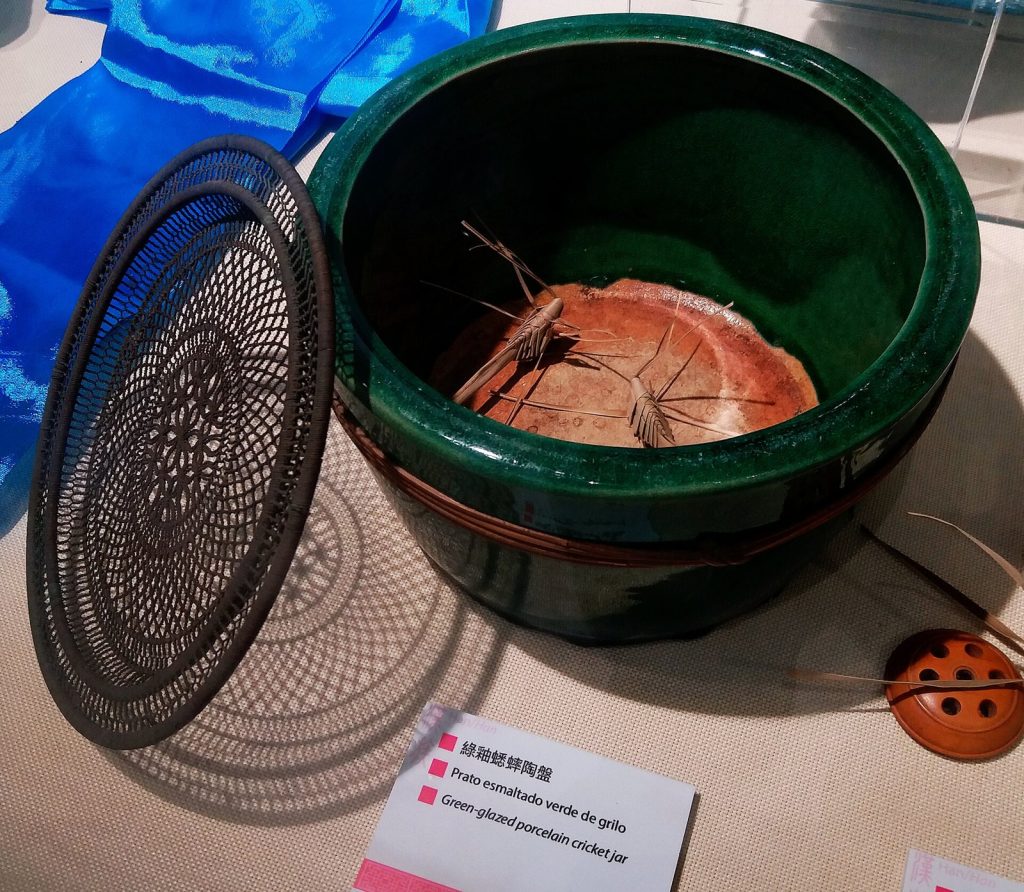
The Ming dynasty’s Xuande Emperor is remembered as a cricket enthusiast, and fine ceramic cricket pots associated with his era are still prized by collectors. In the Qing dynasty, the writer Pu Songling included a story called “The Cricket” (促织, Cuzhi) in Strange Tales from a Chinese Studio. It is a dark satire about a poor family crushed by the demand to supply fighting crickets to officials, and many Chinese students read it in school.
Decline and revival
The hobby was suppressed for part of the twentieth century, then gradually returned. Today it survives as a traditional pastime with clubs, collectors, and seasonal markets, though it is far less mainstream than it once was.
Singing crickets versus fighting crickets
Visitors often lump everything together as “crickets,” but there are two different traditions:
- Singing insects. People keep various crickets and katydids (蝈蝈, guoguo) for their sound. In northern China, especially Beijing, some enthusiasts keep singing insects through the winter in carved or painted gourds held close to the body for warmth. The gourd itself can be a crafted object worth admiring.
- Fighting crickets. These are male field crickets (蟋蟀, xishuai, also called 蛐蛐, ququ in northern speech) selected for size, colour, and temperament. Owners keep each in its own clay pot and feed them carefully.
A cricket match is quite different from blood sports. Two males are placed in a small arena divided by a gate. Handlers gently stimulate their antennae with a fine brush or grass stem to provoke a territorial response. When the gate lifts, the crickets spar with their jaws, and the match usually ends when one retreats, stops chirping, or leaves the arena. Serious injuries are uncommon, though welfare questions still exist and many people simply prefer the singing side of the hobby.
One important legal point: gambling on cricket fights is illegal in mainland China. The hobby itself is legal, but betting is not.
The autumn cricket season
Crickets mature in late summer. Collectors and suppliers gather them from fields in late summer and early autumn, and the competitive season traditionally runs from around the autumn equinox through October, when the insects are at their strongest. As the weather cools in November, most fighting crickets reach the end of their natural life, which is measured in months, not years.
Where the famous crickets come from
Shandong Province has a strong reputation for fighting crickets. Ningyang County in Tai’an, Shandong, especially Sidian Town, is widely known for them, and “Ningyang cricket” (宁阳蟋蟀) has been registered as a national geographical indication product. Every autumn, buyers travel there for the season. This is a specialist scene; if you are curious, read local government and tourism announcements before making a trip, and do not expect English signage.
What you might see at a market
You do not need to travel to Shandong to catch a glimpse of cricket culture. In many Chinese cities, crickets appear in autumn at flower-and-bird markets (花鸟市场), pet markets, and occasional street stalls. Specific markets open, close, and relocate over time, so check recent local information before you go rather than trusting an old guidebook.
At a typical cricket stall you may see:
- Rows of small clay pots with lids, each holding a single insect
- Bamboo or plastic cages for singing katydids
- Gourds, some carved or decorated, used as winter homes for singing insects
- Tools: fine ticklers (brushes or grass stems), tiny water and food dishes, and weighing scales
- Buyers lifting a lid, peering in, and discussing an insect’s colour and posture in quiet voices
Prices vary enormously depending on the insect, the season, and the seller. We are not going to quote figures, because they change constantly and an honest guide cannot pin them down. If you buy, agree a price clearly before you take anything.
Etiquette for visitors
Cricket keepers are often older men who have practised the hobby for decades. A little respect goes a long way.
1. Ask before photographing. A smile and a gesture toward your phone usually works. Accept a shake of the head.
2. Never open a lid yourself. Let the owner show you. Sudden light, breath or movement can stress the insect.
3. Do not tap pots or cages. It is the equivalent of banging on an aquarium.
4. Keep your voice low near stalls and during a match.
5. Do not touch insects unless invited, and wash your hands before handling if you are.
6. Do not suggest betting or ask where people gamble. Betting is illegal.
7. Do not try to carry live insects abroad. Most countries strictly control the import of live animals and insects. Enjoy them where they are.
8. If you dislike the fighting side, keep comments to yourself at the stall and spend your time on singing insects or the craft of gourds and pots instead.
Where else to experience the culture
- City parks. Retirees sometimes bring singing insects to parks in the morning, alongside caged birds. Our guide to Beijing’s Jingshan Park in autumn and Chengdu People’s Park tea houses describe this kind of morning park life.
- Hutongs and old lanes. In Beijing you may hear a katydid from a doorway on an autumn walk; see our Beijing hutong autumn walk.
- Museums. Some city history and folk museums show cricket pots, gourds and dioramas of traditional pastimes. Check exhibits on each museum’s official site.
- Literature. Read Pu Songling’s “The Cricket” in translation for a sharp, moving picture of the hobby’s darker history.
Pair your cricket hunt with seasonal snacks; our autumn persimmons and roasted chestnuts guide explains what you will smell on the same streets.
Useful Chinese words
- 蟋蟀 (xīshuài) or 蛐蛐 (qūqu): cricket
- 蝈蝈 (guōguo): katydid, a singing insect
- 斗蟋蟀 (dòu xīshuài): cricket fighting
- 蟋蟀罐 (xīshuài guàn): cricket pot
- 葫芦 (húlu): gourd
- 花鸟市场 (huāniǎo shìchǎng): flower-and-bird market
- 可以拍照吗?(kěyǐ pāizhào ma?): May I take a photo?
FAQ
Is cricket fighting legal in China?
Keeping and matching crickets is legal, but gambling on the outcome is illegal in mainland China.
When is cricket season?
Mainly late summer to October, peaking around the autumn equinox and the weeks after.
Do the crickets get hurt?
Matches are usually short and serious injuries are uncommon, but welfare concerns exist. Many enthusiasts focus only on singing insects.
Can I buy a cricket as a souvenir?
It is better not to. Live insects are short-lived, need daily care, and are generally not allowed through customs into other countries. Consider a cricket pot or gourd from a reputable craft shop instead.
Where is the best place to see crickets?
Seasonal flower-and-bird markets and city parks in autumn. Check recent local information for current market locations.
Bottom line
Cricket culture in China is small, old, and very seasonal. Treat it the way you would treat a quiet craft workshop: ask before photos, keep hands and lids to their owners, never talk betting, and enjoy the sound of autumn arriving in a clay pot. Lovely China, founded in 2025, welcomes corrections at [email protected].