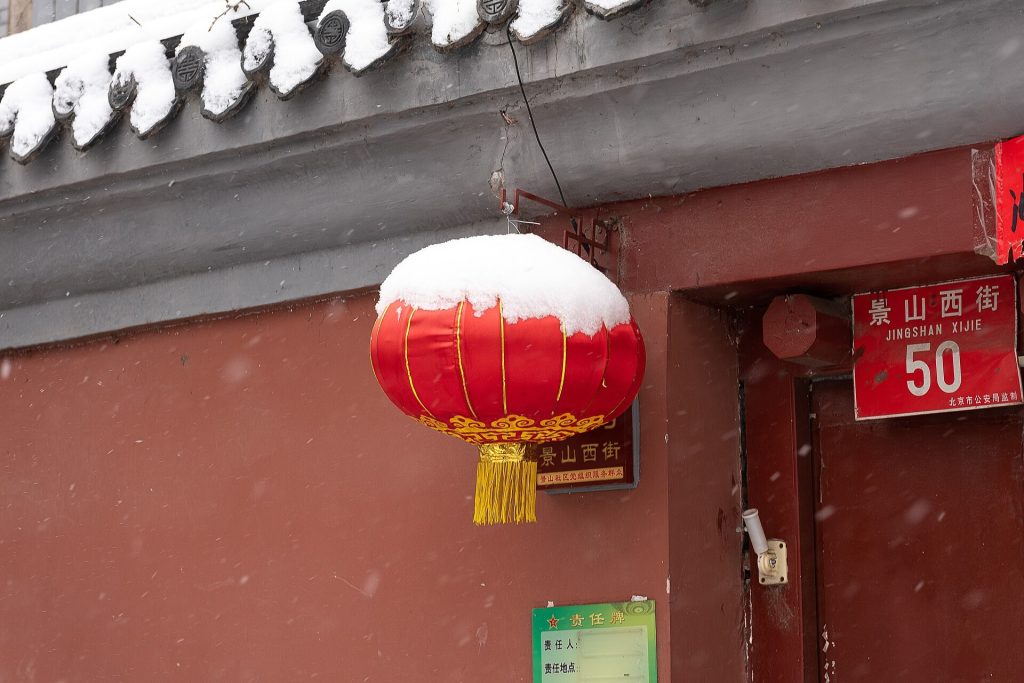
If you are in China for the last days of December 2026 and 1 January 2027, you will see lights, some red decorations, and a public holiday. That holiday is New Year’s Day, 元旦 (Yuán Dān). It is not Spring Festival, 春节 (Chūn Jié), the lunar new year that structures family travel, temple fairs, and the big railway rush. Visitors who treat 1 January as “Chinese New Year” plan the wrong week.
A general Spring Festival overview for visitors is Chinese New Year visitor overview. A Beijing late-December planner is the companion travel piece for the 1 January window. This page is the distinction, and what to re-check on official notices.
Two New Years, two scales
1 January is the start of the Gregorian calendar, a short official public holiday in China. Offices and some businesses close or run reduced hours; shops, restaurants, and many attractions stay open and can be busy; cities may put up lights and promotional displays, some of which already appeared in December (Christmas and December holiday lights). It can feel festive. It is usually not the week when an entire country tries to go home at once.
Spring Festival follows the lunar calendar and is the main family holiday. In 2027 it falls in February—you should confirm the official first day and the State Council holiday window on the live government announcement, not on a remembered blog table, and not on this page as if a date could not be restated officially. Around that holiday, many migrant workers and students travel, some smaller restaurants close, temple-fair culture appears, and red decorations take on a different intensity. Chunyun, the spring travel rush, is tied to that period, not to 1 January as such. We will not invent the official 2027 holiday roster or the official Chunyun start date; those belong on government and 12306 notices when they are published.
Chinese New Year’s Eve (除夕) is the family night of Spring Festival, not 31 December, though some hotels and restaurants will sell a Western-style New Year’s Eve dinner on 31 December because guests ask for it. Both can be pleasant. They are not the same ritual.
What this means for tickets and trains
For late December and 1 January 2027, plan as you would for a winter public-holiday weekend: official attraction hours may change, popular parks can be crowded, and some last trains or metro hours may be adjusted—check official metro and 12306 information for those nights. Changing or buying rail tickets still follows 12306 (12306 refund and change rules). It is usually a milder problem than February, but it is not a quiet Tuesday.
For February 2027, assume that long-distance trains and many flights around Spring Festival should be booked earlier, and that some businesses in hometowns or small streets will pause. Read Chinese New Year visitor overview and the official holiday notice when you plan that trip. Do not wait until 1 January to discover that the lunar new year is still weeks away—or already too close for the ticket you wanted.
Hotels may price 31 December and 1 January as a weekend or event night in some cities; they may price Spring Festival week differently again. We will not invent rates. Ask the hotel and official booking channels.
Atmosphere, greetings, and expectations
On 1 January, “Happy New Year” is understood. The full set of Spring Festival greetings, red envelopes, reunion dinners, and fireworks rules belongs to the lunar holiday and to local regulation. Do not arrive on 31 December expecting every family ritual you have read about for 春节. Conversely, do not arrive in February expecting an ordinary business week.
If you have only one winter visit and you must choose, decide whether you want a relatively ordinary city with a short New Year’s Day holiday and winter sights, or the intensity—beautiful and logistically harder—of Spring Festival. They are both China in winter. They are not interchangeable.
Recheck the official holiday announcement, 12306, and attraction pages as your dates approach. Lovely China orients visitors; we do not publish the government’s calendar for them.
Ground-level reminders for this topic
Stay flexible when a counter, app screen, or staff instruction disagrees with a blog. Lovely China orients travellers; live official pages and bilingual signs win. Keep China travel tools page, essential apps for foreigners, and Alipay and WeChat Pay hub bookmarked so logistics stay boring while you focus on the angle of this guide: how 1 January (元旦, New Year’s Day) differs from Spring Festival (春节, Lunar New Year) for visitors planning late December 2026 and early 2027, including holiday atmosphere, travel rush, and what is or is not yet Chunyun.
Related Lovely China reading
For payments, start with Alipay and WeChat Pay hub and WeChat Pay vs Alipay for tourists. For trains, keep high-speed rail first-timers guide and 12306 passport signup for foreigners handy. City hubs: Beijing first-visit guide, Shanghai first-visit guide. Connectivity: roaming vs local SIM honest guide, pocket Wi-Fi vs eSIM for China, offline maps for foreigners. Bookmark China travel tools page.
Practical checklist
- Confirm official rules on the relevant government, park, airline, or bank page near your travel week
- Screenshot bookings, tickets, and QR codes while you still have stable Wi-Fi
- Save hotel and attraction names in Chinese characters in your phone notes
- Carry passport, a backup payment method, and a small cash float (why cash is still needed)
- Test one small mobile payment before you rely on wallets at a gate or taxi
- Keep the China travel tools page page bookmarked for related Lovely China hubs
FAQ
Is this culture advice official?
No. Lovely China orients travellers. Verify live rules on official pages, apps, and counters near your travel week.
Will every city behave the same?
No. Airports, stations, parks, and markets differ. Use local signage and staff instructions when they conflict with a general guide.
What should I screenshot before I lose Wi-Fi?
Bookings, tickets, hotel Chinese address, pickup pins, and payment success screens.
Notes for late 2026 travellers
Late December 2026 and the New Year week into 2027 bring colder mornings, earlier sunsets, and holiday crowds in many city hubs. Pack real winter layers in the north, and leave extra time on weekends and around 1 January.
This article does not invent ticket prices, opening hours, processing times, consular fees, or official statistics. When a number matters, verify it on the official site, app screen, or ticket board near your travel week.
If an official rule page disagrees with this guide, follow the official page. Lovely China orients English-speaking travellers; we are not an immigration, banking, or medical authority.