Few traditions capture the aesthetic soul of China quite like calligraphy (shūfǎ, 书法). Far more than mere handwriting, it is considered the supreme art form of Chinese civilization—a moving meditation where breath, posture, ink density, and wrist momentum merge in a single, unyielding stroke. For travelers visiting China, stepping into the world of brush and ink offers a profound tactile connection to the country’s history. Whether you are seeking a meditative rainy-day activity in an autumn courtyard or hoping to purchase a meaningful souvenir, this practical guide covers everything you need to know about experiencing Chinese calligraphy firsthand, mastering the basic tools, and observing proper etiquette.
1. Where and How Travelers Can Try Brush Calligraphy
You do not need to be a seasoned artist or fluent in Chinese characters to experience the joy of brushwork. China’s major cultural hubs offer accessible ways for visitors to try their hand at the art, ranging from spontaneous outdoor encounters to structured, immersive workshops.
Hotel Cultural Desks and Heritage Programs
Many upscale boutique hotels, traditional courtyard inns (siheyuan), and international luxury properties in cities like Beijing, Xi’an, and Hangzhou feature in-house cultural desks or resident artists. These programs are designed specifically for novices. You can often book a complimentary or low-cost introductory session where an instructor guides you through holding the brush, mixing the ink, and writing your first character—often starting with basic pictographs like “mountain” (shān, 山) or “water” (shuǐ, 水).
Specialized Workshops and Studio Classes
If you want a deeper dive, local cultural centers and independent art studios in cities like Shanghai and Chengdu host short-form workshops for travelers. These sessions usually last two to three hours and cover the history of different scripts (such as seal script, regular script, and running script) before letting you practice on traditional rice paper. To navigate independently to these independent studios across bustling metropolitan transit networks, having reliable mobile data is essential. It is wise to secure a China SIM and eSIM for Foreign Visitors in 2026 before arrival so you can look up exact alleyway addresses on the go. Once you land, use How to Use Amap (Gaode Maps) in China as a Foreigner: 2026 English Guide to map walking routes through historic neighborhoods where traditional stationery shops hide.
Historic Stationery Streets and Public Parks
In cities like Beijing (near Liulichang Cultural Street) and Shanghai (near Fuzhou Road), historic stationery markets and antiquarian blocks hum with creative energy. Furthermore, early morning visitors to public parks will frequently spot local seniors practicing “water calligraphy” on stone pavement using giant sponge brushes. It is entirely acceptable to pause respectfully and watch; if you show genuine, quiet interest, a friendly practitioner may even hand you the brush to try a stroke. When purchasing workshop tickets or paying for calligraphy supplies at these local spots, seamless digital payment via Alipay and WeChat Pay for Foreign Visitors in China 2026 is universally accepted and expected.
2. Understanding the “Four Treasures of the Study” (Wénfáng Sìbǎo)
Before picking up a brush, it helps to understand the physical apparatus of the craft. Collectively known as the “Four Treasures of the Study” (wénfáng sìbǎo, 文房四宝), these four implements are traditionally revered as scholars’ companions:
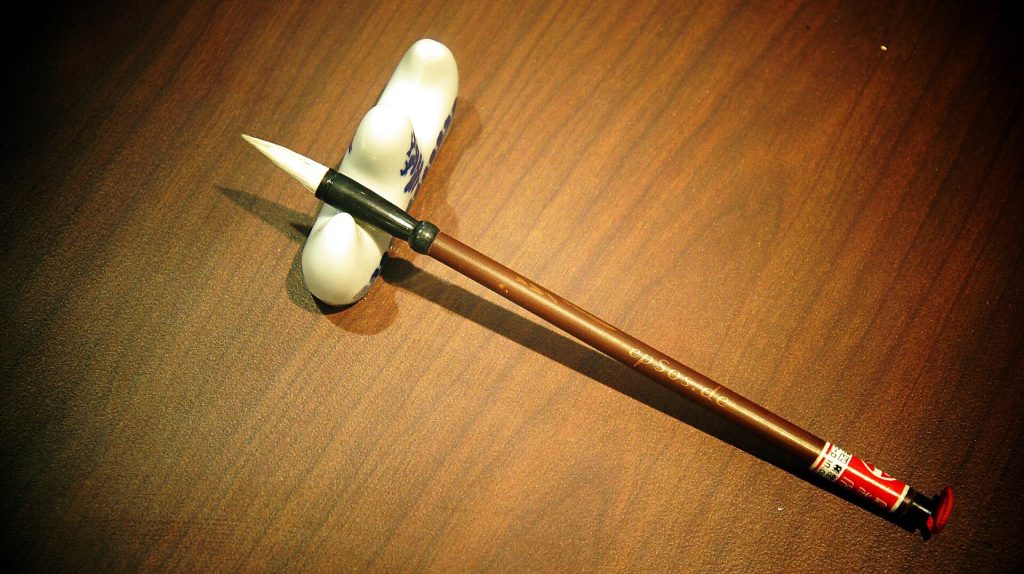
1. **The Brush (Bǐ, 笔):** Made from animal hair (such as goat, wolf, rabbit, or horse) bound tightly inside a bamboo or wooden shaft. A good brush boasts a fine, resilient tip that springs back to a sharp point after being soaked in water.
2. **The Ink (Mò, 墨):** Traditionally cast as solid ink sticks made from pine soot or lampblack mixed with animal glue. To use it, a few drops of water are added to an inkstone, and the stick is ground in slow, circular motions until the liquid turns a rich, velvety black. (Today, bottled liquid ink is widely used for convenience, but the grinding ritual remains deeply meditative).
3. **The Paper (Zhǐ, 纸):** Most commonly referred to as “rice paper” (xuānzhǐ, 宣纸), true calligraphy paper is renowned for its absorbency, texture, and longevity. It catches the ink instantly, bleeding gracefully to reveal the velocity and pressure of every stroke.
4. **The Inkstone (Yàn, 砚):** A heavy stone mortar—often carved from prized regional stones like the Duan or Cizhou varieties—used for grinding and holding ink. A fine inkstone has a slightly textured surface that grinds ink smoothly without damaging the ink stick.
3. Step-by-Step Practical Tips for Your First Calligraphy Session
Walking into your first calligraphy class can feel intimidating, but keeping a few core mechanical principles in mind will instantly improve your comfort and output:
* **The Proper Grip (Zhǐbǐfǎ):** Unlike Western pens, which are held at an angle with fingers resting on the barrel, a Chinese calligraphy brush is held vertically. Pinch the upper part of the brush shaft between your thumb and index finger, brace it with your middle finger, and keep your wrist relaxed and elevated off the table. This allows power to flow from your arm and shoulder rather than just your fingers.
* Mastering Breath and Posture: Sit up straight with both feet flat on the floor, keeping your chest open. Calligraphers coordinate their breathing with their brushstrokes. You inhale as you lift or position the brush, and exhale smoothly as you push the ink across the page with steady, measured pressure.
* **Start with the Eight Principles of Yong (Yǒngzì Bāfǎ):** Traditional learning hinges on the character yong (yǒng, 永), which means “eternity.” This single character incorporates eight distinct stroke types—dots, horizontal lines, vertical drops, hooks, and sweeps—serving as a foundational blueprint for all standard script characters.
* Embrace Imperfection: Do not worry about making mistakes. Traditional practitioners write hundreds of thousands of practice characters on newsprint or reusable water-canvas cloths before moving on to expensive xuan paper. Focus on the rhythm of the hand and the mindfulness of the moment.
4. Respectful Studio Behavior and Etiquette
Stepping into a traditional Chinese calligraphy studio or participating in a workshop requires mindfulness of local etiquette:
* Maintain Quiet Focus: Calligraphy is traditionally viewed as a form of moving meditation and self-cultivation. Keep conversation subdued and avoid loud mobile phone usage while others are working at their desks.
* Handle Tools with Respect: Never jam a brush vertically down into a table or leave it soaking carelessly in water for extended periods, as this bends the hairs permanently. When handing a brush or an ink stick to someone else, pass it with both hands, offering the handle or end toward them.
* Keep Your Workspace Tidy: Ink stains easily, and traditional xuan paper is delicate. Manage your liquid ink carefully, use felt pads underneath your paper to protect wooden tables, and place used brushes on dedicated porcelain rests rather than rolling them across shared surfaces.
5. Gift Etiquette for Calligraphy Pieces
If you commission a custom piece of calligraphy from an artist or receive a scroll as a gift during your travels, understanding Chinese Gift-Giving Etiquette for Visitors: Practical Do’s and Don’ts will ensure you respond with appropriate cultural grace.
* Accepting and Unveiling: Always accept scrolls, framed art, or books with both hands as a sign of respect. When opening a hanging scroll for the first time with the artist or giver present, take your time admiring the flow of the characters rather than rushing through it.
* Appreciating Content: Calligraphy pieces gifted to travelers often feature auspicious idioms wishing peace, longevity, prosperity, or perseverance (such as “Harmony brings wealth” or “Striving for self-improvement”). Ask the giver or instructor to translate the inscription and explain its historical nuances—hosts deeply appreciate when visitors take an active interest in the deeper meaning.
* Framing and Displaying: If you plan to gift a calligraphy piece you created or purchased to a host back home, ensure it is mounted correctly on silk brocade or framed cleanly. Avoid rolling it up permanently in a dark tube if it is meant to be displayed as a token of lasting friendship.
Frequently Asked Questions (FAQ)
Do I need to know how to speak or read Mandarin to take a calligraphy class?
Not at all. Most workshops designed for international visitors are taught with bilingual instruction (English and Mandarin) or guided visually. Because calligraphy treats characters as visual, sculptural forms of art, beginners focus purely on line weight, balance, and rhythm rather than linguistic memorization.
Can I bring calligraphy supplies (ink sticks and brushes) back home in my luggage?
Yes, brushes, inkstones, and solid ink sticks can be packed in either carry-on or checked luggage without issue. However, if you are carrying bottled liquid ink, note that airline liquid restrictions apply to carry-ons, so it is safer to pack liquid ink inside your checked baggage or purchase solid ink sticks, which are completely TSA-friendly.
How can I verify the authenticity of an antique calligraphy scroll purchased at a market?
Antique calligraphy scrolls found in open-air antique markets or souvenir shops are almost always modern reproductions or tourist-grade prints. If you are looking to purchase a genuine, hand-painted piece of fine art, look for reputable galleries in cultural hubs like Beijing’s Liulichang or Shanghai’s Fuzhou Road, where artists provide certificates of authenticity and artist signatures.