On 24 December in many Chinese cities, greengrocers and supermarket seasonal aisles fill with apples in gold paper, ribbon, and little gift boxes. They are sold as ping’an guo (平安果), “peace apples.” The pun is the whole custom: 苹 in 苹果, the everyday word for apple, sounds like 平 in 平安, meaning peace or safety. Giving someone an apple on Christmas Eve becomes a compact wish that they will be well.
24 December 2026 is a Thursday. It is not a Chinese public holiday, and neither is 25 December. Offices, metros, and most sights run on ordinary schedules unless they have published a special notice. This article is about the apple custom, not a rewrite of Christmas and December holiday lights, which is the lights-and-expectations piece for Beijing and Shanghai, and not New Year’s Day vs Spring Festival for visitors, which explains that New Year’s Day—1 January—is the nearby statutory holiday. We will not invent sales figures, official ceremonies, or prices.
A commercial custom, not a mandate
Peace apples are popular among students, young colleagues, and friends, and they are enthusiastically merchandised by malls and fruit chains. You are not required to participate. You will not be rude if you walk past the display. You will also not be rude if you buy one beautifully wrapped apple for a travel companion or a host, as long as you are not forcing a gesture onto someone who has already said they do not want a gift.
The apples themselves are ordinary fruit under the wrapping. Some are large, some are ordinary supermarket apples in extraordinary paper. A few vendors add a printed “peace” card or a cartoon. None of this is a religious rite, and none of it replaces whatever Christmas Eve dinner, church service, or quiet hotel night you had already planned. If you wish to attend a service, read the church’s own notice; we will not invent registration rules (Christmas and December holiday lights already makes that point in the city-lights context).
Because the custom is commercial, quality varies. A thoughtfully boxed apple from a busy supermarket is usually just an apple with good marketing. A street stall at a huge mark-up is still an apple. We will not tell you a “correct” price. If you care about the fruit, look at it the way you would look at any other apple: skin, firmness, smell. If you care about the joke, the wrapping is the joke.
Where travellers usually see them
From mid-December, and especially in the days around the 24th, you will notice the displays in:
- Shopping-mall atriums and supermarket seasonal stacks in large cities.
- Fruit shops that already sell gift fruit, now with Christmas colours added to the usual language of “peace” and “safe journey.”
- Hotel gift corners, sometimes, and convenience stores in international neighbourhoods.
You may also see colleagues exchanging them at work on the 24th, because it is a normal Thursday with a seasonal snack on the desk. That is useful context if you are an expat in an office. It is optional context if you are only in town for a week of sightseeing.
Payment is ordinary mobile pay or the shop’s usual till (Alipay and WeChat Pay hub). A wrapped apple is not a special customs category. If you want to carry one in a bag through a metro gate, treat it as fruit in a box, not as a ceremony. Eating it the same evening is allowed and, honestly, sensible.
How this sits on the winter calendar
Winter Solstice, 冬至, has its own foods and its own guide (Winter Solstice (Dongzhi) guide for 2026 if the key exists; otherwise the published Dongzhi article is the cousin). Spring Festival gift culture is later and much larger. New Year’s Day on 1 January is a public holiday with travel consequences (New Year’s Day vs Spring Festival for visitors). Christmas Eve sits beside these as a lighter, imported, merchandised moment that Chinese cities have made their own through a pun.
The pun is gentle, and it is meant kindly. You do not need to over-explain it. If a shop assistant offers you a boxed apple, you can smile, buy it, or say no thank you. If a Chinese friend hands you one, a simple thank you is enough. A return apple is welcome but not required, especially if you only met that afternoon.
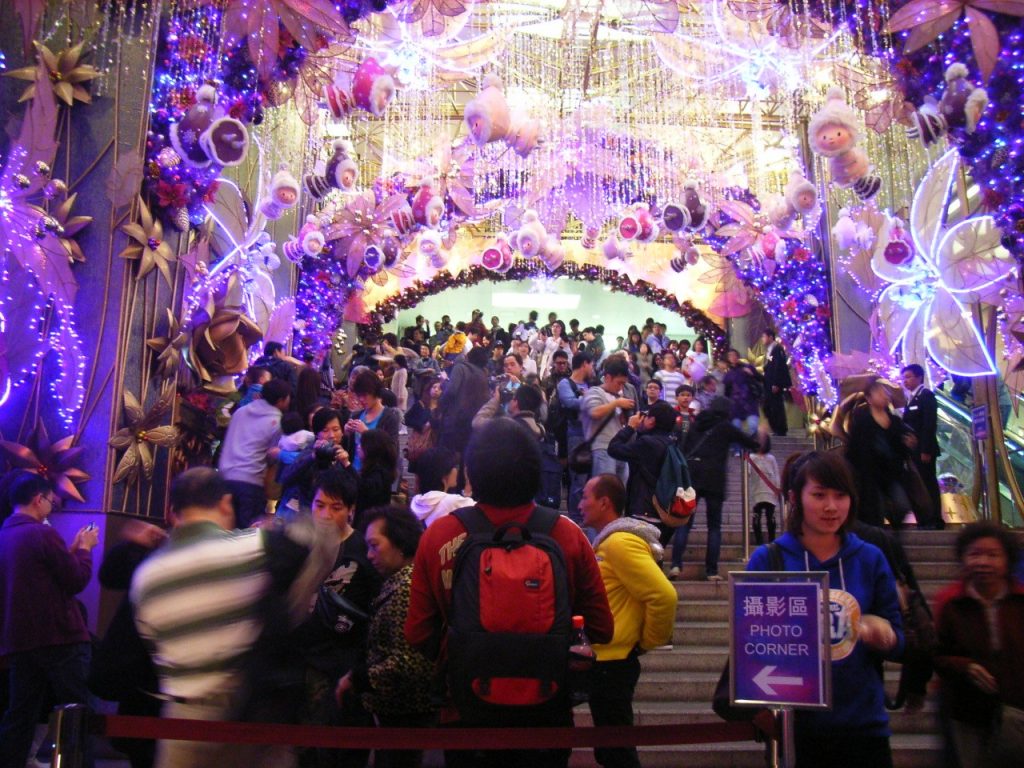
Lights, trees, and mall music will still be there, and they are described in Christmas and December holiday lights. Use that article when you want to know what a December evening in a big city feels like. Use this one when you are staring at a pyramid of gold apples and wondering whether you have missed a national ritual. You have not. You have found a seasonal stall with a good joke, on an ordinary Thursday, a week before the holiday that actually changes train tickets.
Travelling with an apple, and what not to overthink
If you buy a boxed apple as a small gift for a host, carry it as you would any fruit box: upright, in a bag that will not crush it on the metro, and not in a checked bag if you want the wrapping to arrive intact. You do not need a ceremony at the door. Hand it over, say it is a Christmas Eve apple, and move on to tea.
Related Lovely China reading
For payments, start with Alipay and WeChat Pay hub and WeChat Pay vs Alipay for tourists. For trains, keep high-speed rail first-timers guide and 12306 passport signup for foreigners handy. City hubs: Beijing first-visit guide, Shanghai first-visit guide. Connectivity: roaming vs local SIM honest guide, pocket Wi-Fi vs eSIM for China, offline maps for foreigners. Bookmark China travel tools page.
Practical checklist
- Confirm official rules on the relevant government, park, airline, or bank page near your travel week
- Screenshot bookings, tickets, and QR codes while you still have stable Wi-Fi
- Save hotel and attraction names in Chinese characters in your phone notes
- Carry passport, a backup payment method, and a small cash float (why cash is still needed)
- Test one small mobile payment before you rely on wallets at a gate or taxi
- Keep China travel tools page bookmarked for related Lovely China hubs
FAQ
What is a peace apple?
A ping’an guo (平安果) is an apple, often gift-wrapped, sold and given around Christmas Eve because 苹 in 苹果 echoes 平安, a wish for peace or safety. It is a popular commercial custom, not a public-holiday ritual.
Is 24 or 25 December a public holiday in China?
No. 24 December 2026 is a Thursday and 25 December is a Friday, both ordinary calendar days unless a specific shop or office publishes its own notice. 1 January is the nearby statutory holiday.
Do I have to give someone an apple?
No. Participation is optional. A boxed apple can be a kind small gift for a friend or host; a simple thank you is enough if you receive one.
Is this the same as the Beijing and Shanghai Christmas-lights article?
No. That piece is about December lights, mall atmosphere, and the fact that Christmas Day is not a national holiday. This one is specifically about the peace-apple custom on Christmas Eve.
Notes for late 2026 travellers
Late December 2026 and the New Year week into 2027 bring colder mornings, earlier sunsets, and holiday crowds in many city hubs. Pack real winter layers in the north, and leave extra time on weekends and around 1 January.
This article does not invent ticket prices, opening hours, processing times, consular fees, or official statistics. When a number matters, verify it on the official site, app screen, or ticket board near your travel week.
If an official rule page disagrees with this guide, follow the official page. Lovely China orients English-speaking travellers; we are not an immigration, banking, or medical authority.