If you are planning a trip to Northeast China ahead of the massive peak crowds, visiting Harbin in late November 2026 offers a fascinating glimpse into the region’s transformation. While the world-famous Harbin International Ice and Snow Sculpture Festival officially scales up for its grand opening in early January, late November serves as the city’s atmospheric early-winter preview.
—
Is Late November a Good Time to Visit Harbin?
> Direct Answer: Yes, late November is an ideal time to visit Harbin if you prefer fewer crowds, lower accommodation rates, and a chance to experience authentic local winter life before peak-season tourism spikes. However, you should note that the massive Harbin Ice and Snow World theme park is usually still under construction during this window, meaning your trip will focus on early ice formation, snowy streetscapes, and Russian-influenced architecture rather than completed mega-castles.
During late November, daytime temperatures typically hover below freezing, ranging roughly from -1°C to -11°C (30°F to 13°F). The Songhua River begins its seasonal freeze, paving the way for local winter activities, while Central Street (Zhongyang Street) glows under early winter snow flurries and festive evening lights. For travelers combining their journey with other regional hubs, it pairs wonderfully with trips southward, such as exploring Beijing in November 2026 or catching milder late autumn weather down along the coast.
—
What to Expect: Early Ice and City Highlights
Late November is defined by the steady onset of winter. The city takes on a distinct Siberian chill, and everyday life adapts quickly to the sub-zero environment.
1. The Songhua River Transition
As November progresses, the mighty Songhua River running past the city begins freezing over solid. While it may not yet be fully stabilized for heavy vehicle traffic or large-scale amusement parks, locals and visitors often venture cautiously onto the designated shoreline sections to witness the initial sheets of ice and early winter recreation.
* What to Experience: Watch locals test the early ice edges, catch amateur ice-skaters gliding on cleared patches near the shore, and observe the initial stages of ice harvesting where blocks are sawed out for early sculpture testing.
2. Strolling Down Central Street (Zhongyang Street)
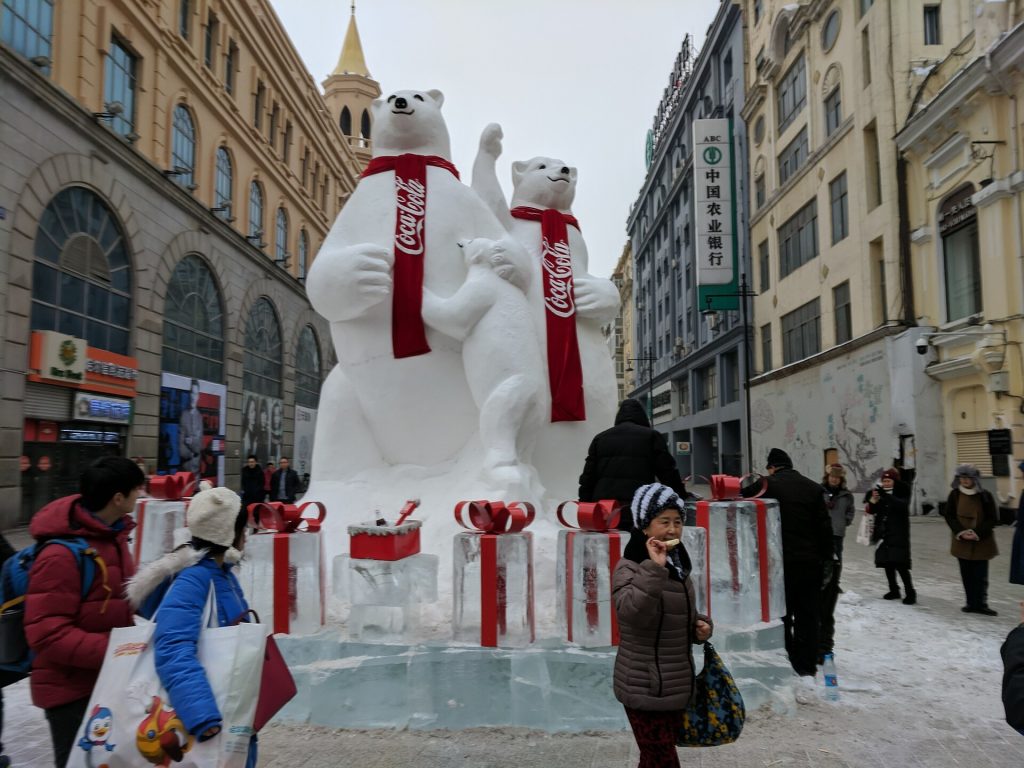
Harbin’s famous pedestrian street is magnificent in late November. Lined with European-style 19th-century architecture, the street comes alive with vendors selling local winter treats. You can bite into a famous frozen pear (qiangli) or enjoy a classic local ice pop while surrounded by sub-zero air—a quintessential Harbin tradition.
Architectural Highlights: Look out for Renaissance and Baroque facades, historic bread shops selling traditional Russian liubaye* (large sourdough loaves), and glowing neon street lamps that turn the cobblestones into a romantic winter postcard scene as early dusk sets in around 4:00 PM.
3. Russian Architecture and Saint Sophia Cathedral
The striking green domes of Saint Sophia Cathedral look even more enchanting dusted with fresh November snow. Because late November experiences far fewer international tourists than January, you can enjoy these architectural landmarks at a peaceful, unhurried pace.
* Photography & Interior Tips: Take time to appreciate the red-brick Byzantine architecture from multiple angles in the public square. Step inside the cathedral (now functioning as a municipal architectural art museum) to view historical photo exhibits detailing Harbin’s unique multicultural railway heritage.
—
Actionable Packing, Booking, and Tech Tips
Preparing correctly for Harbin’s early winter bite is essential. A miscalculated layer can cut a sightseeing walk short.
Master the Art of Layering: Pack heavy-duty thermal base layers (merino wool or high-tech synthetics), fleece mid-layers, and a windproof, down-filled outer parka rated for sub-zero temperatures. Do not skip thermal socks, fleece-lined snow boots with high traction (essential for icy cobblestones), windproof touchscreen-compatible gloves, and a fur-lined trapper hat (ushanka*) that thoroughly covers your ears.
* Protect Your Electronics: Extreme cold drains smartphone and camera batteries rapidly. Keep your devices in interior coat pockets close to your body heat, and always carry a high-capacity portable power bank wrapped in a small cloth pouch or kept warm.
* Prep Your Digital Payments: Setting up essential apps before arrival ensures seamless travel across China. Follow guides like Alipay and WeChat Pay for foreign visitors to handle subway tickets, taxis, and street food smoothly. Linking an international Visa or Mastercard to Alipay/WeChat Pay beforehand is a lifesaver.
* Stay Connected: Reliable mobile data is crucial for navigation and translation. Look into a China SIM and eSIM for foreign visitors 2026 to get connected right upon landing so you can bypass network restrictions and use mapping apps efficiently.
* Transit and Entry Planning: If you are routing your trip internationally through major Chinese hubs to catch a connection north, check current policies via the China 240-Hour Visa-Free Transit 2026 overview to see if you qualify for a streamlined stopover without needing a standard advance visa.
—
Frequently Asked Questions
Is the Ice and Snow World open in late November?
No. The massive Ice and Snow World theme park requires weeks of carving blocks harvested from the Songhua River and typically opens its gates around mid-to-late December. Late November visitors will see preparation and early construction, but not the finished park.
How cold does Harbin get in November?
Average temperatures range from highs around -1°C (30°F) to lows dropping down to -11°C (13°F). Wind chill can make it feel significantly colder, so proper windproof outerwear is non-negotiable.
Do I need cash, or can I use my phone for everything?
Cash is rarely used in Harbin today. Almost all vendors, restaurants, and transport systems operate via digital wallets. We recommend setting up Alipay or WeChat Pay linked to an international credit card prior to departure.
How do I get to Harbin from Beijing?
Harbin is easily accessible from Beijing via high-speed bullet trains (taking roughly 5 to 7 hours depending on the train class and route) or a short 2-hour domestic flight, making it exceptionally convenient to weave into a broader northern China itinerary.
What local food should I try in the cold weather?
Do not miss authentic Northeastern Chinese (Dongbei) cuisine, which features hearty, warming dishes like 锅包肉 (guobaorou – sweet and sour crispy pork), grounded stews with bean-curd, vermicelli, and pork (zhu dun rou), and steaming bowls of freshly boiled pork and cabbage dumplings (jiaozi). Pair them with a warm cup of hot corn juice or local iced treats for contrast!
—
<!–title: Harbin in Late November 2026: Early Winter, Ice Preview and What to Pack
slug: harbin-early-winter-november-2026
category: Travel
focus: Harbin late November
meta: Harbin in late November 2026: when ice starts on the Songhua, Central Street tips, what to wear before the full Ice Festival, and getting around in the cold.
cover_alt: Ice and snow sculpture beside Harbin’s Central Street in early winter
<!–
title: Harbin in Late November 2026: Early Winter, Ice Preview and What to Pack
slug: harbin-early-winter-november-2026
category: Travel
focus: Harbin late November
meta: Harbin in late November 2026: when ice starts on the Songhua, Central Street tips, what to wear before the full Ice Festival, and getting around in the cold.
cover_alt: Ice and snow sculpture beside Harbin’s Central Street in early winter
cover_credit: Photo: 闫恩铭 / Enming Yan / Wikimedia Commons (CC BY-SA 4.0)
–>
cover_credit: Photo: 闫恩铭 / Enming Yan / Wikimedia Commons (CC BY-SA 4.0)–>