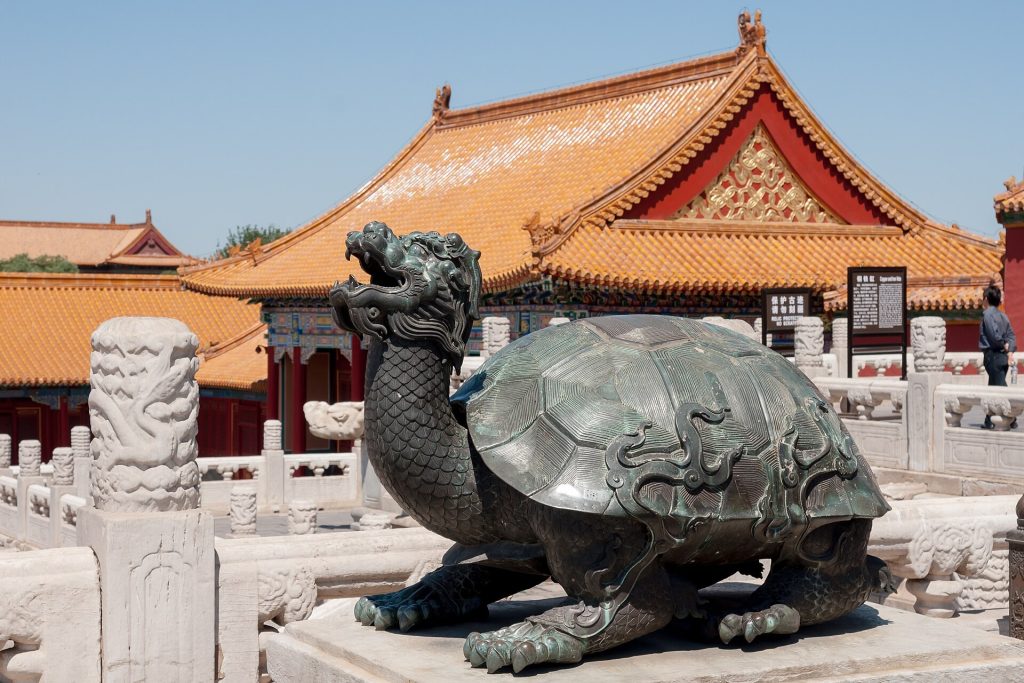
Welcome to late autumn 2026 in Beijing. The sweltering summer heat is gone, the intense Golden Week crowds have dispersed, and the city’s golden ginkgo trees are beginning to frame the towering crimson walls of the Forbidden City.
Late autumn brings crisp light and golden foliage.. Source: CGTN
Officially known as the Palace Museum, this sprawling 72-hectare imperial complex is a marvel of Ming and Qing dynasty architecture. Home to 24 emperors over nearly 500 years, it contains roughly 980 surviving buildings and over 8,700 rooms. Visiting in late October or November is arguably the best time of year: the crisp autumn light brings out the dazzling brilliance of the yellow glazed roof tiles, and the cooler temperatures make navigating the massive courtyards incredibly pleasant.
But a visit here requires serious strategy. The days of showing up and buying a ticket at the gate are long gone. Here is your comprehensive, expanded guide to conquering the Palace Museum as an English-speaking visitor in 2026.
Booking Your Ticket: The 2026 Reality
Let’s get one thing straight: there are absolutely zero walk-up ticket sales at the Forbidden City.
Access is tightly controlled through a real-name digital booking system designed to manage the daily capacity limits. Tickets are released exactly 7 days in advance at 8:00 PM Beijing time. Because this is China’s most iconic high-demand sight, tickets can vanish in minutes, even in the quieter late autumn season.
Where to Book: Use only the official Palace Museum English booking website or their official WeChat mini-program. Do not rely on third-party scalpers, as ticket transfers are heavily restricted and often result in denied entry.
What You Need: Your passport details. Your passport is your ticket—you will swipe the physical booklet at the turnstiles to enter. Ensure the name and passport number you enter online match your physical document perfectly.
Morning vs. Afternoon Tickets: When booking, you must select either a morning entry (typically before 12:00 PM) or an afternoon entry. Afternoon tickets are often slightly easier to secure and offer beautiful golden hour photography, but give you less total time inside the grounds.
Payment: Make sure your mobile payment methods are set up and verified well before the 8:00 PM release time so you aren’t delayed at checkout. If you haven’t set this up yet, read our guide to Alipay and WeChat Pay for Foreign Visitors in China 2026.
Pricing: Standard adult admission is roughly 60 RMB during the peak season (April–October) and 40 RMB during the off-season (November–March). The Treasure Gallery and Clock Gallery require an additional 10 RMB supplement each.
Arriving and Entering: The Meridian Gate Flow
All visitors must enter the Forbidden City through the Meridian Gate (Wu Men) in the south and exit via the Gate of Divine Prowess (Shenwu Men) in the north or the East Prosperity Gate (Donghua Men) in the east. The flow is strictly one-way from south to north.
Combining with Tiananmen Square
The Meridian Gate is located just north of Tiananmen Square. If you plan to see Tiananmen Square on the same day, be aware that the square also requires its own separate, advance (free) reservation. Navigating the security checkpoints around Tiananmen can easily eat up an hour, especially on weekends.
The Alternative Approaches
If you are skipping the square or want to avoid its massive security bottlenecks, approach the Meridian Gate via the Donghua Men (East) or Xihua Men (West) avenues that run alongside the palace moat. To find the most efficient walking routes from the subway (usually Subway Line 1 to Tiananmen East or West) to the correct security checkpoints, we highly recommend using local navigation—see How to Use Amap (Gaode Maps) in China as a Foreigner: 2026 English Guide.
Bags and Security
Security is airport-style and very strict. Standard daypacks and water bottles are fine, but lighters, matches, large commercial tripods, and oversized luggage are prohibited. If you bring a large suitcase, you will have to check it at the Meridian Gate and pay to have it shuttled to the northern exit, which can delay your departure significantly. Travel light to save time.
Choosing Your Route
The Forbidden City is unfathomably huge. Attempting to see every room will leave you exhausted and overwhelmed. Choose a route based on your stamina and schedule.
The Half-Day Highlight Reel (2–3 Hours)
If you are short on time or prone to “temple fatigue,” stick to the Central Axis. This route hits the grand ceremonial halls and the Emperor’s primary living quarters.
The Flow: Meridian Gate → Gate of Supreme Harmony → The Three Great Halls (Hall of Supreme Harmony, Hall of Central Harmony, Hall of Preserving Harmony) → The Inner Court (Palace of Heavenly Purity) → The Imperial Garden → Gate of Divine Prowess (Exit).
The Vibe: Monumental, awe-inspiring, and crowded. Even in November, this axis sees the most foot traffic.
The Hall of Supreme Harmony is the largest and most important structure on the Central Axis.. Source: Wikipedia
The Full-Day Deep Dive (4–6 Hours)
To truly appreciate the Palace Museum, veer off the central axis into the Eastern and Western Palaces. These narrower alleys and smaller courtyards once housed the empresses, concubines, and imperial staff. They offer a much quieter, more intimate look at court life.
Palace of Prolonging Happiness (Yanxi Gong): Located in the east, this courtyard features an unfinished, Western-style crystal palace (Lingzhao Xuan) built in 1909. It stands in stark contrast to the surrounding traditional architecture and is a must-see.
The Treasure Gallery: Requires a small supplemental ticket. It houses incredible imperial artifacts, including massive jade carvings, solid gold chimes, and intricate crowns.
The Clock and Watch Gallery: Also requires a supplemental ticket. The intricate 18th-century European and Chinese mechanical clocks here are mind-boggling, with many featuring moving automata.
The Treasure Gallery showcases the immense wealth of the Qing imperial court.. Source: China Discovery
Understanding the Architecture: Roof Guardians & Symbolism
As you walk the grounds, look up. The architectural details of the Forbidden City are steeped in rigid imperial hierarchy and cosmic symbolism.
Imperial roof guardians dictate the status of the building beneath them.. Source: Wikipedia
The Roof Guardians (Zou Shou): On the corners of the sloping roofs, you will see lines of small, mythical beast statues led by a man riding a phoenix. The number of beasts indicates the importance of the building. The Hall of Supreme Harmony is the only building in China permitted to have 10 beasts, signifying its absolute supremacy.
Colors of the Empire: The yellow glazed roof tiles were reserved exclusively for the emperor (representing the earth element and the center of the universe). The crimson walls symbolize happiness, wealth, and the sun.
Door Nails: Imperial gates feature golden door nails arranged in 9 rows of 9 (9 being the highest single-digit number, representing the emperor).
Guided Tours, Audio Guides, and Navigating History
Staring at beautiful buildings only goes so far without the historical context of the political betrayals, royal successions, and daily life that took place within them.
Official Audio Guides: As soon as you pass through the Meridian Gate, you will see kiosks renting official GPS-triggered audio guides. These are highly recommended. Available in dozens of languages, the device hangs around your neck and automatically plays the relevant historical narration as you step into different courtyards.
Hiring a Guide: If you prefer a human touch, licensed English-speaking guides congregate near the entrance. Negotiate the price and route beforehand. A good private guide can point out hidden details—like the massive single-stone dragon carvings on the staircases—that you might otherwise walk right past.
Accessibility, Crowds, and Practical Tips
Late Autumn Lighting: The golden hour in November hits the yellow roofs beautifully by 3:00 PM. If you are a photographer, an afternoon ticket offers the most dramatic shadows and rich colors.
Accessibility: The Forbidden City has made great strides in accessibility in recent years. Wooden ramps have been installed over the famously high wooden door thresholds along the central axis to accommodate wheelchairs and strollers. However, be aware that the ancient, uneven stone paving in the vast courtyards can still be bumpy.
Connectivity: You will rely on your smartphone for everything—from showing your booking confirmation and scanning QR codes, to buying a quick coffee inside the palace grounds. Ensure you are connected the moment you arrive. Get sorted with a China SIM and eSIM for Foreign Visitors in 2026.
Restrooms & Facilities: Clean public restrooms are well-signposted (often tucked into the side alleys just off the main courtyards).
Eating, Drinking, and Taking Breaks
Exploring 72 hectares is a workout. You will need to pace yourself.
Inside the Walls: There are cafes and souvenir shops scattered throughout. Near the Imperial Garden at the northern end, you can buy wildly popular palace-themed 3D ice cream bars, shaped like the roof guardians or palace gates (matcha and peach are excellent choices). You are also allowed to bring your own water and simple snacks, which is highly recommended since inside dining options are relatively expensive and limited to light fare.
The Corner Tower Cafe: Located just outside the northern Gate of Divine Prowess, this highly photogenic cafe serves imperial-themed lattes (like the “Kangxi” latte) in cups decorated with traditional artwork. It’s the perfect place to rest your feet after exiting the complex.
Beyond Beijing
If the crisp autumn weather in the capital has you inspired, November is one of the best months to explore further afield without the intense summer heat or monsoon rains.
If you are heading south to continue your journey through China’s imperial history, consider pairing your Beijing trip with a visit to the Ming-era sites of the south. Check out our guide to Nanjing in November 2026: The Ultimate City Guide for English-Speaking Travelers for another historic capital that puts on a spectacular display of autumn foliage and offers a deeper look at the early Ming dynasty before the capital moved to Beijing.
Frequently Asked Questions (FAQ)
Is the Forbidden City open every day?
No. The Palace Museum is strictly closed on Mondays year-round (except for national statutory holidays). Plan your itinerary accordingly.
How much time should I allocate for my visit?
At an absolute minimum, you need 2.5 to 3 hours just to walk the Central Axis from south to north. To see the eastern and western palaces, the Treasure Gallery, and take a reasonable pace, budget 4 to 6 hours.
Can I wear traditional Chinese clothing (Hanfu) inside?
Yes! It is incredibly popular for both domestic and international tourists to rent traditional Qing or Ming dynasty clothing (Hanfu) for photoshoots inside the palace. Just ensure your footwear is comfortable, as you will be walking several miles.
Can I leave and re-enter on the same ticket?
No. The ticket is single-entry. Once you exit through the northern or eastern gates, you cannot re-enter the complex. Make sure you have seen everything you want to see before passing through the final exit turnstiles.
Is there a dress code?
There is no strict formal dress code, but visitors are expected to dress respectfully (no overly revealing clothing or garments with offensive slogans). The most important “dress code” is comfortable walking shoes—the distances are vast and the ancient stone floors are unforgiving.
Want tips for exploring Tiananmen Square before entering?
Yes