Arriving at a massive aviation hub like Beijing or Shanghai can feel overwhelming for first-time visitors and expats. Once you clear immigration—often supported by the National Immigration Administration’s streamlined entry procedures—your first major logistics test is choosing how to reach the city center. While taxis and ride-hailing services are available, public transit remains the backbone of urban movement. Among public options, the classic choice comes down to the airport bus versus the rail and metro network. Weighing these two modes requires balancing luggage volume, your arrival window, and local payment readiness.
The Core Dilemma: Airport Bus vs. Metro in Major Hubs
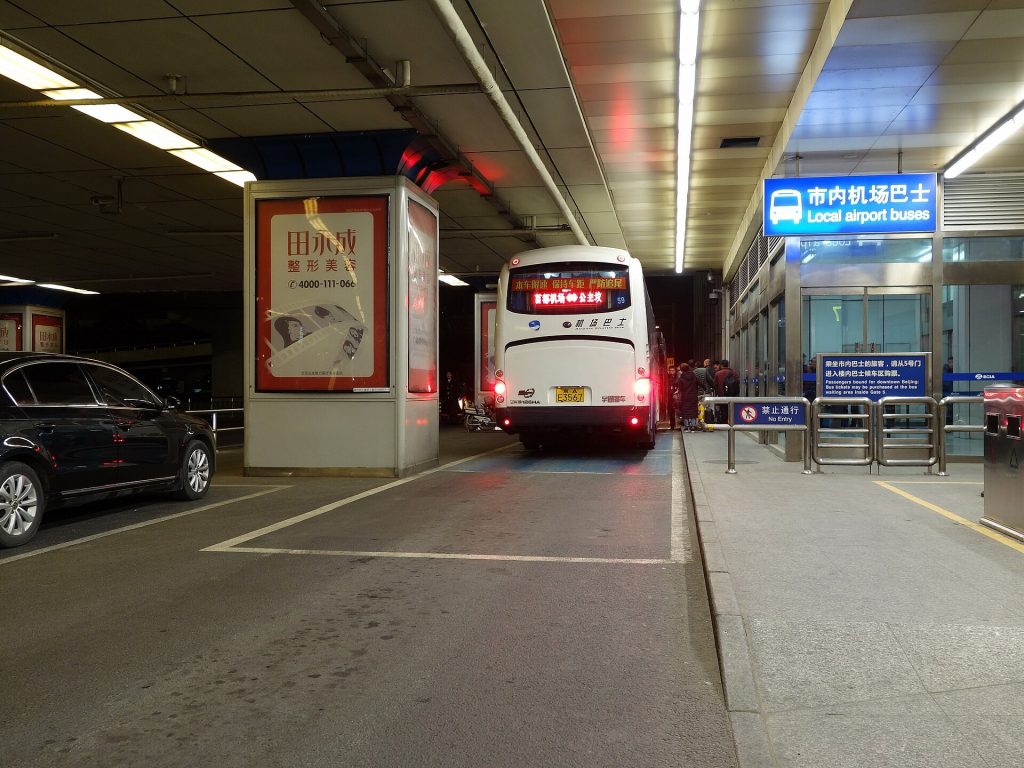
Both airport buses and rapid metro links serve major Chinese gateways, yet they cater to very different travel styles. Rail lines offer punctuality and freedom from street-level traffic congestion. However, they frequently require physical navigation through sprawling subterranean interchanges and multiple line transfers. Airport buses, on the other hand, provide a single-seat ride to specific district terminals or major transit nodes, shielding you from heavy underground walking. Understanding how these features interact with your itinerary is essential for a smooth landing during the winter travel season of November and December 2026.
Decision Framework: Four Pillars for Foreign Travellers
To choose between an airport bus and a metro system without second-guessing yourself on arrival, evaluate your journey through four practical decision pillars.
Luggage Bulk and Station Transfers
If you are travelling light with a single backpack or cabin trolley, the metro is usually seamless. You can tap through turnstiles and slide onto trains quickly. Conversely, traveling with multiple large suitcases transforms a multi-tier metro transfer into an exhausting obstacle course. Elevators can be crowded, and walking through long corridors between platforms tests your patience. An airport bus minimizes internal station transfers, allowing you to load your heavy bags once in the terminal bay and retrieve them at your destination stop.
Time of Day and Late-Night Arrivals
Timing dictates your transit viability. If your flight touches down during peak morning or evening rush hours, rail transit protects you from surface gridlock. Subways run on fixed headways, ensuring predictable travel times. However, if you arrive late at night—a common scenario for international long-haul flights landing in Beijing or Shanghai—standard metro lines may have already ceased operations. In these instances, checking specialized night shuttle buses or planning alternative ground transport is crucial. For detailed insights into regional hub choices, review our guide on Beijing Capital vs Daxing airport.
Hotel Location Relative to Terminals and Stations
Your final destination anchors your choice. If your hotel sits directly adjacent to a major metro station along key arterial lines, rail transit drops you close without traffic exposure. If your accommodation is situated in a quieter residential district or near a major bus terminal, an airport bus route might drop you blocks closer to your door than a remote metro stop, reducing your final-mile walk. For coastal hub specifics, see our overview on Pudong airport to city.
Payment Readiness and Ticketing
Navigating Chinese transit ticketing has evolved significantly. While traditional ticket windows and multilingual automated kiosks accept various payment methods, modern digital integration is standard. Setting up your smartphone apps in advance—or exploring options detailed under tourist metro cards vs mobile pay—ensures you can breeze through transit gates. Bus tickets can typically be purchased at designated airport counters or via official mini-programs, whereas metro systems support contactless mobile transit codes or single-journey tokens.
Hub Comparisons: Beijing and Shanghai Realities
China’s premier megacities handle transit infrastructure on a massive scale, yet each presents unique operational nuances.
Beijing (PEK and PKX)
Beijing Capital International Airport (PEK) and Beijing Daxing International Airport (PKX) connect to the urban core via specialized airport express rail links and extensive shuttle bus fleets. PEK sits closer to northeastern residential and commercial districts, making rapid rail connections swift for travelers heading toward eastern hubs. PKX, located further south, utilizes high-speed airport rail lines that bridge the distance to major urban interchange stations rapidly. When selecting between buses and trains here, account for the vast terminal layouts; walking from arrival gates to transit boarding points takes dedicated time.
Shanghai (PVG and SHA)
Shanghai Pudong International Airport (PVG) and Shanghai Hongqiao International Airport (SHA) offer distinct transit ecosystems. Hongqiao integrates seamlessly with major rail and metro arteries, making underground transit exceptionally direct for downtown-bound passengers. Pudong, situated further east, offers direct metro line access as well as specialized express options. Choosing a bus from Pudong can be advantageous if your destination matches a specific suburban or district route, bypassing downtown station transfers entirely.
Practical Step-by-Step Checklist for Arrival Week
Follow this concise action plan before and during your travel week to ensure a trouble-free transit experience:
Verify Your Airport Code: Check your flight ticket to confirm whether you land at PEK, PKX, PVG, or SHA, as transit routes differ completely between airports.
Check Official Timetables: Consult the Shanghai Metro portal, Beijing Municipal Government transport updates, or airport websites close to your travel dates for any winter schedule updates.
Prepare Digital Payment Tools: Set up your mobile payment accounts or secure a physical transit card before heading into station crowds.
Inspect Hotel Proximity: Map your hotel’s exact address against local metro line exits and airport bus drop-off points to minimize heavy luggage hauling.
FAQ
Is the airport bus better than the metro if I don’t speak Chinese?
Both systems feature bilingual signage in English and Chinese, alongside digital route maps. The metro is generally easier to navigate independently because automated platforms display clear station sequences. Airport buses require you to identify the correct route number and monitor your stops closely, though airport service counters usually have English-speaking staff to point you to the right boarding bay.
What happens if my flight lands after the metro closes in winter?
Related Lovely China reading
For payments, start with Alipay and WeChat Pay hub and WeChat Pay vs Alipay for tourists. For trains, keep high-speed rail first-timers guide and 12306 passport signup for foreigners handy. City hubs: Beijing first-visit guide, Shanghai first-visit guide. Connectivity: roaming vs local SIM honest guide, pocket Wi-Fi vs eSIM for China, offline maps for foreigners. Bookmark China travel tools page.
Practical checklist
- Confirm official rules on the relevant government, park, airline, or bank page near your travel week
- Screenshot bookings, tickets, and QR codes while you still have stable Wi-Fi
- Save hotel and attraction names in Chinese characters in your phone notes
- Carry passport, a backup payment method, and a small cash float (why cash is still needed)
- Test one small mobile payment before you rely on wallets at a gate or taxi
- Keep the China travel tools page page bookmarked for related Lovely China hubs
FAQ
Is this travel advice official?
No. Lovely China orients travellers. Verify live rules on official pages, apps, and counters near your travel week.
Will every city behave the same?
No. Airports, stations, parks, and markets differ. Use local signage and staff instructions when they conflict with a general guide.
What should I screenshot before I lose Wi-Fi?
Bookings, tickets, hotel Chinese address, pickup pins, and payment success screens.
Notes for late 2026 travellers
November and early December bring cooler mornings, earlier sunsets, and comfortable walking weather across much of eastern and central China. Pack layers and leave extra time on clear weekends at popular sights.
This article does not invent ticket prices, opening hours, processing times, consular fees, or official statistics. When a number matters, verify it on the official site, app screen, or ticket board near your travel week.
If an official rule page disagrees with this guide, follow the official page. Lovely China orients English-speaking travellers; we are not an immigration, banking, or medical authority.