When you land in China, expecting your digital wallet to work seamlessly only to see a red “payment failed” or card rejection screen can cause instant stress. While linking international credit cards has become much smoother, foreign-card verification and transaction hiccups still happen. Understanding why these errors occur—and having reliable payment backups ready—will keep your November or December trip running smoothly without a hitch.
Common Reasons Why Alipay Foreign-Card Verification Fails
When an international card fails during binding or checkout, the issue usually stems from automated security layers or data mismatches rather than a permanent block.
Home Bank Security Blocks and 3D Secure (3DS): Many international banks automatically flag transactions originating from China as suspicious. If your card lacks active 3D Secure authentication or if your issuer’s automated fraud detection blocks the initial handshake, the verification will abort.
Name Mismatch Discrepancies: Alipay requires the name on your linked foreign card to match your verified passport identity. Even minor formatting differences—such as omitted middle names, inverted given and family names, or abbreviations—will trigger an instant rejection.
Unsupported Card Networks and BINs: Although major global networks like Visa, Mastercard, and American Express are widely accepted, specific regional debit cards, prepaid cards, or corporate cards may use Bank Identification Numbers (BINs) that the system cannot process.
Network Timeouts and Poor Connectivity: Switching between airport Wi-Fi, roaming networks, or unstable connections mid-verification can interrupt the encrypted token exchange between Alipay and your home bank.
Practical Troubleshooting Steps and Safe Retries
If your card verification fails, avoid repeatedly slamming the submit button, as consecutive failed attempts can trigger temporary security lockouts. Instead, work through these concrete steps:
Verify on Stable Networks: Move to a stable Wi-Fi network or ensure your international data roaming is strong before attempting to re-add your card.
Contact Your Card Issuer: Call or chat with your home bank’s support team. Confirm that international e-commerce and digital wallet linking are enabled, and ask if they blocked an inbound authorization request from China.
Carefully Re-Enter Card Details: Remove the failing card from your wallet, then re-add it. Double-check that every field—especially your billing address and exact name spelling—matches your passport and bank statements line-for-line.
Prepare Your Setup Before Departure: Whenever possible, bind and verify your cards at home before flying. This avoids trying to receive bank OTPs (One-Time Passwords) over unstable overseas SMS channels. For a comprehensive walkthrough of the initial setup, check out the guide on Alipay setup for foreigners.
Backup Payment Paths When Digital Wallets Fail
Even seasoned expats keep alternative payment routes ready for moments when a specific app or merchant terminal rejects a foreign card.
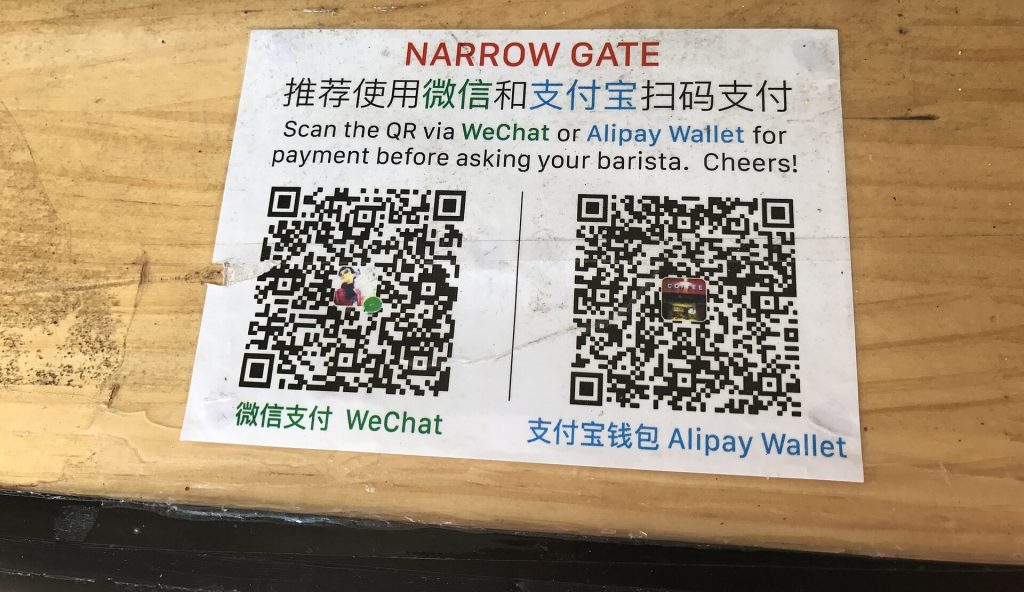
Switch to WeChat Pay: If Alipay repeatedly declines your card, try setting up WeChat Pay instead. The underlying mechanics differ slightly, and a card rejected on one platform may bind successfully on the other. Read more about comparing ecosystems in WeChat Pay vs Alipay for tourists and follow the steps in the WeChat Pay foreign card guide.
Utilize UnionPay QR and Physical Cards: Many merchants and transport hubs support UnionPay infrastructure. Carrying a physical international credit card with a chip and PIN, or exploring UnionPay QR with foreign cards, provides an essential backup when app-based routing fails.
Maintain a Cash and ATM Float: Despite widespread digital adoption, holding a modest amount of physical RMB cash is still vital for small vendors, ticket kiosks, or emergencies. You can withdraw local currency using international cards at major bank ATMs; review why cash is still needed for practical tips.
Ask the Hotel Desk for Assistance: If you encounter persistent payment blocks while trying to book tickets or settle bills, your hotel’s front desk can often help intermediate local digital payments or guide you to nearby accepted payment channels. Always verify official transport, museum, and attraction booking rules directly on official platforms (such as 12306 or official park portals) ahead of your travel week.
FAQ
What should I do if my bank never sends the SMS verification code during card binding?
First, check your mobile network signal and ensure international roaming or your eSIM data plan is active so you can receive incoming banking texts. If the SMS still fails to arrive, open your home bank’s dedicated mobile app to check for push notifications or in-app approval prompts, or contact your bank to verify your registered contact number.
Is it safe to delete and re-add a failing card in Alipay?
Yes. If a digital token becomes corrupted or a previous attempt gets stuck, removing the card and entering the details fresh from the “Add Card” menu is a standard troubleshooting step. Ensure you are doing this on a secure network connection.
Why did my card pass verification yesterday but fail at a shop today?
Linking a card proves it can be added to your account, but individual merchant terminals use different payment routing rules. Some smaller merchants or specific transaction categories are restricted from processing international credit card funding. If a specific store scanner rejects your payment, try paying via WeChat Pay, cash, or a physical card.
Related Lovely China reading
For payments, start with Alipay and WeChat Pay hub and WeChat Pay vs Alipay for tourists. For trains, keep high-speed rail first-timers guide and 12306 passport signup for foreigners handy. City hubs: Beijing first-visit guide, Shanghai first-visit guide. Connectivity: roaming vs local SIM honest guide, pocket Wi-Fi vs eSIM for China, offline maps for foreigners. Bookmark China travel tools page.
Practical checklist
- Confirm official rules on the relevant government, park, airline, or bank page near your travel week
- Screenshot bookings, tickets, and QR codes while you still have stable Wi-Fi
- Save hotel and attraction names in Chinese characters in your phone notes
- Carry passport, a backup payment method, and a small cash float (why cash is still needed)
- Test one small mobile payment before you rely on wallets at a gate or taxi
- Keep the China travel tools page page bookmarked for related Lovely China hubs
FAQ
Is this people advice official?
No. Lovely China orients travellers. Verify live rules on official pages, apps, and counters near your travel week.
Will every city behave the same?
No. Airports, stations, parks, and markets differ. Use local signage and staff instructions when they conflict with a general guide.
What should I screenshot before I lose Wi-Fi?
Bookings, tickets, hotel Chinese address, pickup pins, and payment success screens.
Notes for late 2026 travellers
November and early December bring cooler mornings, earlier sunsets, and comfortable walking weather across much of eastern and central China. Pack layers and leave extra time on clear weekends at popular sights.
This article does not invent ticket prices, opening hours, processing times, consular fees, or official statistics. When a number matters, verify it on the official site, app screen, or ticket board near your travel week.
If an official rule page disagrees with this guide, follow the official page. Lovely China orients English-speaking travellers; we are not an immigration, banking, or medical authority.