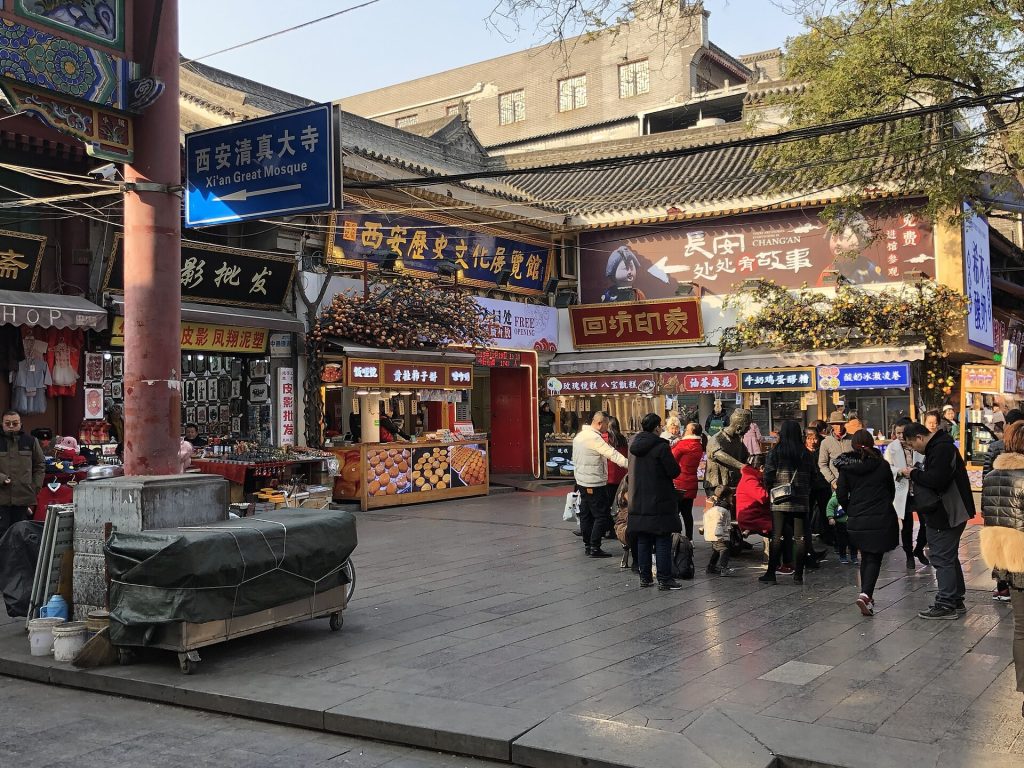
Stepping into Xi’an’s famous Muslim Quarter (Beiyuanmen) after dark is an absolute sensory immersion. Lanterns glow over bustling food stalls, the rich aroma of cumin and simmering lamb broth fills the cool air, and the lively clatter of woks creates an electric atmosphere. For foreign travelers and expats visiting in November or December 2026, navigating this historic food district for the first time requires a blend of adventurous appetite, cultural awareness, and practical know-how. This guide covers everything you need to know for a smooth, respectful, and deeply satisfying evening visit.
Pairing Your Evening with Day Sights
The Muslim Quarter comes alive right around sunset, making it the ideal final stop after a full day of exploring Xi’an’s ancient architecture. If you spent your daylight hours tracing the historic stone ramparts—check out our detailed guide on the Xi’an City Wall for optimal access points and cycling tips—you can easily transition into the evening market.
Similarly, many travelers pair a morning tour of the legendary imperial garrison with an afternoon city return, building an itinerary akin to the pacing suggested in Terracotta morning vs afternoon. By the time evening arrives, you will have worked up a healthy appetite, ready to dive straight into the labyrinth of alleys without feeling rushed.
Managing Your Pacing and Navigating the Crowds
Beiyuanmen and its surrounding alleyways (like Sajiawan and Huajuexiang) draw massive crowds of both domestic and international visitors every single night. Pacing yourself is the secret to actually enjoying the experience rather than feeling overwhelmed.
Start Early: Arrive right around dusk (roughly 5:30 PM to 6:00 PM in late autumn and winter) before the peak dinner rush hits. Stalls are fully stocked, and you can walk at a more relaxed pace.
Venture Off the Main Drag: The main stretch of Beiyuanmen can feel intensely commercialized and crowded. Step down the narrower side lanes, where local Hui community members run quieter bakeries, traditional tea shops, and family-owned noodle dens.
Pace Your Stomach: Do not buy the first large portion of food you see. Grab small, shareable bites—like a freshly grilled skewer or a single pastry—so you have room to sample different specialties as you explore deeper into the neighborhood.
Payment Logistics: QR Codes and Cash
Cashless payment is the absolute standard across China, and the Muslim Quarter is no exception. Virtually every vendor relies on smartphone apps, but being prepared will save you any transactional friction.
Set Up Mobile Pay Early: Ensure your Alipay or WeChat Pay account is linked to an international credit card well before your trip. For official guidance on digital registration rules, consult updates from the National Immigration Administration or your payment platform’s help center as you near your travel week.
Carry Small Cash Backup: While vendors prefer digital payments, many stalls will accept physical Renminbi (RMB). Keep small denomination notes (10, 20, and 50 yuan bills) handy in case your phone battery dies or a network glitch occurs. Avoid handing over large 100-yuan bills for very small purchases.
Respectful Behaviour and Community Awareness
The Muslim Quarter is not just a tourist food court; it is the historic heart of Xi’an’s resident Hui Muslim community, whose heritage in the city stretches back over a thousand years. Respecting local customs and traditions ensures a welcoming environment for everyone.
Halal Sensitivity and Etiquette: Many establishments in the quarter are strictly halal. While non-alcoholic drinks are widely available, bringing outside non-halal foods, snacks, or alcoholic beverages into traditional eateries or stalls is considered deeply disrespectful.
Photography Courtesy: Vendors, artisans hammering peanut candy, and elders chatting in the alleys are often captured on camera, but always ask politely or gesture with a smile before taking close-up portraits of individuals.
Sample Iconic Local Flavors Respectfully: Try classic regional staples like hand-pulled Biangbiang noodles or a savory Xi’an roujiamo, often referred to locally as a Chinese hamburger, which features tender, spiced meat packed inside a freshly baked flatbread.
FAQ
Is the Muslim Quarter safe for foreign travelers at night?
Yes, the main tourist areas and alleyways are extremely well-lit, heavily policed, and generally very safe late into the evening. Standard urban precautions apply: keep a close eye on your smartphone, wallet, and passport bag in dense crowds, and stick to well-trafficked pathways if you wander into the deeper residential lanes after dark.
Can I visit the Xi’an Great Mosque during my evening food tour?
The historic Great Mosque of Xi’an sits right near the bustling market area, offering a tranquil courtyard sanctuary featuring traditional Chinese architectural fusion. However, the mosque operates standard daytime visiting hours, so you will need to arrive before closing time in the late afternoon rather than late at night. Check current cultural site notices near your travel dates for exact opening schedules.
How do I handle language barriers when ordering street food?
While younger vendors or high-traffic stalls may know basic English food terms, many smaller family stalls do not. Pointing directly at what other customers are eating, using translation apps on your phone, or using simple hand gestures to indicate portions works remarkably well. A friendly smile and polite local greetings go a long way in bridging any communication gap.
Related Lovely China reading
For payments, start with Alipay and WeChat Pay hub and WeChat Pay vs Alipay for tourists. For trains, keep high-speed rail first-timers guide and 12306 passport signup for foreigners handy. City hubs: Beijing first-visit guide, Shanghai first-visit guide. Connectivity: roaming vs local SIM honest guide, pocket Wi-Fi vs eSIM for China, offline maps for foreigners. Bookmark China travel tools page.
Practical checklist
- Confirm official rules on the relevant government, park, airline, or bank page near your travel week
- Screenshot bookings, tickets, and QR codes while you still have stable Wi-Fi
- Save hotel and attraction names in Chinese characters in your phone notes
- Carry passport, a backup payment method, and a small cash float (why cash is still needed)
- Test one small mobile payment before you rely on wallets at a gate or taxi
- Keep the China travel tools page page bookmarked for related Lovely China hubs
FAQ
Is this travel advice official?
No. Lovely China orients travellers. Verify live rules on official pages, apps, and counters near your travel week.
Will every city behave the same?
No. Airports, stations, parks, and markets differ. Use local signage and staff instructions when they conflict with a general guide.
What should I screenshot before I lose Wi-Fi?
Bookings, tickets, hotel Chinese address, pickup pins, and payment success screens.
Notes for late 2026 travellers
November and early December bring cooler mornings, earlier sunsets, and comfortable walking weather across much of eastern and central China. Pack layers and leave extra time on clear weekends at popular sights.
This article does not invent ticket prices, opening hours, processing times, consular fees, or official statistics. When a number matters, verify it on the official site, app screen, or ticket board near your travel week.
If an official rule page disagrees with this guide, follow the official page. Lovely China orients English-speaking travellers; we are not an immigration, banking, or medical authority.