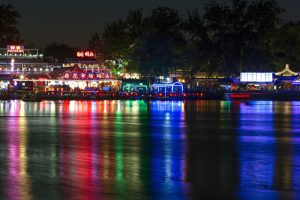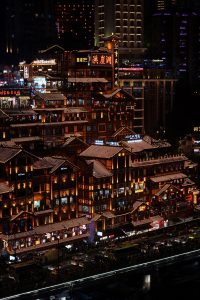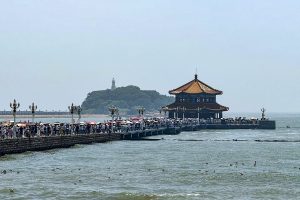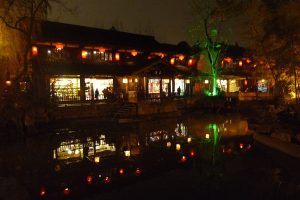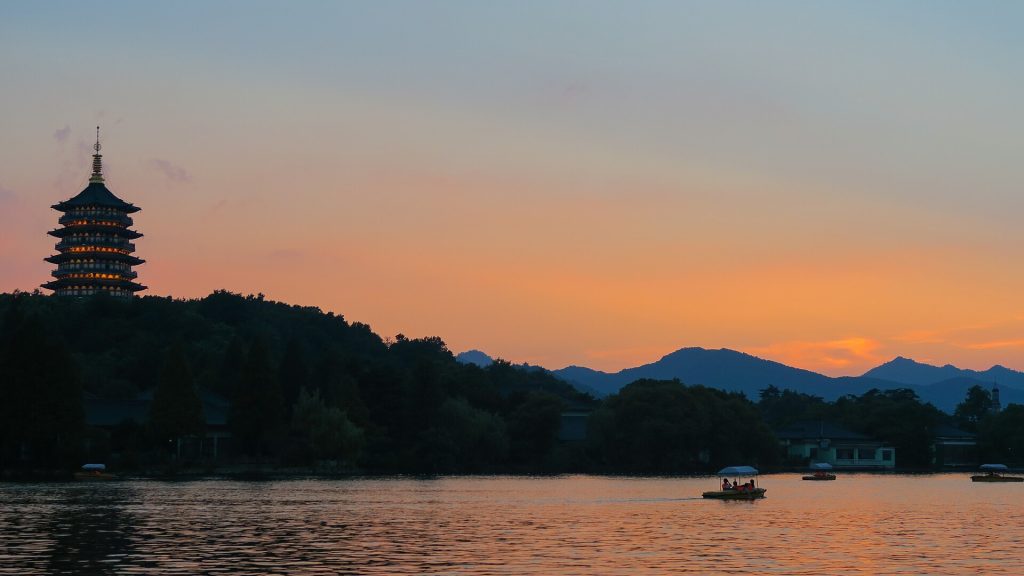
There is a specific hour in late autumn when Hangzhou exhales. By November, the crushing summer humidity of the Jiangnan region has long since dissolved, replaced by a crisp, silver-edged air that smells faintly of damp stone, decaying lotus stalks, and the last roasting leaves of sweet osmanthus. As daylight begins to bleed out of the sky around five o’clock, painting the water in muted tones of pewter and slate, the West Lake does something rare for a major Chinese tourist icon: it grows quiet. This is the hour for a slow, reflective walk along the shore, where the frantic rush of weekend sightseers gives way to the rhythmic swish of bicycle tires and the low murmur of locals heading home.
The Shift from Sunlight to Silver Dusk
Standing near the Broken Bridge (Duanqiao) at dusk in late 2026, you feel the immediate transition from the frantic midday pace of the city into a landscape that has inspired Chinese poets for over a millennium. The famous weeping willows along the Bai Causeway no longer throw heavy, shade-giving canopies; instead, their thinning, golden-green fronds act like loose calligraphy strokes against the grey autumn sky.
As the sun slips behind the emerald hills of Gem Hill (Baoshishan), the water’s surface smooths out into a giant mirror. The iconic three towering stone pagodas of Three Pools Mirroring the Moon (Santan Yinyue) loom faintly in the distance, dark silhouettes cutting through the rising evening mist. It is cold enough now to pull a wool scarf tight and thrust your hands deep into your coat pockets. The air bites gently at your cheeks, reminding you that winter is creeping down from the north.
Along the lakeside promenade, the sensory details are entirely understated. You hear the crisp clack-clack of bicycle bells from commuters cutting across the causeway, the soft crunch of gravel underfoot, and the distant, rhythmic creak of a solitary sculling boat (wupengchuan) returning to its mooring. Tour groups have vanished, replaced by elderly residents bundled in quilted jackets, walking slowly with their hands clasped behind their backs, pausing to watch the surface of the lake turn the color of cold tea.
Finding Warmth as the Teahouses Thin Out
By the time you reach the shaded footpaths near Solitary Hill (Gushan), the historic teahouses that hummed with activity all afternoon begin to quiet down. Waiters fold away outdoor bamboo chairs, and the sweet, roasted aroma of Longjing green tea lingers heavily in the damp evening air.
If you are visiting Hangzhou for the first time during this cooler season, pacing yourself is essential. The lake is vast—roughly six square kilometers of water framed by hills—and winter nightfall arrives swiftly. To navigate the city smoothly without getting stranded in the cold after dark, keep your digital logistics organized. Having your offline navigation maps and payment apps sorted ahead of time ensures you aren’t fumbling with your phone with frozen fingers; for a quick refresher on the most reliable digital utilities, take a look at the essential China travel tools.
Stepping away from the main tourist drag into the back alleys behind the West Lake Museum, the street lamps flicker on, casting a warm, buttery glow over whitewashed walls and black-tiled roofs. Here, local life carries on undisturbed by tourism. Vendors sell steaming bags of roasted chestnuts from iron drums filled with hot black sand, sending up plumes of sweet, nutty steam that cut right through the November chill. Grabbing a warm bag to heat your hands is one of the small, quiet joys of an autumn evening here.
The Walk Back Toward the Metro
The final stretch of a November dusk walk naturally pulls you away from the water and toward the city’s veins. Walking south toward Longxiangqiao or Fengqi Road metro stations, the transition from classical landscape to modern metropolis is seamless.
For newcomers plotting out their broader itinerary beyond a single evening stroll, a well-structured approach helps balance natural scenery with urban conveniences. Reviewing a practical Hangzhou first-visit blueprint can help you map out daylight visits to the surrounding tea plantations and historic temples before you return to the lake for the evening mist.
Descending the concrete stairs into the subway station brings an immediate wave of synthetic warmth. As you swipe your transit card at the turnstile and wait for the train back to your accommodation, your fingers finally thaw. Looking back through the glass doors at the commuters rushing past, you realize that West Lake in November isn’t a postcard monument to be checked off a list; it is a living, breathing landscape that invites you to slow down, match its quiet rhythm, and simply watch the light fade.
FAQ
What should I wear for an evening walk around West Lake in November?
Layers are crucial. While daytime temperatures can remain mild, the temperature drops rapidly the moment the sun dips behind the hills, often bringing damp, penetrating lake winds. Bring a warm wool coat, a scarf, and comfortable walking shoes with good grip, as the lakeside stone paths can become slick from evening mist and morning dew.
Are the West Lake boat tours still operating at dusk in late autumn?
Public ferry services generally wind down late in the afternoon as daylight fades and temperatures drop. While private rowboats may still take passengers out earlier in the afternoon, evening water activities are heavily restricted in the colder months. It is always best to check local weather conditions and operational hours near your travel dates if you plan to get out on the water.
How do I get back to the city center after walking the lake at night?
Related Lovely China reading
For payments, start with Alipay and WeChat Pay hub and WeChat Pay vs Alipay for tourists. For trains, keep high-speed rail first-timers guide and 12306 passport signup for foreigners handy. City hubs: Beijing first-visit guide, Shanghai first-visit guide. Connectivity: roaming vs local SIM honest guide, pocket Wi-Fi vs eSIM for China, offline maps for foreigners. Bookmark China travel tools page.
Practical checklist
- Confirm official rules on the relevant government, park, airline, or bank page near your travel week
- Screenshot bookings, tickets, and QR codes while you still have stable Wi-Fi
- Save hotel and attraction names in Chinese characters in your phone notes
- Carry passport, a backup payment method, and a small cash float (why cash is still needed)
- Test one small mobile payment before you rely on wallets at a gate or taxi
- Keep the China travel tools page page bookmarked for related Lovely China hubs
FAQ
Is this stories advice official?
No. Lovely China orients travellers. Verify live rules on official pages, apps, and counters near your travel week.
Will every city behave the same?
No. Airports, stations, parks, and markets differ. Use local signage and staff instructions when they conflict with a general guide.
What should I screenshot before I lose Wi-Fi?
Bookings, tickets, hotel Chinese address, pickup pins, and payment success screens.
Notes for late 2026 travellers
November and early December bring cooler mornings, earlier sunsets, and comfortable walking weather across much of eastern and central China. Pack layers and leave extra time on clear weekends at popular sights.
This article does not invent ticket prices, opening hours, processing times, consular fees, or official statistics. When a number matters, verify it on the official site, app screen, or ticket board near your travel week.
If an official rule page disagrees with this guide, follow the official page. Lovely China orients English-speaking travellers; we are not an immigration, banking, or medical authority.