Why the counter still matters for foreign visitors
China’s rail network is easiest when tickets are sorted before you reach the station. Many travellers use the official 12306 channels or assisted booking well ahead of time. Still, the station ticket counter remains a practical tool for foreign visitors — especially when an app verification fails, a passport name needs human eyes, a same-day change is required, or you simply prefer a paper trail and a staff conversation.
This guide explains how to buy or adjust mainland train tickets at the station counter in calm, practical steps. For the app-first path, keep how visitors book a mainland train on 12306 open as your companion piece. Counter skills and app skills work best together.
When the window is smarter than the app
Consider the counter when:
- Your passport details will not verify cleanly in an app.
- You need to change or refund and the on-screen flow is unclear.
- You are already at the station with time before departure and want a staff confirmation of train number, seat type, and gate advice.
- You are helping a less phone-comfortable travel partner complete a purchase.
- Holiday pressure makes you want a human check that the ticket matches the passport exactly.
Prefer the app or early booking when:
- Popular trains around Mid-Autumn or Golden Week may sell out.
- You are not yet in the origin city and cannot visit a counter.
- You want seat selection calmness from a hotel desk days ahead.
Calendar anchors for 2026: Mid-Autumn Festival is Friday 25 September (holiday roughly 25–27 September; makeup workday Sunday 20 September). National Day Golden Week runs roughly 1–7 October, with a makeup workday Saturday 10 October (国办发明电〔2025〕7号). Around those dates, buy early whenever you can; use the counter as backup and for adjustments, not as your only plan for the most competitive trains. See Golden Week 2026 vs Mid-Autumn.
What to bring to the ticket hall
- Passport (the same document you travel on).
- Phone with payment options ready — Alipay / WeChat Pay for foreign visitors — plus a card or cash backup if needed.
- Clear trip facts: date, approximate time window, origin, destination, and preferred seat type (second class, first class, soft sleeper, hard sleeper, hard seat, and so on).
- Screenshots of any existing booking reference if you are changing a ticket.
- A short Chinese note or translation app phrase for destination station names if pronunciation is hard.
You do not need perfect Mandarin. You do need the destination written clearly and patience in the queue.
Finding the right queue
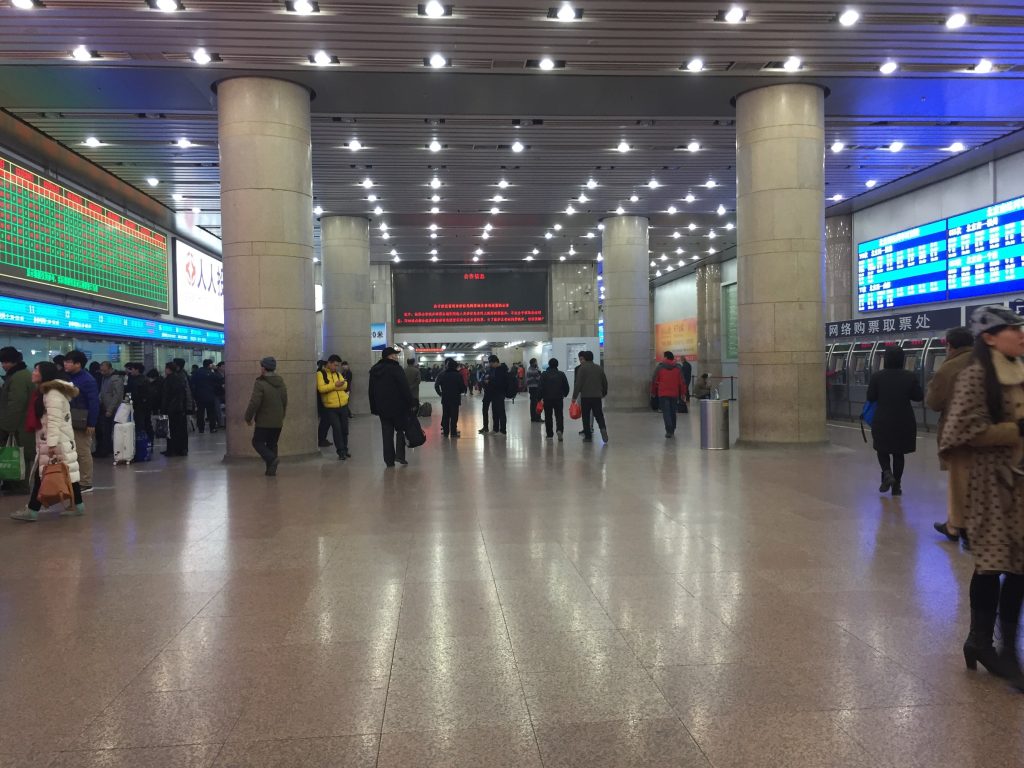
Large stations separate ordinary ticket windows, student windows, and sometimes machine-only zones. Look for signs that suggest tickets for travellers generally, or ask staff with “ticket office / 售票处” while pointing at your passport.
Practical queue habits:
1. Join the line only after you know which product you want (new ticket vs change).
2. Keep passport out of the bag before you reach the glass.
3. Stand so the next person can see you are ready — fumbling at the window slows everyone.
4. If a number ticket system exists, take a number and watch the display.
Stations can feel loud and fast. Breathe, step forward when called, and speak simply.
At the window: a calm purchase script
A workable script in English, with key facts ready:
1. Show passport.
2. Say or show: date + origin city + destination city.
3. Prefer a time window (“morning,” “around 14:00,” “last train before evening”).
4. Prefer a seat type; accept alternatives if sold out.
5. Confirm the train number, departure time, and car/seat on screen or printout before paying.
6. Pay, take tickets or confirmation, and photograph the result immediately.
If the agent offers a different routing (transfer vs direct), ask whether it is still same-day comfortable. Do not accept a transfer you do not understand just because it is available.
Name matching matters. The ticket identity should align with your passport. If something looks wrong, resolve it at the window before you leave the hall.
Changes, refunds, and same-day surprises
Policies for changes and refunds depend on timing, train type, and current railway rules. Do not memorise internet myths as law. At the counter:
- Bring the original ticket / booking proof and passport.
- Ask what options exist for your specific train.
- Confirm any fee difference before you approve a change.
- Re-check the new train number and departure time out loud.
If your plans shift because of Mid-Autumn (~25–27 September 2026) or Golden Week (~1–7 October), act early. Counters get busier when many people adjust holiday travel at once. The makeup workday on Sunday 20 September can also nudge travel patterns that weekend — another reason not to leave critical tickets to the last hour.
After you have the ticket: station flow
Buying is only half the job. Next:
- Find the correct departure station building if a city has multiple stations (for example, a main station vs an East/South/West station).
- Arrive with security and identity-check buffer.
- Follow gate numbers on screens; they can update.
- Keep passport ready at checkpoints.
For etiquette once aboard, pair this guide with calm boarding habits and luggage rules from related Lovely China rail pieces such as high-speed etiquette guides on the site. If you are continuing from an airport hub, Shanghai Hongqiao Airport first arrival transfer or Beijing Capital Airport first arrival transfer may help the air–rail connection mindset.
Common first-timer mistakes
- Arriving at the wrong station campus because the ticket says “East” and the taxi went to “Station.”
- Assuming a sold-out popular holiday train will appear at the counter without alternatives ready.
- Putting the passport away before the identity check at the gate.
- Changing plans verbally without confirming the new printout or SMS/app record.
- Leaving payment setup unfinished until the window — set up pay apps the day before.
Sample day-of counter plan
90 minutes before a flexible regional train
Enter station area → ticket hall → purchase or pick up → security → waiting room → gate.
Busy holiday week plan
Buy days ahead via 12306 or assisted channels → use counter only if change needed → arrive earlier than usual for lines → keep dinner plans after arrival flexible.
App failed yesterday
Morning counter visit for the next day’s train → photograph ticket → hotel rest → return with buffer.
Calm counter checklist
- Passport accessible and valid for travel days.
- Origin, destination, date, and seat preference written clearly.
- Payment method tested.
- Time buffer for queues and security.
- Photo of ticket / confirmation saved offline.
- Correct station name double-checked on the ticket.
- Backup train time accepted if the first choice is gone.
- Mid-Autumn and Golden Week dates considered before you rely on same-day luck.
Give yourself one quiet minute after paying to photograph the ticket, confirm the station name, and check the departure time once more before you enter security. The station counter is not old-fashioned; it is a reliability tool. Use apps to plan early, use windows to fix and confirm, and treat passport-perfect tickets as part of a calm China rail journey rather than a last-minute scramble.