First landing at PEK without the panic
Beijing Capital International Airport (PEK) is still a common first Chinese landing for long-haul visitors, even as other Beijing airports share traffic. A calm first arrival is less about memorising every corridor and more about knowing your terminal logic, choosing one transfer mode, and keeping passport, SIM, and payment steps in a fixed order.
This guide is for foreign visitors transferring onward to a Beijing hotel or railway hub in 2026. It pairs well with Shanghai Pudong airport first-arrival transfer if you are comparing hubs, and with Beijing subway for foreign visitors once you are city-side.
Early autumn timing note: Mid-Autumn Festival is Friday 25 September 2026 (~25–27 September holiday window), with a makeup workday on Sunday 20 September. Golden Week runs roughly 1–7 October 2026, with a makeup workday on Saturday 10 October. Airport halls and city transfers feel busier on holiday eve evenings — build buffer, not bravado.
Know your terminal before you land
PEK’s main passenger story for many international arrivals centres on large terminals with long walks after immigration. Before you fly:
- Check your operating airline’s terminal on your booking, not only on memory from a previous trip.
- Screenshot the hotel Chinese address and nearest subway station.
- Decide your transfer mode while you still have Wi-Fi at home: Airport Express + subway, taxi/Didi, or hotel pickup.
After landing, follow Arrivals / Immigration signs, complete entry formalities, then collect bags. Do not start ride-hailing or metro navigation until you are fully airside-to-landside clear and standing in a public arrivals area with stable phone signal.
Passport habits that reduce stress:
- Keep the passport in a front zip pocket through immigration and baggage claim.
- Have your hotel confirmation ready if asked about address details.
- For the first night registration flow later, skim hotel check-in with a foreign passport.
Connectivity: SIM, eSIM, and offline backups
A transfer plan fails quietly when maps will not load. Before you rely on Didi or subway exits:
- Review China SIM and eSIM options for foreign visitors and activate what you can before the jet bridge if your plan allows.
- Airport SIM counters exist, but queues and passport steps take time after a long flight — budget that time if you arrive without data.
- Download offline maps for Beijing and save screenshots of Airport Express stops and your hotel exit letter.
Set up Alipay and WeChat Pay before the trip when possible. You may still need them for metro QR codes, convenience stores, and ride-hailing deposits depending on your setup.
Option A: Airport Express and subway
For many first-timers with manageable luggage, Airport Express into the subway network is the clearest “learn Beijing rails on day one” path.
Typical calm flow:
1. Follow Airport Express / rail signs from your arrivals hall.
2. Buy a ticket or use a supported mobile payment path at the rail gates.
3. Ride to the interchange your map recommends for your hotel line.
4. Transfer to the subway with attention to line colours and terminal station names.
5. Exit by letter, not by guesswork.
Why this works:
- Predictable pricing feel compared with surge-prone road traffic at peak holiday hours.
- You practise the same gate and signage habits you will use all week.
- You avoid negotiating language at a taxi stand when exhausted.
When to skip it:
- Oversized luggage that makes stairs and long transfers miserable.
- Very late arrivals when you value a door-to-door drop more than cost.
- Travel companions who need seating and minimal walking immediately.
If you take rails into the city, keep backpacks in front on crowded cars and stand clear of doors if you are not exiting next — the same manners as any busy metro.
Option B: Taxi and Didi
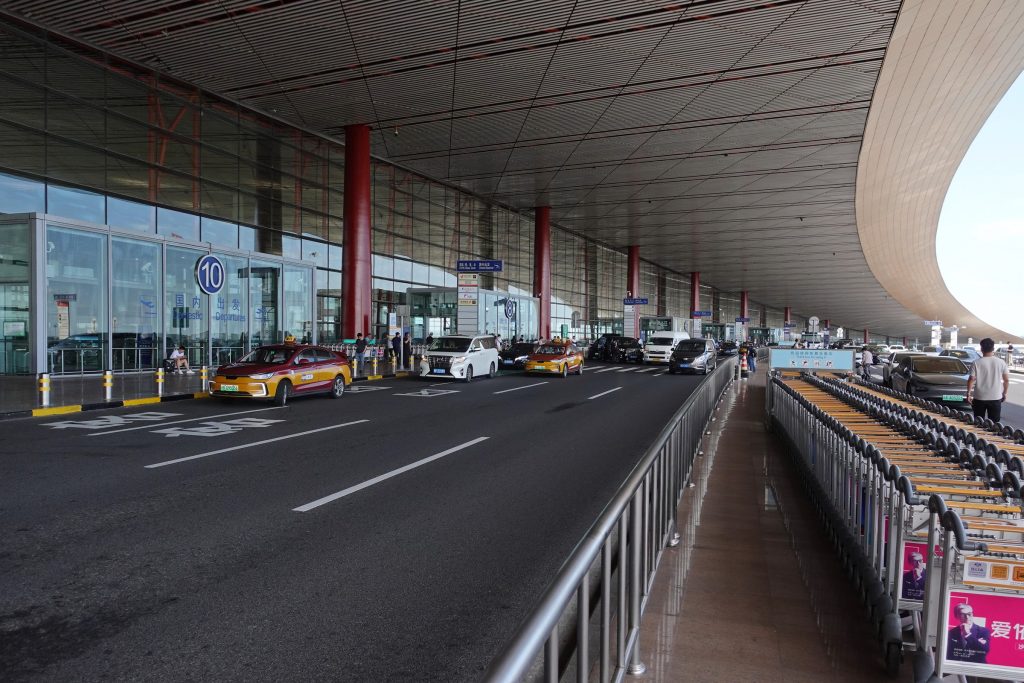
Official taxi ranks and ride-hailing pickup zones are the door-to-door choice. Use clearly signed official channels; ignore freelance offers in the arrivals hall.
Didi tips for a first PEK night:
- Open the app only after you know which pickup zone your terminal uses.
- Enter the hotel name in Chinese characters when possible.
- Confirm the license plate before you load bags.
- Keep the Didi foreign-visitor guide habits: share trip status if your phone allows, and do not argue fare math in the roadway.
Taxi habits:
- Start the meter; keep the receipt if you may expense the ride.
- Show the hotel address card rather than improvising pronunciation.
- Expect slower road times at weekday peaks and holiday eve evenings without needing exact traffic statistics.
Option C: Hotel pickup and private transfer
If your hotel offers airport pickup, confirm meeting point text in Chinese and English, flight number monitoring, and after-hours fees before you fly. Private transfers can feel calmer for families, late freighters, or travellers with mobility needs. Pay attention to cancellation rules if your inbound flight slips.
A calm minute-by-minute mental model
You do not need a stopwatch. You need a sequence:
1. Immigration and baggage.
2. Toilet, water, and a short sit if you feel shaky.
3. SIM/data confirmation.
4. Choose ONE transfer mode — do not compare all three while blocking a walkway.
5. Follow signs to Express, taxi rank, or pickup zone.
6. Message your hotel only after you are moving, so ETA is real.
7. At the hotel, complete registration before you unpack everything.
Holiday-aware buffers:
- Before Mid-Autumn (25 September 2026) and Golden Week (~1–7 October), assume longer immigration and road times on peak travel days.
- The makeup workday on 20 September may change how “Sunday” feels for business traffic; leisure holiday peaks still cluster around the festival nights themselves.
- If connecting to a same-day high-speed train, build generous buffer or sleep in Beijing first — missed trains cost more calm than an extra night.
Luggage, money, and small comforts
- Use a luggage trolley when available; Terminal walks are long.
- Keep a small cash backup, but plan to pay digitally for most city needs.
- Pack a light layer; arrival halls and cars can feel cold after cabin air.
- Photograph your checked-bag tags before the belt, then put the phone away while you watch the carousel.
If you are airside on a short transit rather than entering Beijing fully, follow your airline’s transfer signage and visa/transit rules carefully — separate from this city-entry guide. For visa-free transit possibilities in general, see the 144-hour visa-free transit overview and confirm your exact itinerary against current official rules.
First-night destination choices that simplify PEK transfers
Choosing a hotel near a subway station on a line that connects cleanly from Airport Express corridors reduces day-one friction. Lakeside or hutong boutique stays are lovely, but on night one many visitors sleep better near a major line with bilingual exits. You can move neighbourhoods later in the trip.
Checklist before you leave the airport:
- Passport and entry stamps secure.
- Data working or offline map ready.
- Transfer mode chosen.
- Hotel address in Chinese on phone and paper backup.
- Payment app unlocked.
- Water and a snack for the ride.
Arrive tired if you must — just do not arrive undecided. One clear transfer plan turns PEK from a maze into a long but readable corridor toward your first Beijing sleep.