Why take a hard seat day train once
Hard seat (yingzuo, 硬座) is the classic open-carriage seat class on many conventional Chinese trains. It is not a soft sleeper berth and not a high-speed second-class recliner. For a daytime journey of a few hours — or a longer scenic slog you choose on purpose — hard seat teaches the rhythm of shared armrests, hot-water flasks, trolley snacks, and station stops that high-speed travel smooths away.
Foreign visitors often meet hard seat by accident when soft sleeper is sold out, or on purpose when the route is short and the ticket is the practical option. This story-style guide keeps expectations honest: comfort is relative, etiquette is learnable, and a calm kit list matters more than romance. For overnight berths instead, read soft sleeper on a first overnight train. For booking mechanics, keep 12306 booking for visitors nearby.
Early autumn 2026 adds calendar pressure: Mid-Autumn (Friday 25 September, holiday ~25–27) and Golden Week (~1–7 October) raise demand on many corridors. Makeup workdays on Sunday 20 September and Saturday 10 October move weekday traffic onto Sundays or Saturdays. Book earlier than you would in a quiet May week.
What “hard seat” actually feels like
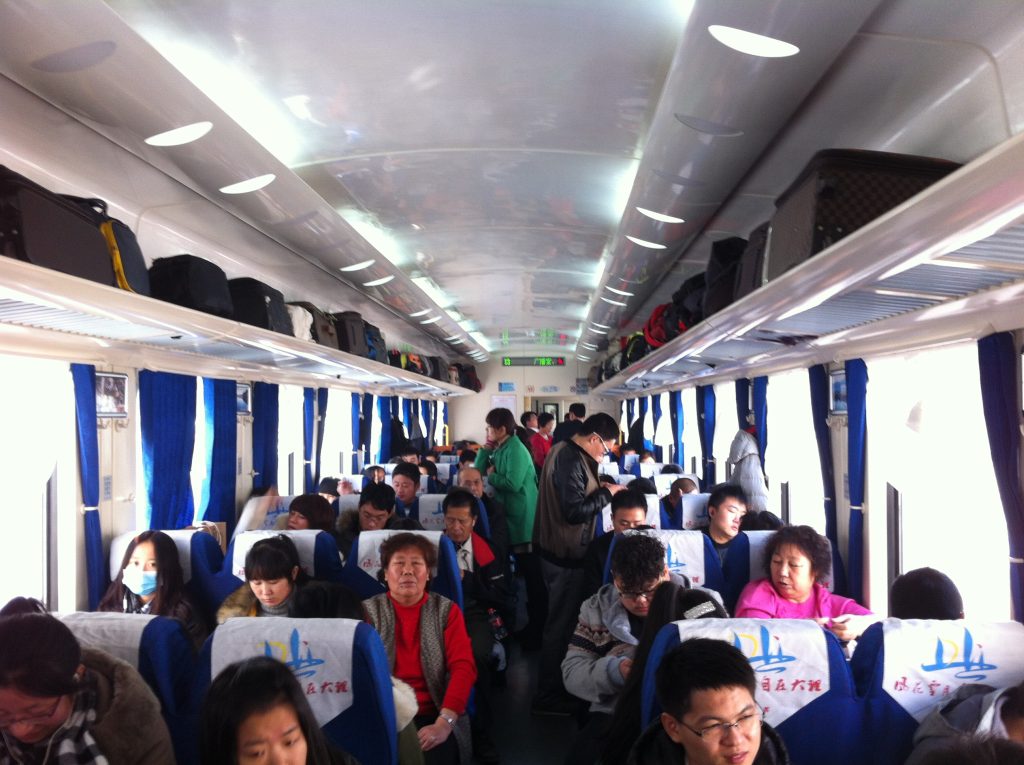
Carriages are open plan with rows of paired seats facing each other across small tables, plus aisle seats depending on the coach. Seat cushions are firmer than high-speed seats. There is usually an overhead rack for smaller bags and space near your feet or at coach ends for larger luggage — contested space on busy days.
You will hear:
- Announcements in Chinese (sometimes bilingual on major trains)
- Hot-water urns in use all day
- Trolley sellers with instant noodles, snacks, and drinks
- Card games, phone videos at moderate volume, and occasional loud calls
Windows may open on older stock or stay sealed on newer air-conditioned coaches. Dress in layers either way.
Tickets, seat maps, and booking habits
Hard seat appears on many Z/T/K and other conventional trains; not every high-speed G/D service uses this class name. When you search on 12306 or an authorised agent, read the class carefully. A seat number locks your place; standing tickets (wuzuo) exist on some trains when seats are sold out — first-timers should avoid long standing tickets.
Practical booking notes:
- Passport details must match exactly.
- Arrive at the station with enough time for security and the correct departure floor.
- Screenshot your ticket QR / order details offline.
- Carriage number and seat number are on the ticket — find the carriage on the platform before the crowd surges.
If Mid-Autumn or Golden Week trips are involved, compare dates with national Day Golden Week 2026 travel planning so you are not surprised by sold-out seat maps.
Boarding flow without soft-sleeper habits
Paperless tickets are common; still carry your passport every time you pass checkpoints. Station names on tickets use Chinese characters — match them carefully to platform screens. If you speak little Mandarin, write your destination station name on paper or in a phone note large enough to show staff quickly.
Children’s tickets and student discounts follow official rules that change with policy; do not invent a discount story at the gate. Foreign passport holders should follow the same identity checks as everyone else in the queue.
Boarding flow without soft-sleeper habits
1. Pass security and identity checks at the station.
2. Wait at the correct gate; platforms can change — watch boards.
3. Board your carriage number; staff and side indicators help.
4. Stash large luggage where locals put similar bags; keep valuables at your seat.
5. Sit according to the ticket even if the coach looks empty at the origin — later stations fill seats.
Do not assume an empty facing seat is your footrest for the whole journey. People board down the line.
Luggage, personal space, and kindness math
Hard seat personal space is negotiated continuously. Keep backpacks on your lap or under legs when racks are full. Hard-shell suitcases belong in designated areas, not blocking the aisle. If you bring food, choose low-smell options; carriage air is shared.
Offer the window or aisle courtesy when someone elderly boards and seating is tight — gestures travel even when language does not. Noise-cancelling earphones help; speakers pointed at the carriage do not.
Food, water, and bathroom timing
The onboard water urn is part of the culture: passengers refill bottles and brew instant noodles. Bring your own bottle. Trolley food is convenient; station platform snacks before boarding can be fresher. Avoid the messiest soups if your table neighbours are working on laptops.
Bathrooms are at coach ends.Avoid the messiest soups if your table neighbours are working on laptops.
Some travellers pack fruit, bakery buns, and nuts — low drama, easy cleanup. Instant noodles remain the iconic move: hot water, lid closed with chopsticks across the top, wait, then eat carefully on the table. Watch one neighbour’s method before your first attempt if you are unsure. Spill management is part of carriage citizenship.
Bathrooms are at coach ends. Go at off-peak moments — not during the first ten minutes after a major boarding rush, and not right when the train is stopped at a station if staff lock toilets. Carry tissues and hand gel as backup.
Staying comfortable on a long day seat
Small upgrades change the day:
- Thin scarf or hoodie as a pillow against the window
- Compression socks on longer rides
- Walk to the vestibule occasionally to stretch
- Download offline maps and shows before you lose signal in tunnels
- Power bank — outlets exist on many coaches but are contested
Reset expectations: this is not a soft sleeper cocoon. It is a social daytime vehicle. Comfort comes from pacing, hydration, and accepting shared soundscape.
People-watching without starring in a conflict
Day trains show students going home, workers shifting cities, and travellers with kids. Smile, keep bags out of the aisle, and settle disputes by showing your ticket rather than arguing volume. If someone sits in your seat, calmly show the seat number; conductors can help if needed.
Photography of scenery through windows is fine; photographing strangers’ faces without consent is not.
When hard seat is the wrong tool
Choose another class or a high-speed train when:
- You need overnight sleep (prefer sleeper)
- You have heavy mobility constraints and long walks between cars
- The only open option is a multi-hour standing ticket
- You are connecting to a flight with tight timing and need predictable dwell
Hard seat shines on shorter daylight hops and on intentional slower journeys where the landscape and carriage life are part of the story.
A sample first-ride day plan
High-speed trains feel different from conventional hard seat culture — quieter cars, different luggage norms, different boarding choreography. If you also ride G-trains on this trip, notice how announcements and seat comfort change class by class. Do not expect hard seat staff to provide soft-sleeper bedding; there is none.
Night hard seat is a harsher teacher than day hard seat. If your only ticket is overnight hard seat, reconsider when budget allows, or prepare for little sleep and very early station arrivals. Daylight is the kinder classroom.
A sample first-ride day plan
Morning: light breakfast near the station; fill water.
Boarding: locate carriage early; seat belt of attention on your bag zippers.
Mid-ride: noodles or bakery snacks; one walkway stretch per two hours.
Arrival: stand only after the train stops; let aisle clear; check you have passport and power bank before stepping down.
If your wider China trip also includes overnight sleepers, use hard seat as daylight contrast rather than as punishment. Many travellers remember their first hard seat day not for luxury, but for the moment the trolley passed, the water urn hissed, and the countryside slid by at conventional-train pace — a China rhythm that still runs beside the high-speed network in 2026.
If your wider China trip also includes overnight sleepers, use hard seat as daylight contrast rather than as punishment. Many travellers remember their first hard seat day not for luxury, but for the moment the trolley passed, the water urn hissed, and the countryside slid by at conventional-train pace — a China rhythm that still runs beside the high-speed network in 2026.
After you arrive
Check your belongings before the aisle locks with standing passengers. Station plazas can feel chaotic after long rides — pause inside or at a clear pillar to message your hotel, open the metro map, or call a Didi only once you know which exit you need. Hard seat travel pairs well with simple same-day hotel check-in plans; see hotel check-in with a foreign passport if this is also your first China lodging night.
You do not need to romanticise discomfort. You only need to complete one daylight hard seat journey with clear eyes: ticket understood, bags secure, water filled, expectations sized for an open carriage. After that, you can choose high-speed for efficiency or sleeper for night rest — and still know what the blue-seat coaches feel like when China moves at the older tempo.