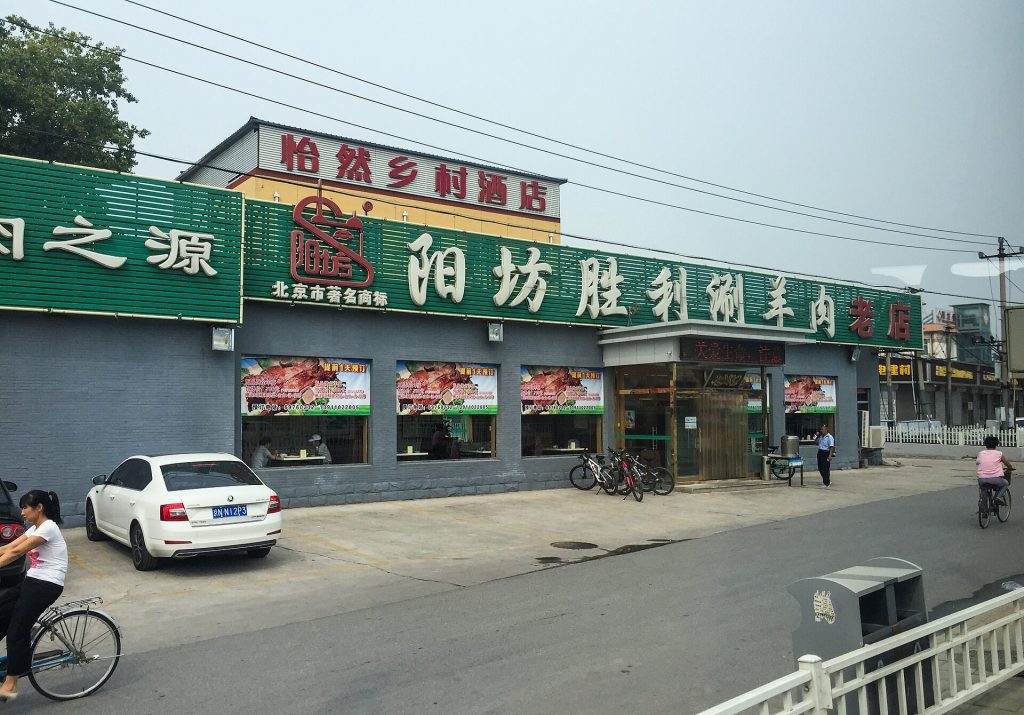
Beijing mutton hotpot—shuanyangrou, instant-boiled mutton in a copper pot—is a winter meal with a different grammar from Sichuan or Chongqing mala hotpot. The broth is usually pale and clean, the meat is thin, the dip is sesame, and the cooking time is counted in moments, not in a long spicy simmer. This first-timer guide is about ordering, dipping, and not treating the copper pot as a cousin of a numb-and-spicy cauldron. It is not a Haidilao guide, and it is not a restaurant ranking.
Soup-base types more generally are explained in hotpot soup bases. The Chongqing first-timer contrast lives at Chongqing hotpot. Chengdu-style spicy pots are in Chengdu hotpot first-timers. Chopstick habits are in chopsticks etiquette for foreigners. If you are in the capital in early December, this meal sits naturally beside Beijing early December first-visit planner and Beijing first-visit guide.
What you are looking at
A classic shuanyangrou table centers on a copper pot, often with a chimney, sitting over charcoal or a modern table stove that imitates the same idea. The broth may be a light water or bone-based soup, sometimes with ginger, goji, or other simple aromatics—not a sea of chili oil. Around it arrive plates of very thinly sliced mutton, plus vegetables, tofu, and vermicelli that go in after you understand the meat.
The pleasure is contrast: meat that stays tender because it is sliced thin and cooked briefly, then a thick sesame-based dipping sauce that you adjust at the table. If you came expecting mala numbness, you will think the pot is “plain.” It is not plain. It is a different cuisine.
Some restaurants offer a divided pot or a spicy add-on. You can ask. You do not have to. First-timers usually learn more by tasting the traditional light broth on its own.
Sesame sauce and the rest of the table
The dipping sauce is the second kitchen. A sesame-paste or sesame-forward sauce is the usual base; you may be invited to add chives, cilantro, fermented tofu, chili oil, raw or pickled garlic, and other small dishes. Start modest. Taste. Add. A sauce so crowded that you can no longer taste mutton has gone too far.
Sides that belong in the pot rather than in the dip: napa cabbage, spinach or other greens, tofu or tofu skin, mushrooms, and vermicelli or glass noodles. Starch goes in later, greens can be brief, and tofu can sit a little longer than meat. Watch the table next to you if you are unsure of order.
We do not invent prices or a “standard set.” Look at the menu or the clerk’s pad. Order a plate or two of mutton first, plus a couple of vegetables, then add more meat if the table is still hungry. Over-ordering is the usual first-timer mistake, especially if two people treat a menu designed for four as a compulsory list.
How long the meat stays in the pot
Thin mutton is not a stew cut. With chopsticks, pick up a slice or a small cluster, dip it into the boiling broth, and wait only until the color changes and the meat just loses its raw look. That is often a short count, not a long conversation. Lift it out, let it drain, dip it in the sesame sauce, and eat. If you abandon a pile of slices in the pot for ten minutes, you will be eating tighter, dryer meat.
A few practical habits:
- Do not use the same chopsticks to fish in the pot and then back in a shared sauce in a sloppy way if the table has served serving-chopstick customs; watch the house (chopsticks etiquette for foreigners, chopsticks etiquette)
- Keep raw plates and cooked pieces mentally separate
- Let the pot come back to a proper boil between rounds
- If fat or foam gathers, staff may skim; you can also leave it alone unless asked to help
Lamb smell is part of the dish. If you are sensitive to it, say so when you order; some houses can suggest a milder cut or a slightly different broth. Do not expect a completely odorless pot.
How this differs from mala hotpot
Sichuan and Chongqing pots are often about a rich, spicy, numbing base, longer communal simmering, and a chili-oil logic you manage with your mouth, not only with a dip (Chongqing hotpot, Chengdu hotpot first-timers). Shuanyangrou is about a clean boil and a sesame dip. The copper chimney is a clue you are in the northern story, not in a Chongqing alley.
Haidilao-style service—and any chain with a long sauce bar and a waiting-room ritual—is a different night out. You can enjoy both on a longer China trip. Just do not walk into a traditional copper-pot house and look for a conveyor of oil-based soup trays.
Winter is the natural season. Early December in Beijing makes a copper pot feel like the point of the evening, especially after a cold outdoor stretch around Temple of Heaven visit or a hutong walk. Book or arrive a little earlier on weekends; popular houses queue (queue etiquette). Pay with a wallet you already tested (Alipay and WeChat Pay hub). Tipping norms are not what North American visitors expect (tipping in China).
Read the live menu for prices and any set-meal rules. Then keep the slices thin, the dip adjustable, and the boil brief. That is the whole skill.
Related Lovely China reading
For payments, start with Alipay and WeChat Pay hub and WeChat Pay vs Alipay for tourists. For trains, keep high-speed rail first-timers guide and 12306 passport signup for foreigners handy. City hubs: Beijing first-visit guide, Shanghai first-visit guide. Connectivity: roaming vs local SIM honest guide, pocket Wi-Fi vs eSIM for China, offline maps for foreigners. Bookmark China travel tools page.
Practical checklist
- Confirm official rules on the relevant government, park, airline, or bank page near your travel week
- Screenshot bookings, tickets, and QR codes while you still have stable Wi-Fi
- Save hotel and attraction names in Chinese characters in your phone notes
- Carry passport, a backup payment method, and a small cash float (why cash is still needed)
- Test one small mobile payment before you rely on wallets at a gate or taxi
- Keep the China travel tools page page bookmarked for related Lovely China hubs
FAQ
Is shuanyangrou the same as Sichuan or Chongqing mala hotpot?
No. Beijing instant-boiled mutton usually uses a light broth, thin slices cooked briefly, and a sesame dipping sauce. Mala hotpot is a different, spicier, often oil-rich grammar.
How long should the mutton stay in the pot?
Only until the slice just loses its raw colour. This is a short cook, not a long simmer. Leaving a pile of meat in the pot for a long conversation dries it out.
Do shops have a fixed tourist price?
We do not invent prices or restaurant rankings. Read the live menu or the clerk’s pad and pay what the house shows.
Notes for late 2026 travellers
November and early December bring cooler mornings, earlier sunsets, and comfortable walking weather across much of eastern and central China. Pack layers and leave extra time on clear weekends at popular sights.
This article does not invent ticket prices, opening hours, processing times, consular fees, or official statistics. When a number matters, verify it on the official site, app screen, or ticket board near your travel week.
If an official rule page disagrees with this guide, follow the official page. Lovely China orients English-speaking travellers; we are not an immigration, banking, or medical authority.