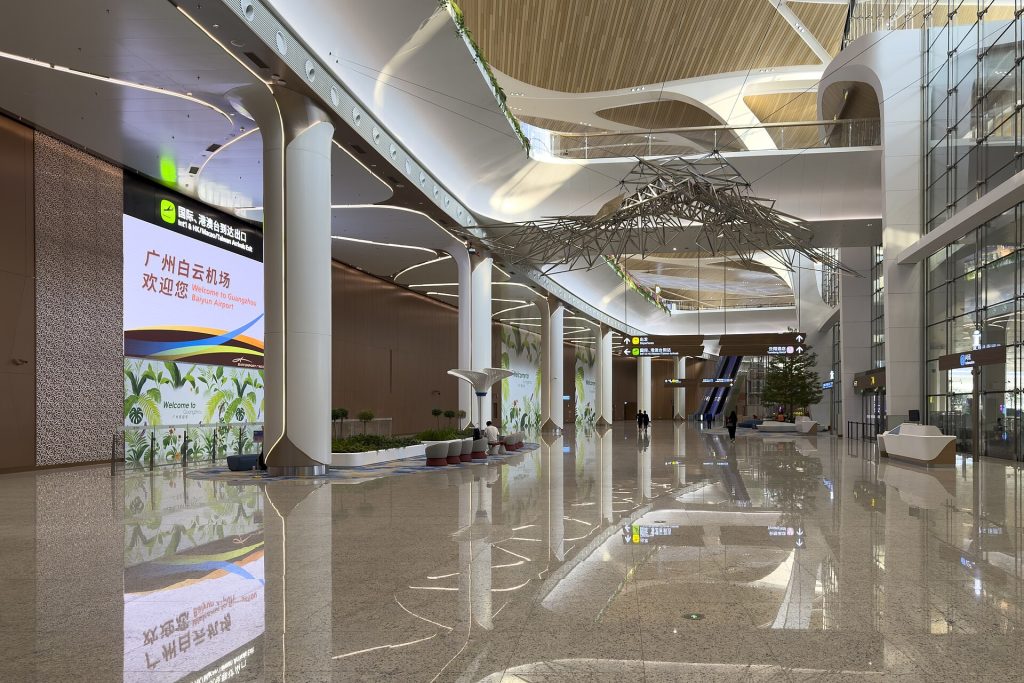
A late international arrival in China is a sequence, not a single counter. The flight lands after 10 p.m., or past midnight; the hall is quieter; some shops are shut; and the habits that work at 3 p.m.—a busy information desk, a sure metro, a wallet that already works—may not be there. You still have to clear immigration, collect bags, reach a hotel that can register a foreign passport, and get into town if the last metro has already gone.
This article walks that first-night path as one piece. It is not a substitute for reading the entry mark in your passport, for the hotel-registration explainer in hotel registration for foreigners, or for the last-metro transport detail in catching the last metro after a late-night arrival. Those remain the deeper guides. Here the job is to keep the night in order.
Immigration and the arrival hall
International arrival halls generally process the flights that land there, including late ones. We will not invent a closing time for passport control. Follow the official signs for arrivals, immigration, and baggage, and use the airport’s own page if you need a terminal map before you fly. If a transfer corridor and an arrivals corridor are both signed, take the one that matches your status: you are landing to stay, not necessarily connecting airside.
Have your passport ready, your arrival card completed if one is required (arrival registration card fill guide), and your hotel name in Chinese on a screen that works offline. Officers may ask where you will stay and how long. Answer with the booking you actually have. Do not offer visa-on-arrival stories you heard online; they are not a plan (visa-on-arrival myths vs real options).
Photograph the full entry stamp or endorsement, and any printed permit, before you leave the desk. That photo is how you will answer a hotel clerk or an airline agent later. The way a 30-day stay or a 240-hour transit clock is counted is official wording plus the mark in the passport, not a remembered blog example (how 30-day visa-free stays are counted, exit stamps and overstay risks is the departure-side companion, not tonight’s task).
Baggage carousels can be slow at the end of a bank of arrivals. Stay with the belt for your flight number. If a bag is missing, use the official delayed-luggage desk in the hall, not a stranger who offers to “help you file it” outside.
Getting into town after rail has stopped
Do not assume the metro is still running. Last trains vary by city, line, and weekday versus weekend, and they change. Check the official metro map or the airport transport board for the night you land, not a timetable from a previous trip (catching the last metro after a late-night arrival). If the last train has gone, or you cannot confirm it with a comfortable margin, switch to a car.
Follow signs to the official taxi rank. Ignore touts who approach you at the carousel or just outside customs with a “fixed price.” Official taxis are metered. Show the hotel’s Chinese name and address, saved offline (offline maps for foreigners, Amap Baidu English mode). Payment may be a QR code, a wallet, or cash (taxi cash vs QR for foreigners, when you still need cash).
Didi is often clearer in English if your app and identity checks already work (Didi ride-hailing for foreigners, Didi identity verification for foreign visitors). The important local detail is the pickup zone: a door number, a named curb, or a signed waiting bay (Didi airport pickup meeting points). Wait there. If the pin and the airport sign disagree, trust the official sign and adjust the pin, or call the driver in the app. A private car offered by a stranger in the hall is not a shortcut.
Airport buses may still run toward a rail station or a downtown stop. If you consider one, take the destination, the last departure, and the ticket method from the official board. We will not invent a route list or a fare table.
The hotel desk still has work to do
Hotel front desks in China complete police registration for foreign guests, including in the middle of the night (hotel registration for foreigners, hotel registration for foreigners). That is not optional, and a “we will do it in the morning” promise is not something to rely on. Hand over the passport, wait while they process it, and confirm they can legally host foreign passports before you travel—especially if you booked a small property or an apartment-style listing.
Related Lovely China reading
For payments, start with Alipay and WeChat Pay hub and WeChat Pay vs Alipay for tourists. For trains, keep high-speed rail first-timers guide and 12306 passport signup for foreigners handy. City hubs: Beijing first-visit guide, Shanghai first-visit guide. Connectivity: roaming vs local SIM honest guide, pocket Wi-Fi vs eSIM for China, offline maps for foreigners. Bookmark China travel tools page.
Practical checklist
- Confirm official rules on the relevant government, park, airline, or bank page near your travel week
- Screenshot bookings, tickets, and QR codes while you still have stable Wi-Fi
- Save hotel and attraction names in Chinese characters in your phone notes
- Carry passport, a backup payment method, and a small cash float (why cash is still needed)
- Test one small mobile payment before you rely on wallets at a gate or taxi
- Keep China travel tools page bookmarked for related Lovely China hubs
FAQ
Do immigration desks close before a late-night international flight lands?
International arrival halls generally process the flights that land there, including late ones. We do not publish a closing time in this article. Follow official arrivals signs and the airport’s own information. If you are landing to stay, take the arrivals path, not a transfer corridor that does not match your status.
What if the metro has already stopped?
Switch to an official taxi rank or a working Didi pickup zone instead of waiting at a shuttered gate. Confirm last-train times on the official metro map or airport board for the night you land; do not rely on a remembered timetable. Wait at the signed pickup bay, and ignore touts who approach you at the carousel.
Will the hotel still register my passport after midnight?
Yes, hotel front desks in China still complete police registration for foreign guests at night. That step is not optional. Confirm before you travel that the property can legally host foreign passports, especially if you booked a small or apartment-style listing, and hand over the passport when you arrive.
What should I photograph at passport control?
Photograph the full entry stamp or endorsement, and any printed permit, before you leave the desk. That image is what you will show a hotel clerk or an airline agent later. Also save the hotel’s Chinese name, address, and phone number offline for the driver.
Notes for late 2026 travellers
Late December 2026 and the New Year week into 2027 bring colder mornings, earlier sunsets, and holiday crowds in many city hubs. Pack real winter layers in the north, and leave extra time on weekends and around 1 January.
This article does not invent ticket prices, opening hours, processing times, consular fees, or official statistics. When a number matters, verify it on the official site, app screen, or ticket board near your travel week.
If an official rule page disagrees with this guide, follow the official page. Lovely China orients English-speaking travellers; we are not an immigration, banking, or medical authority.