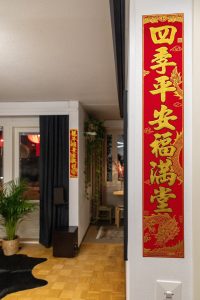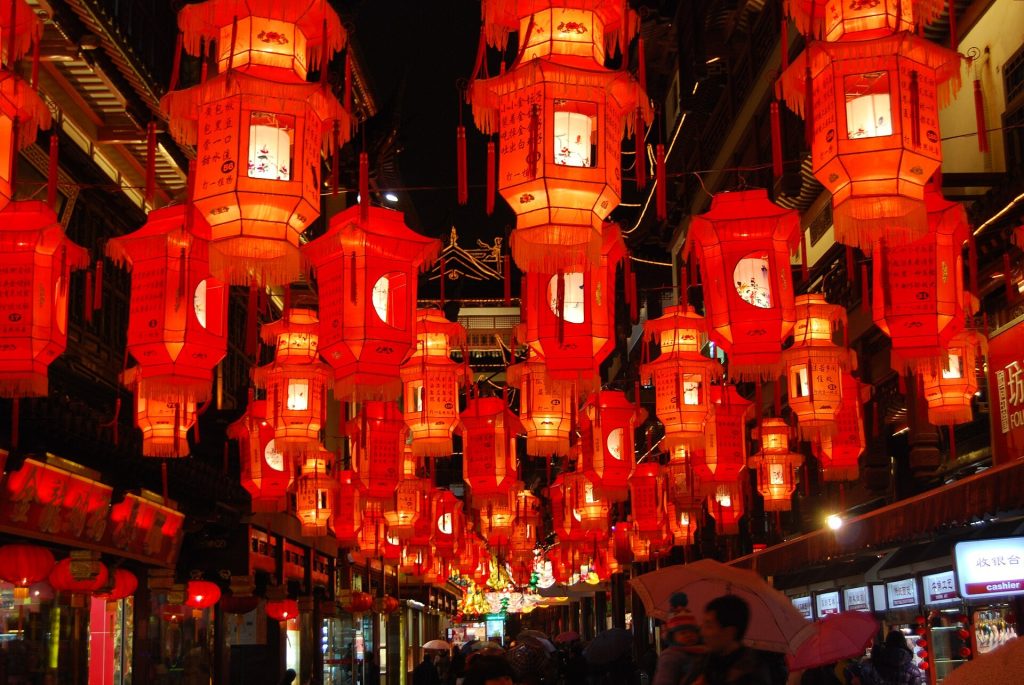
Chinese New Year’s Day in 2027 falls on 6 February. In the days around that date, and in the wider Spring Festival season, you will hear greetings everywhere: in shops, at hotel desks, in messages, and on red decorations in the street. Visitors who offer a short, well-chosen phrase—and who accept one with a smile—usually find the gesture warmer than a long speech. This is a practical etiquette guide to spoken and written greetings, not a lecture on folk rules, and not a calendar of official workdays.
The State Council publishes the official nationwide public-holiday timetable in an official notice. This article will not invent that timetable, the number of days off, or which weekend is swapped for a workday. Check the current official announcement for workdays and travel planning, and use New Year’s Day 2027 what’s open only for the separate New Year’s Day (Yuan Dan) question in early January. Spring Festival is not the same holiday as 1 January. For travel-rush context, see Chunyun 2027 for foreign visitors; for the couplets and door decorations you will walk past, see Spring Festival couplets for visitors.
A few phrases that do the work
The most useful spoken greetings are short. 过年好 (guònián hǎo) is a warm, general “happy New Year” in the Spring Festival sense, easy to say to hotel staff, shopkeepers, and acquaintances. 新年快乐 (xīnnián kuàilè) is widely understood and is also used in more general New Year contexts; around Spring Festival it is still welcome, even if some families prefer more festival-specific wording. 恭喜发财 (gōngxǐ fācái) is a cheerful “wishing you prosperity,” common in shops and light-hearted exchanges; it is festive rather than intimate.
You do not need a long repertoire. Say one phrase clearly, smile, and stop. A slightly imperfect tone is fine. A memorised paragraph is not required and can feel like a performance. If someone greets you first, you can repeat the same phrase back, or simply say 过年好 and thank them.
Written greetings appear on phones, on restaurant screens, and on red paper. If you send a message to a Chinese colleague or friend, a short 过年好 or 春节快乐 (chūnjié kuàilè, “happy Spring Festival”) is enough. You do not need poetry. If you receive a longer blessing, a brief thanks and a return greeting is polite.
Red envelopes, or hongbao, are a separate custom with their own etiquette, especially when they include money or a WeChat transfer. Do not assume you must give one. If a digital red packet appears in an app, WeChat hongbao red packets for foreigners explains the visitor-side mechanics; this article will not invent amounts or a rule that foreigners must participate.
When to offer a greeting, and when a smile is enough
In the days around Lunar New Year, a greeting at a hotel desk, a restaurant welcome, or a shop counter is ordinary and appreciated. You can offer one when you arrive, when staff clearly greet you first, or when you leave a place that has decorated for the festival. You do not need to greet every person in a metro car, and you do not need to interrupt someone who is clearly at work in a rush.
With people you know a little—a colleague, a host, a guide—a greeting at the beginning of a conversation is natural. With very close friends, families use additional, sometimes more personal blessings. You are not expected to know every regional variant. Stick to the common phrases above unless someone teaches you a local favourite and you want to try it.
Superstitions and folk avoidances circulate in this season, from what to say to what not to give as a gift. They are not binding rules for a visitor, and they are not uniform across China. If a host mentions a preference, follow it out of courtesy. Do not lecture anyone about “the real meaning” of a custom, and do not invent taboos for other travellers.
If you are working or travelling through the holiday, remember that many people are visiting family. A greeting plus patience in a queue is worth more than a perfect pronunciation. Official opening hours for museums, shops, and ticket offices should be checked on official pages; do not assume a site is open or closed on 6 February without a current notice.
Tone, humour, and what not to force
Keep the tone warm and simple. Jokes about money when saying 恭喜发财 are not required. Physical gestures vary: a small nod, a smile, occasionally a slight bow in a formal setting. You do not need to perform a ritual you have only seen in a video. If someone offers a handshake, a handshake is fine. If they do not, do not insist.
Children may be celebrated in this season, but a visitor should not give money or gifts to a child they do not know. If you are invited to a family meal, bring a small, ordinary gift only if your host’s culture in that moment makes it easy, and ask a local friend if you are unsure. This is not a banquet-seating manual; it is a reminder that greetings are the easy, sufficient gesture for most encounters.
Photography of decorations is usually fine in public streets; be considerate in doorways that are clearly family homes, and of people who did not agree to be in your frame. The couplets and lanterns are part of the public festival landscape; Spring Festival couplets for visitors will tell you more about what the paper on the door is saying.
If you remember only a little, remember the date—6 February 2027 for New Year’s Day itself—and one phrase: 过年好. Check the official holiday notice for workdays, travel as if many of your neighbours are also on the move, and let the greeting be short, kind, and unforced. China travel tools page will cover the logistics; the greeting is the human part, and it is enough.
Related Lovely China reading
For payments, start with Alipay and WeChat Pay hub and WeChat Pay vs Alipay for tourists. For trains, keep high-speed rail first-timers guide and 12306 passport signup for foreigners handy. City hubs: Beijing first-visit guide, Shanghai first-visit guide. Connectivity: roaming vs local SIM honest guide, pocket Wi-Fi vs eSIM for China, offline maps for foreigners. Bookmark China travel tools page.
Practical checklist
- Confirm official rules on the relevant government, park, airline, or bank page near your travel week
- Screenshot bookings, tickets, and QR codes while you still have stable Wi-Fi
- Save hotel and attraction names in Chinese characters in your phone notes
- Carry passport, a backup payment method, and a small cash float (why cash is still needed)
- Test one small mobile payment before you rely on wallets at a gate or taxi
- Keep China travel tools page bookmarked for related Lovely China hubs
FAQ
When is Chinese New Year’s Day in 2027?
6 February 2027. The official nationwide public-holiday timetable—including weekend make-up workdays—is published in a State Council notice. Check that official announcement rather than a memorised number of days off.
What is a simple greeting I can use?
过年好 (guònián hǎo) is a warm, general Spring Festival greeting. 恭喜发财 is a cheerful prosperity wish, common in shops. Say one phrase clearly, smile, and stop. You do not need a long speech.
Do I have to give red envelopes?
No. Hongbao is a separate custom. Do not assume you must give money, especially to a child you do not know. If a digital red packet appears in an app, use our hongbao guide for the mechanics.
Notes for late 2026 travellers
Late December 2026 and the New Year week into 2027 bring colder mornings, earlier sunsets, and holiday crowds in many city hubs. Pack real winter layers in the north, and leave extra time on weekends and around 1 January.
This article does not invent ticket prices, opening hours, processing times, consular fees, or official statistics. When a number matters, verify it on the official site, app screen, or ticket board near your travel week.
If an official rule page disagrees with this guide, follow the official page. Lovely China orients English-speaking travellers; we are not an immigration, banking, or medical authority.