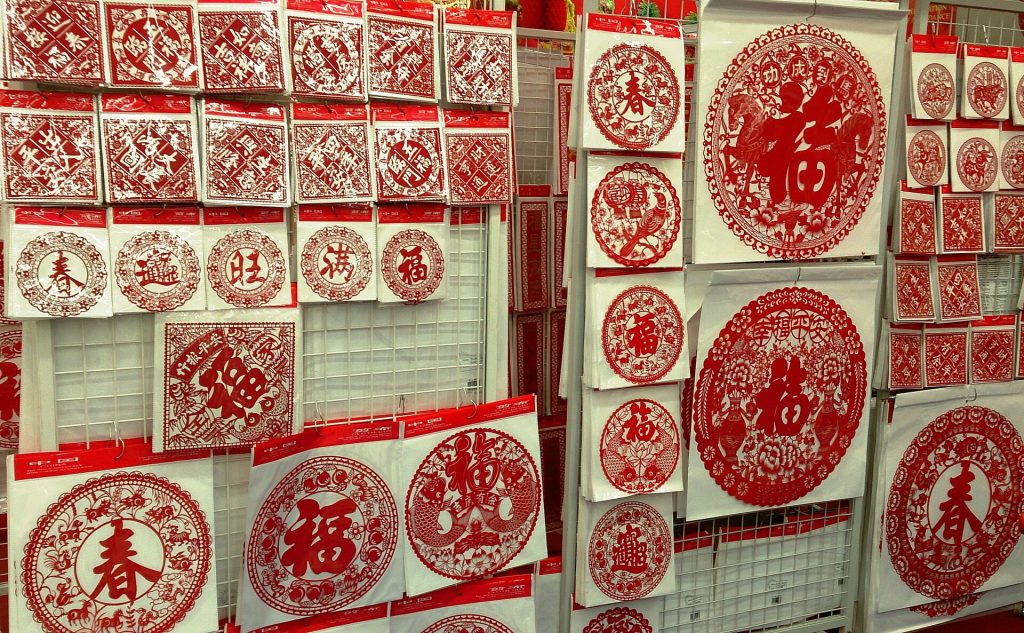
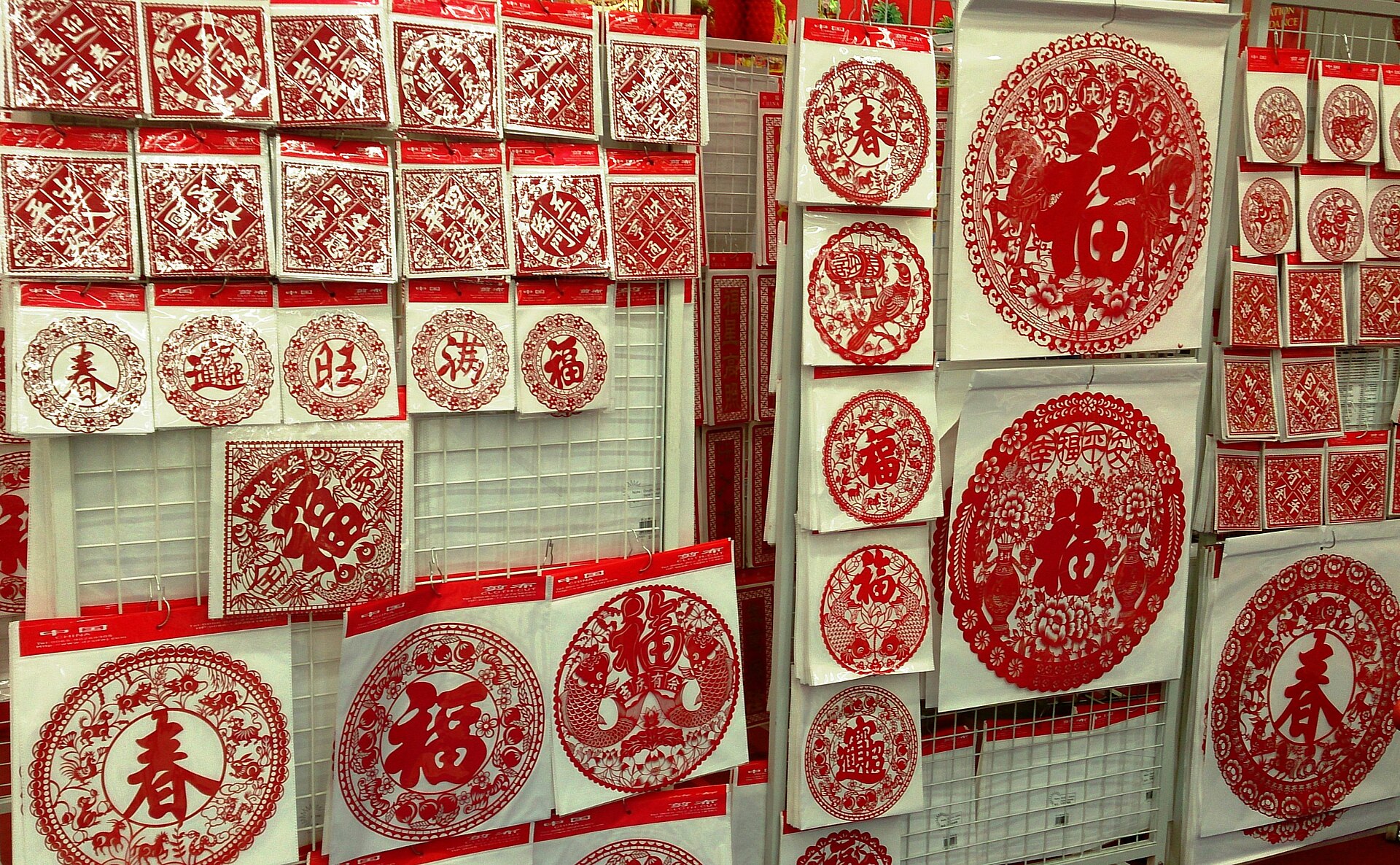
The old woman in the Yangshuo market stall didn’t look up when I approached. Her scissors — two blunt, blackened blades joined by a steel loop — moved with a dry snip-snip-snip against folded red paper. No pencil lines guided her. Within the time it takes to drink a cup of tea, a phoenix appeared, wings spread, each feather distinct. She tapped the stack, unfolded the top sheet, and handed it to me. The paper remembered every cut.
From palace screens to village windows
Paper cutting did not start as folk art. In the Eastern Han, when Cai Lun standardized the pulp-making process, the first sheets were precious — tribute items for the imperial court. Palace ladies cut silk and gold foil into phoenixes and dragons to adorn screen panels and ceremonial headdresses. By the Tang dynasty, paper had slipped into common households. Farmers in Shaanxi and Shanxi began pasting cutouts on window lattices each winter, letting candlelight turn the designs into moving shadows across the kang bed. The tradition hardened into ritual: every Lunar New Year, last year’s brittle cutouts came down, soaked off with hot water, and fresh ones went up before the reunion dinner.
Two hands, two tools, two aesthetics
Travel north to Yuxian in Hebei and you’ll find men sitting on low stools, mallets tapping dozens of knives through stacked Xuan paper. The “knife method” produces hundreds of identical copies — bold, symmetrical, meant for mass festivals. Cross the Yellow River into Shaanxi’s countryside and women work with nail scissors, one sheet at a time. The “scissor method” yields asymmetry, improvisation, a rooster with a slightly crooked comb that feels alive. Neither is superior. A Yuxian master once told me, “The knife remembers the pattern. The scissors remember the mood.”
What the symbols actually mean
Foreign buyers often choose by prettiness. Locals choose by pun. The language of paper cutting is homophone-heavy:
- Bat (fu 蝠) — sounds like “blessing” (fu 福). Five bats circling a peach: “Five Blessings Surround Longevity.”
- Fish (yu 鱼) — echoes “surplus” (yu 余). A pair flanking a lotus: “Surplus Year After Year.”
- Pomegranate — split open to reveal seeds. “Many sons” (zi 子) because seed and son share the character.
- Magpie on plum blossom — xi (magpie) plus mei (plum) sounds like “joy reaches the eyebrows.”
- Rooster — crows at dawn, driving away darkness. Often pasted on the bedroom door of a newborn boy.
- Double happiness (囍) — cut as a single continuous line. Wedding windows, always red, never pink.
Regional dialects add layers. In Guangdong, a crab means “harmony” because its sideways walk sounds like “side-by-side” in Cantonese. In Sichuan, a chili pepper signals a spicy, passionate marriage. Ask the cutter what a motif means before you buy; the answer tells you whether they inherited the knowledge or just copied a pattern book.
Where to watch without a tour group
Skip the reconstructed “folk culture villages” near major airports. Go instead to:
- Yuxian County, Hebei — winter market days (the 3rd, 8th, 13th of each lunar month). Masters demonstrate knife-cutting in open courtyards. Buy a stack of unmounted sheets; they pack flat in luggage.
- Fengning Manchu Autonomous County — women’s cooperatives in villages like Dage. You’ll sit on a heated brick bed while the cutter talks through each snip. No English, but gestures translate.
- Ansai, Shaanxi — the Loess Plateau caves double as studios. Look for the red lantern outside a yaodong entrance. The cutter may invite you to try a pair of her spare scissors on scrap paper.
- Yangzhou, Jiangsu — the Paper Cutting Museum inside the Slender West Lake park has a quiet upstairs workshop where retired artisans take apprentices. Weekday mornings only.
Timing matters. The week before Spring Festival, every cutter is fulfilling orders — no time for visitors. The slack season (after Lantern Festival until Qingming) is when they teach.
What newcomers get wrong
- Framing under glass immediately. Paper needs to breathe. Mount on acid-free backing board with wheat-starch paste, leave a 2 cm border, and hang away from direct sun. The red will mellow to brick in a decade — that’s the point.
- Buying “antique” cutouts from street vendors. Genuine pre-1950s pieces disintegrated on window lattices. What’s sold as “old” is usually 1990s reproductions artificially yellowed with tea water.
- Asking for custom designs on the spot. A cutter needs days to compose a new pattern, especially if it involves calligraphy. Commission at least a lunar month ahead.
- Treating all red paper as equal. Cheap dyed pulp fades to gray in weeks. Real Xuan paper holds vermilion for generations. Rub a corner between thumb and forefinger — quality paper feels cool, slightly resistant, never powdery.
- Photographing without permission. In village workshops, the designs are family intellectual property. A cutter in Ansai once chased a tourist down the lane for posting her unpublished peony pattern on social media. Ask first. Most say yes if you explain the purpose.
A practice you can try tonight
You don’t need Xuan paper or heirloom scissors. Take a square of red origami paper (15 cm), fold it in half, then in half again — a quarter sheet. Draw half a butterfly against the folded edge: one wing, half the body, one antenna. Cut along the line with sharp nail scissors. Unfold slowly. The symmetry will surprise you. Now fold a fresh square diagonally, then diagonally again, then once more — an eighth. Cut a tiny triangle from the tip, a crescent from the long edge. Unfold. A snowflake no two alike. That’s the whole art: subtraction revealing structure. The old woman in Yangshuo would nod.