The old man at the roadside stand in Pingyao handed me a steamed bun the color of dried earth. No steam rose from it. No charcoal smoked behind his cart. “Cold food today,” he said, wiping flour from his fingers. “Fire rests.” It was the third day of the third lunar month, the tail end of the Cold Food Festival, and the entire alley smelled of sesame oil and cold dough instead of the usual wok breath.
What Arrives on the Table
You will not find a hot meal served at a traditional household during Hanshi. The rule is absolute: no flame lit, no smoke raised. What appears instead is a parade of dishes made days ahead and kept in clay jars or bamboo baskets. In the north, the star is sangzi — thin wheat noodles twisted into nests and deep-fried before the ban begins. They shatter like dry leaves between your teeth, salty and faintly sweet from the egg wash. In the south, green rice dumplings called qingtuan dominate. Their color comes from mugwort or barley grass juice pounded into glutinous rice flour. Inside, a spoonful of red bean paste or salted egg yolk waits, cool and dense.
- Sangzi (fried wheat noodles) — made three days prior, stored in tin boxes lined with paper
- Qingtuan (green rice dumplings) — steamed before the fire ban, kept on damp cloth
- Cold congee — plain rice porridge cooked the night before, eaten with pickled mustard greens
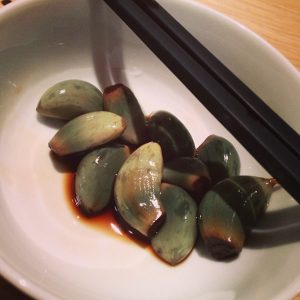
- Preserved eggs — tea-stained or lime-cured, peeled and quartered
- Fruit — loquats, early cherries, or mulberries rinsed in well water
The texture contrast is the point. Crunch against yield. Salt against plain starch. You eat slowly because nothing burns your tongue. An aunt in Taiyuan once told me, “Hot food rushes the stomach. Cold food makes you chew the memory.”
How It Should Taste and Look
Good sangzi snaps cleanly, no bend. If it bends, the oil wasn’t hot enough when fried. The color should be pale gold, not brown. Qingtuan must hold its jade hue — dull grey-green means the mugwort was old or the dough overworked. The filling should not weep. When you press a dumpling, the skin rebounds. Cold congee separates into water and grain; stir it with a wooden spoon until it clouds. Pickles must crunch, not surrender to mush. The preserved egg yolk centers should be creamy, ringed with translucent amber, never green at the edges.
Presentation is deliberate. Bowls are shallow. Chopsticks rest on a ceramic bridge. No plastic. A single sprig of fresh mugwort may sit beside the plate — the only green allowed that isn’t food.
A Home Method
If you rent a courtyard house or stay with a family, you can prepare the basics yourself. Start two days before the festival begins.
- Day one: Fry sangzi. Heat peanut oil in a wide iron wok until a chopstick tip bubbles violently. Drop in twisted dough strips, ten at a time. Fifteen seconds. Lift with a spider strainer. Drain on wire racks. Cool completely before boxing.
- Day one evening: Steam qingtuan. Mix glutinous rice flour with mugwort juice until the dough feels like an earlobe. Wrap around chilled red bean balls. Steam twenty minutes. Cool on bamboo mats, covered with clean gauze.
- Day two: Cook congee. One cup rice, ten cups water. Simmer two hours. Cool in the pot. Refrigerate if you have power; otherwise set the pot in a basin of cold well water.
- Day two night: Boil eggs for tea-staining. Crack shells gently. Simmer in black tea, soy sauce, star anise, and orange peel for forty minutes. Steep overnight.
- Festival morning: Arrange everything. No stove lit. No kettle whistling.
The hardest part is resisting the kettle. Tea must be cold-brewed the night before — loose leaf in a clay jar, topped with spring water, left in the shade.
Restaurant Ordering
Most city restaurants ignore the ban. They serve hot pot and sizzling plates as usual. But in older neighborhoods — especially around Pingyao, Jiexiu, or the western hills of Beijing — you will find “Cold Food Menus” chalked on boards. Order the liangcai platter: sliced lotus root with chili oil, smashed cucumber with garlic, wood ear fungus in vinegar. Ask for “Hanshi congee” — they keep a thermos from the night shift. Do not ask for reheated qingtuan. The waiter will stare. If you want warm tea, order “yesterday’s brew.” They know what it means.
Avoid places advertising “Festival Specials” with pictures of steaming buns. That’s for tourists who don’t know the rule. The real spots have no photos. Just a handwritten list and a grandmother in the corner peeling eggs.
Mistakes Beginners Make
First: lighting a cigarette. An old vendor in Jiexiu once snatched a lighter from a visitor’s hand and tossed it into a rain barrel. “Fire offends Jie Zitui,” she said. The legend says the loyal minister died hugging a tree rather than serve a lord who forgot him. The lord ordered the mountain burned to force him out. Jie Zitui burned instead. So fire dies for these days. Keep your lighter in your bag.
Second: expecting tomb-sweeping crowds. Hanshi overlaps with Qingming, but they are not the same. Qingming is the single day of grave visits — paper money burned, wine poured, weeds pulled. Hanshi is the quiet before and after. Families eat cold meals at home. They do not picnic at cemeteries. If you go to a graveyard on the second day of the festival, you’ll find only groundskeepers.
Third: buying vacuum-packed qingtuan from a supermarket. The texture dies in plastic. The mugwort flavor flattens. Seek a morning market where a woman steams them in bamboo tiers and sells by the dozen, wrapped in lotus leaves.
Fourth: asking “When does it end?” The answer shifts. In some villages, the ban lifts at noon on the third day. In others, at first cockcrow of the fourth. A taxi driver in Datong told me, “When the oldest woman in the house lights the stove, it ends.” Watch for smoke rising from a chimney. That’s your signal.
What Locals Expect
You are not required to fast from fire. No one will chase a foreigner from a kitchen. But if you are invited into a home, eat what is set out. Do not ask for hot water. Do not suggest ordering takeout. Compliment the sangzi crispness. Ask how long the family has used their mugwort strain — some lineages guard the same rootstock for generations. You will be offered a second dumpling. Take it. Refusal reads as disrespect to the labor that kept the food edible without heat.
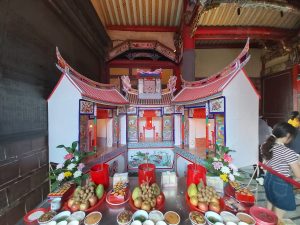
If you walk past a family altar, pause. Bow once. No incense sticks — those are fire. A nod, hands at sides, is enough. The ancestors eat cold food too.
By the time the first wok clangs in the alley behind my Pingyao guesthouse, the green dumplings are gone. The sangzi tins are empty. The old man packs his cart. “Tomorrow hot again,” he calls. I buy one last cold bun for the road. It tastes like patience.