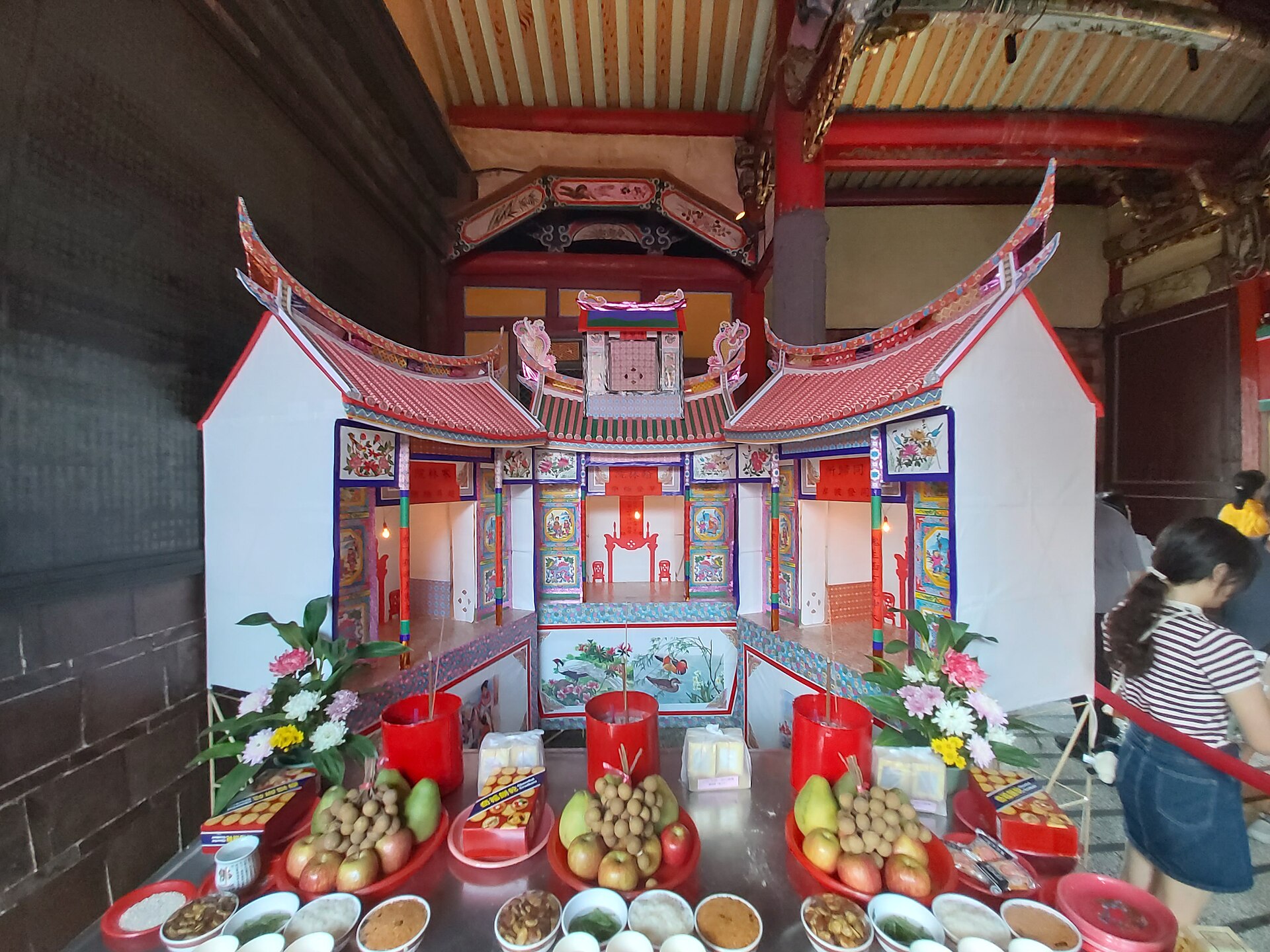
The air in the alley behind my apartment complex smells of singed paper and sandalwood incense. It is the fifteenth night of the seventh lunar month, and the small folding tables usually reserved for mahjong tiles are piled high with offerings: whole boiled chickens, pyramids of oranges, cans of beer, and stacks of hell money waiting for a match. An elderly neighbor waves me over, pressing a stick of incense into my hand before I can protest. “For your grandparents,” she says, nodding toward the small metal burner. “They are visiting tonight. Don’t let them go hungry.”
When the Gates Open
The festival falls on the fifteenth day of the seventh lunar month, usually landing in August or early September on the Gregorian calendar. In southern provinces like Guangdong and Fujian, and across the strait in Taiwan, the main ceremonies often shift to the fourteenth night. The entire seventh month is treated as Ghost Month, a span when the gates of the lower realm swing wide. Unlike the spring Tomb Sweeping Festival, where the living travel to tend graves, this period brings the ancestors—and the unattached wandering spirits—directly to the doorsteps of the living. The energy feels different: heavier, more cautious. People avoid scheduling weddings, opening new businesses, or moving house during these weeks. You feel it in the quiet of the night markets after ten o’clock, the way pedestrians give the roadside burners a wide berth.
Setting the Table for Invisible Guests
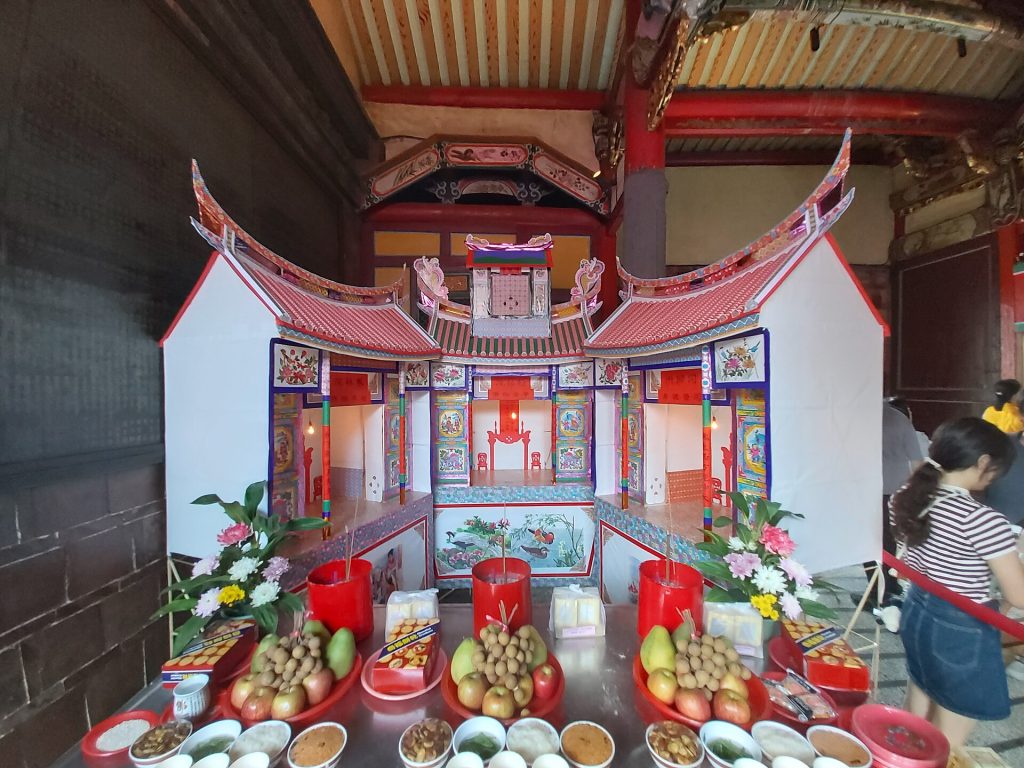
The core of the household ritual is the pudu (普渡), the universal offering. Families set a temporary altar facing the street or the front door, distinct from the ancestral shrine inside. The spread is specific: dishes must be odd in number—three, five, or seven—and the food is cooked plain, without heavy spice, because spirits are thought to prefer the essence rather than the flavor. A typical layout includes a whole steamed fish (head and tail intact for completeness), a plate of pork belly slices, tofu blocks, steamed buns, peanuts, and a cup of baijiu or tea. Chopsticks are placed vertically in the rice bowl, a gesture reserved strictly for the dead. Incense is lit in sets of three, bowed to the four directions, then planted in the ash. The family waits while the spirits “eat”—usually the time it takes for the incense to burn down—before the food is brought back inside for the living to share. Eating the offerings afterward is considered auspicious, a way of receiving the ancestors’ blessing.
Paper Wealth and Water Lanterns
Walk through any residential neighborhood on the peak night and you will see metal barrels or designated burn pits glowing on the pavement. The paper offerings have evolved far beyond simple yellow joss paper. Shops sell intricate cardboard mansions complete with paper servants, flat-screen televisions, luxury sedans, and even smartphones—all designed to be burned so the essence transmits to the afterlife. The hell money comes in bricks of billions; you fold each note loosely before tossing it into the flames so it doesn’t clump and burn incompletely. In river towns and coastal cities, the ritual moves to the water. Lotus-shaped lanterns with a candle at the center are set adrift after dusk, each carrying a written wish or a name. The light guides the water-bound spirits away from the banks of the living. I once watched a grandmother in Sichuan teach her grandson to fold the corners of a paper ingot just so, whispering that sloppy folds meant the bank in the underworld would reject the deposit.
Taboos That Shape Daily Life
Ghost Month carries a long list of behavioral cautions that locals absorb from childhood. You do not hang laundry out overnight—wet fabric is said to attract wandering souls who might try it on. You do not whistle after dark; the sound mimics a spirit’s call and invites them in. Swimming is discouraged, especially in lakes or rivers, because drowned ghosts are believed to pull substitutes down to take their place. If you feel a sudden tap on the shoulder on a deserted street, you turn your whole body, not just your head; turning only the head extinguishes one of the three protective “fires” on your shoulders and head. Photos taken at night during this month are scrutinized later for unexplained shadows. These aren’t treated as superstitions so much as practical safety measures, like looking both ways before crossing a road. A foreign colleague once laughed at the no-whistling rule until his Chinese roommate quietly moved his bed away from the window the next day.
Temple Ceremonies and Public Spectacle
Beyond the household, Taoist temples and Buddhist monasteries stage large-scale salvation rites. At a Taoist jiao ritual, priests chant scriptures while circling a massive paper effigy of the Ghost King, Da Shi Ye (大士爺), a towering figure with a fierce face and a long red tongue. The effigy is burned at the climax, sending the King back to the underworld with the collected petitions. Buddhist temples hold Yulanpen assemblies, reciting the Ullambana Sutra and offering food to the sangha to generate merit for suffering ancestors. In cities like Taipei, Hong Kong, and Singapore, these events spill into stadiums or public squares, complete with Getai (歌臺) performances—live opera, pop singers, and comedians performing on temporary stages. The front row of chairs is always left empty, reserved for the unseen audience. If you attend, sit further back. Applaud politely. Do not step on the threshold of the altar. And never, ever sit in the empty front row, even if the show is sold out and your feet hurt.
What Newcomers Get Wrong
The most common misstep is treating the festival as a Halloween-style spectacle. It is not a costume party. Painting your face like a skeleton or asking locals to “perform a ritual for the tourists” marks you as tone-deaf. Another error is photographing burning offerings up close without permission; the flash is considered disruptive to the transmission. Some visitors try to participate by buying hell money and tossing it into a public burner, but they fold it like a paper airplane or crumple it into a ball. The spirits, the logic goes, cannot use damaged currency. If you want to join a neighbor’s offering, wait to be invited. Accept the incense with both hands. Bow three times. Do not blow out the flame—wave it out with your hand. And when the family sits down to eat the offerings afterward, take a modest portion of the vegetables or rice. Refusing entirely suggests you reject the shared fortune. The festival is, at heart, a family reunion where half the guests are invisible. Respect the guest list, and you’ll be welcomed back next seventh month.