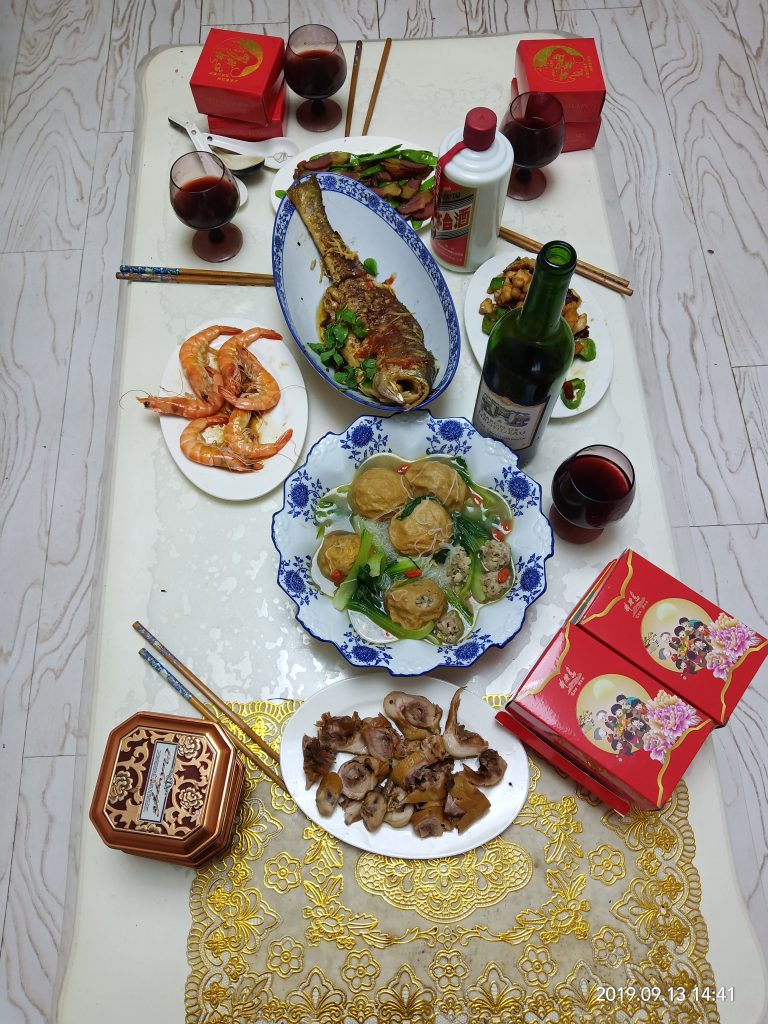
You are a guest at a reunion — not a performer
Mid-Autumn Festival in 2026 falls on Friday 25 September, with a short holiday window roughly 25–27 September. For many families, the emotional centre is not a lantern selfie — it is a reunion dinner (tuányuán fàn). If a Chinese friend, partner, colleague, or host family invites you, the honour is real. So is the mild panic: Where do I sit? Do I bring mooncakes? How much should I eat? What if I cannot follow the toast?
This guide is for foreign guests at a family table, not for office gift pools or public lantern markets. Those have their own lanes: Mid-Autumn office gift etiquette and Mid-Autumn lantern markets 2026. Here the goal is simpler — arrive kindly, eat courteously, thank clearly, and leave without turning the evening into a cultural exam.
Before you go: confirm time, place, and expectations
Ask three practical questions early:
1. Is dinner at home or a restaurant? Home meals can be more intimate; restaurants may have private rooms and clearer bill rituals.
2. What time should I arrive? On-time or slightly early (about 10–15 minutes) is safer than fashionably late for family dinners.
3. Should I bring anything? If the host says “just yourself,” still consider a small, easy gift unless they insist repeatedly.
Useful calendar context for your hosts’ stress level: makeup workday Sunday 20 September, Mid-Autumn 25 September, Golden Week roughly 1–7 October. Families may be juggling travel and leave. Skim Golden Week 2026 vs Mid-Autumn so you do not casually suggest a long post-dinner road trip into peak weeks.
If you are the one hosting relatives visiting you in China, switch guides to hosting family visitors for Mid-Autumn 2026. This article stays on the guest side of the table.
What to bring (without overdoing it)
Good guest gifts are modest and easy to share:
- Quality fruit in a neat box
- A tin of tea or cookies that travels well
- A small dessert that is not identical to what the host already prepared
- Flowers only if you know the household likes them (some apartments have limited vase space)
Mooncakes are classic, but many families already have more tins than they can finish. If you bring mooncakes, choose a small box or a distinctive flavour rather than a giant corporate gift set. Avoid anything that creates kitchen work for the host on arrival (raw ingredients that need cooking, melting ice cream, huge floral stands).
Skip jokes about “weird Chinese food” as your gift card message. Warm and simple beats clever.
Arrival, greetings, and phones
Greet elders first when you can identify them. A smile, a nod, and a short greeting in Mandarin if you have one — nín hǎo — is enough. You do not need a speech about lunar astronomy.
Offer to remove shoes if you see a shoe cabinet and slippers. Follow the household’s lead.
Phones: take a couple of group photos if invited, then put the phone away during the main meal. Do not livestream a private family dinner without explicit permission. Mid-Autumn nights are full of public content elsewhere; this table is not a content set.
Seating without awkward hovering
In many families, elders or the host indicate seats. Wait to be pointed toward a chair rather than claiming the head of the table. If you are a partner meeting family for the first time, sit where your partner guides you.
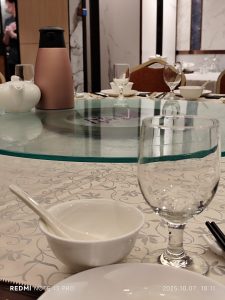
At restaurants, lazy Susans are common. Spin slowly. Stop the turntable gently so elders can reach dishes. Do not spin while someone is serving themselves.
Eating courtesy that reads as respect
Let hosts start the meal rhythm
Wait until elders or hosts invite everyone to begin. If dishes arrive in waves, sample a little of each rather than emptying one plate.
Use serving tools when provided
Public chopsticks or spoons for shared dishes are a kindness — use them. If none exist, use the reverse ends of your chopsticks for shared plates when that is the local habit, or ask quietly.
Manage spice and dietary limits early
Tell your host before the meal if you cannot eat shellfish, pork, extreme chilli, or alcohol. Early honesty is kinder than leaving untouched plates in silence. Offer a simple reason without a lecture.
Pace your appetite
Leaving a little food can signal that you are full and the host provided plenty; cleaning every dish can also be read as praise. Families differ. A safe middle path: eat heartily of what you like, leave a small remainder, and compliment specific dishes.
Bones and shells
Use the small plate for bones if one is provided. Do not hide debris under rice.
Toasts, alcohol, and soft declines
Toasts may appear — sometimes with báijiǔ, beer, or wine. Common courtesy:
- Stand or raise your glass when elders toast, matching the room’s formality.
- Clink glasses gently; with elders, some people hold their glass slightly lower as a respect gesture.
- Take a sip if you drink; you are not always required to drain the cup unless the table’s style is very insistent.
If you do not drink alcohol, say so early and cheerfully: tea, juice, or soft drinks are normal substitutes. Do not fake drunken bonding. Do not pressure anyone else to drink.
Conversation topics that travel well
Safe lanes: travel stories, food appreciation, your city, light work updates, compliments on cooking, interest in Mid-Autumn customs. Ask one sincere question about how the family usually spends the evening — moon viewing, games with children, TV, or a short walk.
Topics to handle carefully: income comparisons, property prices as debate sport, politics, and unsolicited parenting advice. If language gaps appear, smile, slow down, and let your bilingual friend translate in chunks rather than whispering side plots all night.
For explaining the festival later to your own relatives abroad, explaining Mid-Autumn Festival to family abroad helps — but do not turn the live dinner into a lecture series.
After dinner: mooncakes, fruit, and goodbye
Sweet trays and fruit often follow the savoury courses. Try a small piece of mooncake even if you are full; declining everything sweet can feel abrupt unless you have a clear dietary reason. Tea may appear — accept at least one cup if offered.
Offer to help clear dishes at home. Hosts may refuse; offering once is enough. At restaurants, clarify who pays beforehand. As a foreign guest, fighting aggressively for the bill can embarrass hosts who planned to treat you. A graceful approach: thank them, offer once, then accept graciously if they insist — and return kindness later with a meal or gift on another day.
When leaving, thank elders specifically and the cook by name if you know it. Message a short thank-you the next day.
If you feel alone at a loud table
Reunion dinners can be noisy, fast, and full of in-jokes. It is okay to be quiet, smile, and participate through food. You are not failing etiquette by being soft-spoken. If the evening overwhelms you, a brief step outside for air — framed as a phone call or a stretch — is better than shutting down at the table.
For a different Mid-Autumn mood entirely — a solitary city walk rather than a banquet — the Stories piece First Mid-Autumn alone in a Chinese city explores that quieter night. Both experiences are valid.
A compact guest checklist
- Confirm time and address; arrive on time
- Bring a small shareable gift unless firmly told not to
- Greet elders; follow seating cues
- Use serving tools; pace spice and alcohol honestly
- Phone down during the main meal
- Thank hosts the same evening and once the next day
Bottom line
Mid-Autumn reunion dinner etiquette for foreign guests is mostly attentiveness: show up on time, honour elders, share food cleanly, toast lightly or decline kindly, and thank people like you mean it. You do not need perfect Mandarin or encyclopedic festival lore. You need a calm presence at a table that is already carrying the weight of reunion season.