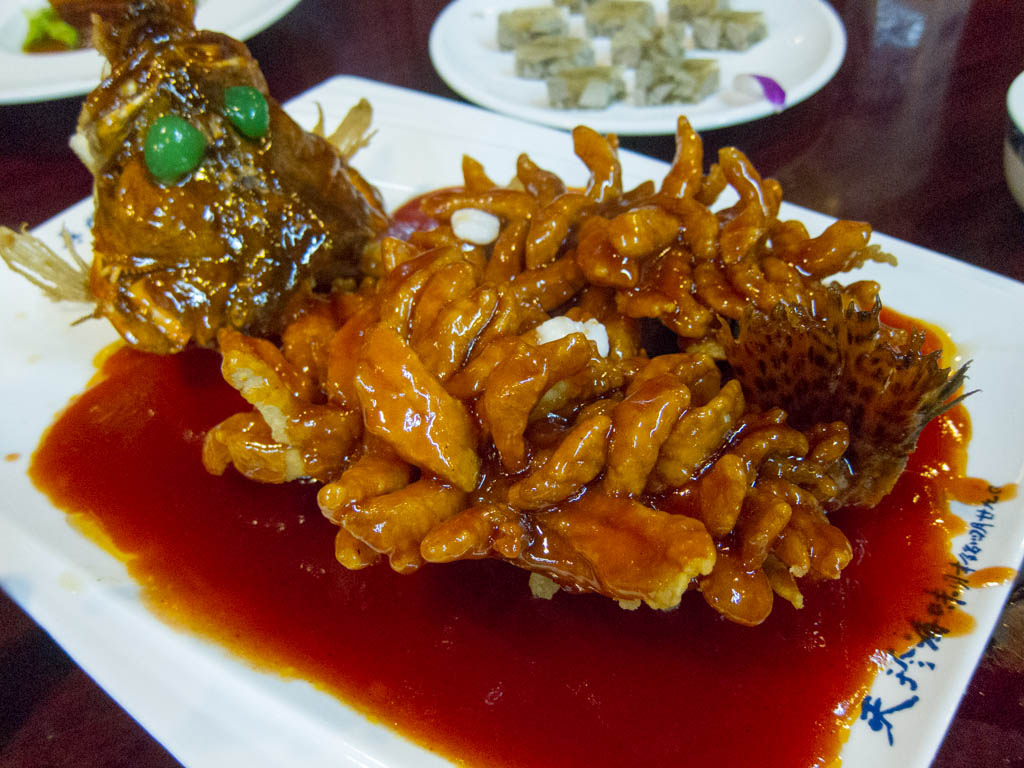
What squirrel fish is
Squirrel fish (松鼠鳜鱼, songshu guiyu) is a Suzhou — and broader Jiangsu — banquet classic: mandarin fish (guiyu) scored, fried until the flesh fans open like a squirrel’s coat, then dressed in a bright sweet-and-sour sauce with pine nuts or similar crunch in many kitchens. It is a showpiece plate more than a quiet solo snack. For English-speaking first-timers, it sits in the gentle-sweet lane of Jiangnan cooking alongside Suzhou sweet cuisine, not the chilli-forward map of Sichuan.
Expect a dramatic presentation, crispy exterior, tender interior, and sauce that tastes fruity-sour rather than dark and sticky like some takeaway “sweet and sour” abroad. If the fish arrives soggy, harshly vinegary, or smelling of old oil, try another kitchen tomorrow rather than deciding Suzhou food is not for you.
Mid-Autumn Festival falls on Friday 25 September 2026 (short holiday roughly 25–27 September). National Day Golden Week runs roughly 1–7 October 2026, with a makeup workday on Saturday 10 October 2026 per State Council notice 国办发明电〔2025〕7号. Garden-district restaurants fill on holiday weekends — book or eat slightly off-peak if you are combining fish with a Humble Administrator’s Garden or Tiger Hill day.
How the “squirrel” shape works
Chefs score the fillets in a cross-hatch so frying opens the flesh into points. The head and tail often stay for the silhouette. You do not need to understand every knife cut to enjoy it — but knowing it is a composed banquet dish helps you order the right table size. This is rarely a cheap “small plate for one hungry backpacker” unless the restaurant offers a scaled-down version; ask about portion size before assuming.
Sauce is usually poured at the table or just before serving so crispness survives. If sauce sits too long, crunch fades. Eat with some urgency once it arrives — polite conversation can wait two minutes while the first pieces stay crisp.
How to order without guessing
Useful phrases:
- 松鼠鳜鱼 (songshu guiyu) — classic squirrel mandarin fish
- 一份够几个人 — how many people does one portion serve?
- 少糖 / 微酸 — less sugar or milder sour if the kitchen can adjust
- 不要香菜 — no cilantro if garnish appears and you dislike it
- 配白饭 — with plain rice
Point to photos when English menus say only “squirrel fish.” Confirm fish species if you have preferences; mandarin fish is traditional, but kitchens sometimes substitute. Prices vary widely between hotel banquet rooms and neighbourhood Jiangsu restaurants — check the menu.
Payments: Alipay / WeChat Pay. Maps: SIM / eSIM. For gardens pacing, see Suzhou gardens autumn day trip.
Taste and texture expectations
Flesh should flake cleanly under chopsticks after the crisp shell breaks. Sauce should balance sweet and sour without tasting like candy syrup alone. Pine nuts, peas, or diced vegetables may appear for colour and crunch. Bones exist — eat carefully, especially with kids. A small vinegar-forward kick is normal; harsh acetone sharpness is not.
Pair with plain rice, a light vegetable, and maybe a mild soup. Do not stack squirrel fish on top of three other fried banquet dishes for two people unless you enjoy leftovers. Tea or simple drinks help cut richness.
Etiquette and sharing
- This is a shared centrepiece — use serving chopsticks or a spoon when provided.
- Do not flip the entire fish aggressively toward neighbouring diners.
- Watch for bones; place them on the bone plate or edge dish, not back into the sauce.
- Photograph quickly, then eat — crispness is time-sensitive.
- If elders at the table should be served first, follow the host’s lead.
Banquet rooms can feel formal; neighbourhood Jiangsu restaurants feel more relaxed. Either way, keep bags off walkways and voices moderate in compact dining rooms.
Where to try (venue types)
Look for Jiangsu or Suzhou cuisine restaurants with steady local parties, not empty halls that only sell the name on a multilingual board. Hotel Chinese restaurants often execute banquet classics reliably for first-timers. Garden-adjacent tourist restaurants can be excellent or average — judge by turnover and aroma, not neon alone. A day that already includes Tiger Hill stairs may call for an earlier dinner reservation rather than a long walk-in queue at peak holiday hour.
Common mistakes
- Ordering a full banquet fish for one diner without checking size
- Letting sauce sit until the crust is soft, then blaming the kitchen for “soggy fish”
- Expecting chilli heat — this is sweet-sour Jiangnan, not mala
- Combining max fried dishes plus max dessert sweets in one sitting
- Rushing to a timed garden entry with sticky fingers and no buffer
- Ignoring bones while talking and laughing — chew carefully
First-timer checklist
1. Confirm portion size for your table.
2. Order rice and a light vegetable.
3. Eat while crisp; photos second.
4. Watch for bones.
5. Keep Mid-Autumn / Golden Week queue slack.
FAQs
Is it spicy? Typically no; sweet-sour is the point.
Can one person finish it? Sometimes a small portion yes; often it is meant for sharing — ask.
Kids? Many children like the sweet-sour flavour; bone caution still applies.
Allergies? Fish, possible nuts (pine nuts), soy and gluten in sauces — ask.
Same as West Lake vinegar fish? Related Jiangnan sweet-sour fish family, different city classic and presentation — do not assume identical recipes.
Pairing Suzhou days without overload
A classic mistake is garden snacks all morning, squirrel fish banquet lunch, then night sweet pastries. Pick a lane: squirrel fish as the meal centrepiece after a garden, or a lighter sweet cuisine tasting with tea, not both at maximum. Autumn humidity still sneaks up on walkers — hydrate.
Rainy afternoons are ideal for indoor banquet plates. Carry a light layer; dining-room AC can feel cold after canal-side sun.
Allergies, dietary notes, and polite refusals
Fish is inherent. Nuts may appear. Sauces may include vinegar, sugar, ketchup-style bases in some modern kitchens, soy, and starch. This is not a vegetarian dish. Gluten can hide in coatings and sauces.
Polite refusal script: 我不要这个 for unwanted garnish, or ask 可以少糖吗 for less sugar. Staff are used to banquet customisation within reason. Tipping norms differ from many Western restaurants; pay via Alipay or WeChat as locals do.
Holiday crowds and practical extras
Near Mid-Autumn and Golden Week, build slack into every plan. Delayed metro plus full restaurant plus timed garden ticket is the stress triangle. Choose two food priorities per day. Screenshot 松鼠鳜鱼 before basement signal drops. Confirm whether a handwritten number is price, wait time, or table count.
Carry tissues, hand sanitiser, and a power bank. Drink water. If travelling with older relatives, schedule sit-down breaks before anyone melts down.
Lovely China was founded in 2025 to publish practical English guides for travellers and expats. Questions or a broken link: [email protected].
Banquet pacing and English-language clarity
If you are the only English speaker at a mixed table, agree on portion size before the fish hits the wok — cancelling a scored fried fish mid-cook is awkward. Ask whether the house offers a half portion. Clarify nut toppings if anyone has allergies before ordering, not after plating.
Jiangnan sweet-sour sauces can taste sweeter than northern travellers expect. That is a regional preference, not a “mistake.” If you prefer sharper vinegar and less sugar, ask politely; not every kitchen will adjust, but many will try. Keep a pitcher of tea on the table.
After garden mornings, sit down before anyone is shaky from hunger. Hangry ordering leads to three fried dishes when one centrepiece fish plus greens would have been enough. Lovely China founded 2025 — [email protected].
Before you go (quick mental rehearsal)
Know the Chinese name, confirm portion, share politely, eat while crisp, watch bones, and leave buffer before trains or garden slots. Lovely China founded 2025 — [email protected].