What crossing-the-bridge noodles are
Crossing-the-bridge noodles (过桥米线, guoqiao mixian) are a Yunnan rice-noodle meal built around a very hot broth bowl and plates of raw or lightly prepared toppings you assemble at the table. The story told in restaurants involves a scholar, a long bridge, and a wife keeping soup hot — charming folklore, not a cooking timer. For English-speaking travellers, the dish is interactive: you learn by adding ingredients in a sensible order so the broth cooks slices safely.
It is not Chongqing xiaomian, not Luosifen, and not ordinary fast mixian without the topping ritual — though Yunnan also has simpler rice-noodle bowls. Say 过桥米线 when you want the assembled experience.
Late September 2026 sits near Mid-Autumn and before Golden Week. Tourist restaurants in Kunming and elsewhere fill on holiday weekends — go early or reserve when possible.
How the ritual usually works
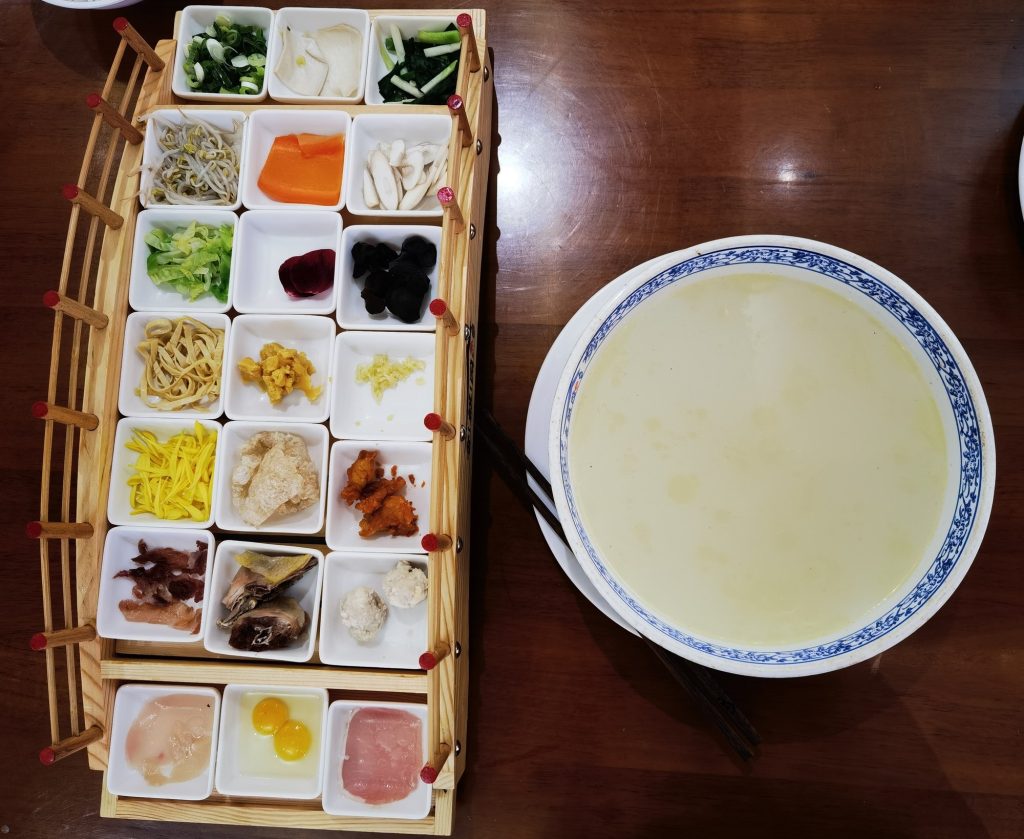
You receive steaming broth (often chicken or similar base, recipes vary), rice noodles, and platters of meat slices, quail eggs, tofu skin, vegetables, and herbs. Add ingredients so thin meats meet hot broth first, then other items, then noodles, adjusting with chilli, vinegar, or pepper oil to taste. Exact house sequences differ — watch nearby tables or ask staff.
Broth must stay hot enough for the toppings designed to cook in-bowl. If your broth arrives lukewarm, speak up. This is everyday restaurant practice, not a chemistry exam — but do not treat raw meat toppings casually if the soup is not truly hot.
Where to eat it
Yunnan restaurants and specialist mixian houses are the usual venues. Busy local spots teach better than empty tourist theatres with only English photos. In Mengzi and southern Yunnan, you may find versions closer to local origin stories; in Kunming and other cities, quality varies. Judge broth fragrance, topping freshness, and noodle texture.
If you are building a spicy-noodle education across China, space guoqiao away from luosifen and Chongqing xiaomian days so aromas stay distinct.
How to order and assemble
Useful phrases
- 过桥米线 (guoqiao mixian)
- 不要辣 / 少辣 (buyao la / shao la)
- 米饭可以吗 is irrelevant here — you want rice noodles, already included
- Ask 怎么放 / 先放什么 if you want assembly order help
Assembly tips for first-timers
1. Confirm broth is steaming.
2. Add thin meat slices, swirling gently.
3. Add eggs/tofu skin/veg per house custom.
4. Add noodles.
5. Season mildly first; intensify later.
Do not dump chilli oil blindly before tasting the base broth.
What it should taste like
Broth should taste clean and savoury, not only salty. Noodles should be soft with gentle chew typical of rice noodles. Toppings should cook through in hot soup without turning into a muddy stew if you work reasonably promptly. Herb finishes brighten the bowl.
Payments, groups, and holiday timing
Set up Alipay and WeChat Pay. Groups should stagger assembly so soup stays hot. Near Mid-Autumn and Golden Week, popular Yunnan restaurants in tourist cities jam — lunch early. Carry a China SIM or eSIM for map hops between recommended shops.
Common first-timer mistakes
- Letting broth cool while taking photos of raw toppings
- Adding noodles first and crowding meats so they undercook
- Assuming all Yunnan food is mild — chilli condiments can still bite
- Ordering guoqiao plus hotpot the same meal
- Confusing it with ordinary fast mixian counters
Allergies and diet notes
Rice noodles help many wheat-avoiders, but sauces and broths may still include soy, chicken, or cross-contact. Sesame oils and peanut garnishes appear in some houses. Shellfish toppings may appear — ask. Vegetarian broths are not guaranteed. This is not medical advice; communicate allergies clearly. If raw-in-bowl meats concern you, ask for fully cooked topping sets when available.
A calm first-timer plan
1. Choose a busy Yunnan specialist.
2. Order guoqiao mixian; confirm heat of broth.
3. Assemble meats first, then other toppings, then noodles.
4. Season gradually.
5. Eat while hot; plan a lighter next meal.
Folklore vs what you need to know
The bridge story is cultural flavour. What you need operationally is hot broth, sensible assembly, and fresh toppings. You do not need to retell the legend to enjoy lunch. If a server offers a quick demo, accept it gratefully.
Travel days and trains
Guoqiao is a sit-down ritual more than a platform takeaway. Eat it when you have a table and time. For rushed station meals, choose simpler noodles. If you have a long journey after, avoid maximum chilli. Quiet carriages and fragrant chilli oil are a poor pair for seatmates.
Bottom line
Yunnan crossing-the-bridge noodles are hot broth, rice noodles, and a topping ritual — best when the soup truly steams and you assemble meats first with restrained seasoning. Keep it as a sit-down meal, especially around autumn holiday crowds in 2026.
Broth etiquette at busy tables
Keep elbows aware of neighbours. Do not splash when swirling meats. Finish assembly before long photo sessions. If dining with locals, follow their lead on order of ingredients. If dining with other first-timers, nominate one person to watch the broth heat while another handles toppings.
Chilli, vinegar, and cilantro choices
Condiments make the bowl yours. Taste plain broth first. Add vinegar for brightness, chilli for heat, herbs for aroma. You can build a mild bowl and a hotter personal bowl if sharing toppings across two soups — some houses facilitate this better than others.
Kunming tourist street vs neighbourhood shops
Tourist clusters near major attractions can be fine or mediocre. Neighbourhood lunch spots with local diners often win on broth. Use maps, recent reviews you trust, and the smell test at the door. Empty rooms with only foreign guests may still be good — or may be theatre. Judge the soup.
After the bowl: pacing Yunnan days
Guoqiao is filling. Schedule a walk, not another banquet. In highland cities, mind sun and hydration separately from soup heat. If you plan evening crossing-bridge again, you probably over-ordered lunch — vary with simpler mixian or non-noodle dinners.
Broth etiquette at busy tables
Keep elbows aware of neighbours. Do not splash when swirling meats. Finish assembly before long photo sessions. If dining with locals, follow their lead on order of ingredients. If dining with other first-timers, nominate one person to watch the broth heat while another handles toppings.
Chilli, vinegar, and cilantro choices
Condiments make the bowl yours. Taste plain broth first. Add vinegar for brightness, chilli for heat, herbs for aroma. You can build a mild bowl and a hotter personal bowl if sharing toppings across two soups — some houses facilitate this better than others.
Kunming tourist street vs neighbourhood shops
Tourist clusters near major attractions can be fine or mediocre. Neighbourhood lunch spots with local diners often win on broth. Use maps, recent reviews you trust, and the smell test at the door. Empty rooms with only foreign guests may still be good — or may be theatre. Judge the soup.
After the bowl: pacing Yunnan days
Guoqiao is filling. Schedule a walk, not another banquet. In highland cities, mind sun and hydration separately from soup heat. If you plan evening crossing-bridge again, you probably over-ordered lunch — vary with simpler mixian or non-noodle dinners.