<!–
title: Chongqing First Visit in Early Autumn: Two Practical Days
slug: chongqing-first-visit-early-autumn
category: Travel
focus: Chongqing first visit
meta: A practical Chongqing first visit for early autumn 2026: cable cars, mountain stairs, spicy food pacing, and Mid-Autumn/Golden Week timing.
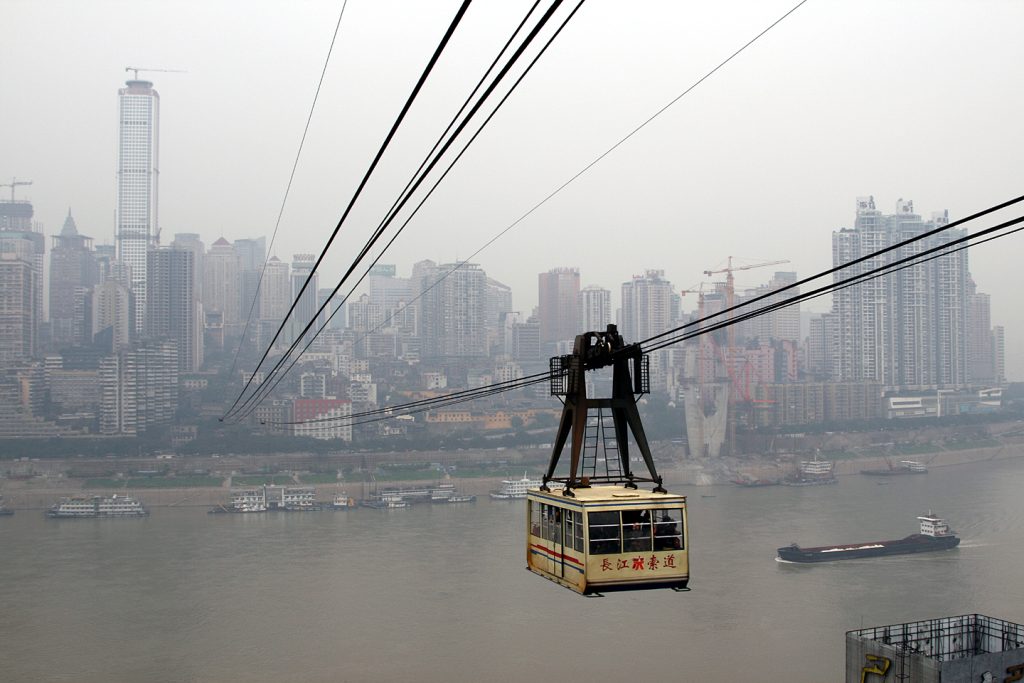
cover_alt: Yangtze River Cableway cabin crossing above the river with Chongqing bridges and hills beyond
cover_credit: Photo: 慕尼黑啤酒 / Wikimedia Commons (CC BY 3.0)
word_count: 1540
–>
Why early autumn suits a first Chongqing visit
Chongqing is a mountain-and-river city that rewards slow feet more than a packed checklist. For a first visit in early autumn 2026, two practical days are enough to feel the layered streets, the river crossings, and the city’s spicy rhythm — without turning every evening into a race.
White Dew (Bailu) falls around 7 September 2026. From then into late September, mornings are usually cooler for outdoor stairs and viewpoints, while evenings still work for night views along the riverfront. The calendar still matters: Mid-Autumn Festival is Friday 25 September 2026 (short holiday roughly 25–27 September), and National Day Golden Week runs roughly 1–7 October 2026. If your dates sit near either holiday, skim Golden Week 2026 vs Mid-Autumn before you lock every hotel night.
Chongqing does not “empty” for either holiday. It reshuffles: local families move, riverfront night spots fill earlier, and transport hubs get busier. Your best first-timer strategy is simple — keep Day 1 for cable car and core Yuzhong walking, keep Day 2 for a neighbourhood-and-food pace with one optional side trip, and leave buffer time for stairs, wrong turns, and rest.
Before you arrive: payments, maps, and stamina
Foreign visitors still lean hard on mobile payments. Set up Alipay and WeChat Pay with your overseas cards before you need a late-night ride or a snack stall that only shows a QR code. Keep a little cash as backup, but expect many places to prefer a scan.
Chongqing’s metro and light rail cover the core well, with English station names on major lines. Screenshot your hotel’s Chinese address and the nearest exits. For airport or long cross-town hops, a working ride-hail setup saves stress; for short hops, metro plus walking often feels calmer — see Didi for foreign visitors if you want the booking flow in one place.
Stamina matters more here than in flat cities. Build your days around hills: wear shoes with grip, plan one “up” and one “down” block per half-day, and treat escalators and elevators in malls as legitimate tools, not cheating. Chongqing’s famous multi-level streets are part of the experience — they are also why a two-day plan beats a four-attraction morning.
Day 1 — Cable car, cliffs, and a soft night landing
Morning: Yangtze River Cableway as orientation
Start with a short aerial ride rather than a long museum morning. The Yangtze River Cableway (长江索道) is both local transport history and a first-timer viewpoint: you cross above the river and see bridges, towers, and the layered city at once. Buy tickets through authorised channels at the station or via platforms that show real-time availability; queues grow on weekends and holiday eve days, so aim for an early slot when you can.
Practical notes:
- Carry your passport if the ticketing system asks for real-name checks.
- Stand near the window side if you want photos, but keep bags zipped — the cabin can sway slightly.
- After you land, do not rush to the next “must.” Walk a few blocks and notice how streets stack above and below you.
This ride is orientation, not a full day. Use it to decide which riverbank feels clearer for afternoon walking.
Midday: Hongya Cave and Jiefangbei without the checklist panic
Hongya Cave (洪崖洞) is the cliffside complex many visitors photograph at dusk. Visit once in daylight if you want to understand the structure, then decide whether a second evening pass is worth the energy. The nearby Jiefangbei (解放碑) area is dense with shops, metro links, and food options — useful as a base, not as a place you must “complete.”
Eat a measured lunch. Chongqing’s signature flavours run spicy, numbing, and oily in different combinations. Order one spicy dish and one mild vegetable or soup, then taste before you escalate chilli. If you already know your Sichuan hotpot limits from Chengdu, treat Chongqing’s street heat with the same respect — and keep water or a mild drink nearby.
Afternoon: walk the levels, then rest
Pick one cliffside or riverside walking stretch rather than hopping between distant viewpoints. The goal is to feel how Chongqing uses elevation: stairs, skybridges, building lobbies that open onto different floors. When your knees complain, stop for tea or coffee indoors. Early autumn light is good for photos, but humidity and sudden showers still appear — a compact umbrella earns its bag space.
Evening: one night view, then sleep
Choose either a short riverfront stroll or a return glance at Hongya Cave’s illuminated face — not both if you are already tired. Dinner can be lighter than lunch: noodles, a small hotpot for two, or a grilled-fish place where you control spice level. End Day 1 early enough that Day 2 does not start as recovery.
Day 2 — Neighbourhood pace, spicy food, optional side trip
Morning: Ciqikou or a quieter old-street window
Ciqikou Ancient Town (磁器口) is a popular old-street stop with shops, snacks, and river proximity. Go earlier in the morning if you want easier walking; later in the day it becomes denser, especially near Mid-Autumn and Golden Week. Treat it as atmosphere and snack sampling, not as a museum trail. If old-street crowds drain you, swap this for a quieter neighbourhood walk near your hotel and save energy for lunch.
Midday: spicy food with a pacing plan
Chongqing’s food identity is not one dish. For a first visit, pick a clear lane:
- Hotpot: share a split pot (spicy + mild) so everyone can adjust.
- Noodles: try a classic local bowl and ask for less spice if needed.
- Small plates: order a few dishes rather than a banquet.
Pacing rules that protect the rest of your trip:
1. Tell staff your spice preference early — “微辣” (mild) or “不辣” (no chilli) is clearer than hoping.
2. Eat protein and vegetables, not only chilli oil.
3. Leave room for evening; Chongqing dinners are easy to over-order.
4. If your stomach is sensitive, keep Day 2 lunch milder and save the boldest meal for when you feel settled.
Afternoon: optional side trip or museum buffer
If you have energy and clear weather, consider one optional add-on only — for example a short metro hop to another viewpoint, or an indoor museum if rain arrives. Do not stack Dazu Rock Carvings into a rushed half-day on a first two-day visit; that site deserves its own planning window. A first Chongqing trip is about learning the city’s vertical grammar, not collecting every famous name.
Evening: pack light for the next city
Use the last evening to check tomorrow’s transport. High-speed trains out of Chongqing are straightforward when tickets are booked ahead — see how visitors book mainland trains on 12306 if you still need the booking flow. If you are staying through Mid-Autumn or into Golden Week, confirm hotel nights and departure seats earlier than you would in a quiet midweek September.
Mid-Autumn and Golden Week timing for Chongqing
Before Mid-Autumn (early–mid September): Usually the calmest window for a first visit, with cooler mornings and fewer holiday-only crowds.
Mid-Autumn short holiday (~25–27 September 2026): Night views and snack streets get busier; book popular restaurants and cable-car timing with more buffer.
Between Mid-Autumn and Golden Week: A useful gap for travellers who can shift dates — still autumn weather, with less peak-holiday pressure than early October.
Golden Week (~1–7 October 2026): Expect denser transport hubs and popular photo spots. Keep itineraries shorter, start earlier, and protect meal times with reservations or flexible street-food plans.
Practical packing and city manners
- Shoes: Non-slip soles matter on polished mall floors and outdoor stairs after rain.
- Layers: Early autumn mornings can feel cooler at viewpoints; afternoons warm up.
- Phone battery: Maps, payments, and translation tools drain fast — carry a power bank.
- Language: Screenshots of Chinese names help taxis and hotel staff; major metro signage is usable in English.
- Respect for stairs culture: Locals move purposefully. Stand right on escalators when marked, keep bags close in crowded cable-car queues, and do not block narrow stair landings for photos.
A simple two-day skeleton you can copy
Day 1: Morning cable car → midday Hongya Cave / Jiefangbei area lunch → afternoon vertical walking with rest stops → one night view → early sleep.
Day 2: Morning Ciqikou or neighbourhood walk → paced spicy lunch → optional short add-on or indoor buffer → confirm next transport → lighter dinner.
That skeleton leaves room for wrong turns — and in Chongqing, wrong turns are often the point. The city reveals itself between levels: a doorway that opens onto a bridge, a mall exit that lands three streets “down,” a river glimpse between towers. Early autumn gives you cooler air to notice those moments. Mid-Autumn and Golden Week ask you to book and pace with more care. Two practical days, done calmly, are a strong first handshake with the mountain city.
When you leave, you do not need to have “finished” Chongqing. You only need to know how it moves — up, across, and down — and how to eat its heat without letting spice decide the whole trip.