What roujiamo actually is
Roujiamo (肉夹馍) is China’s classic meat sandwich: slow-braised meat chopped fine, tucked into a warm flatbread called a mo (馍). The name is often explained as “meat sandwiched in bread,” though locals will cheerfully debate the word order. What matters for you is simpler: it is handheld, hot, portable, and one of the easiest regional dishes to order without a long menu negotiation.
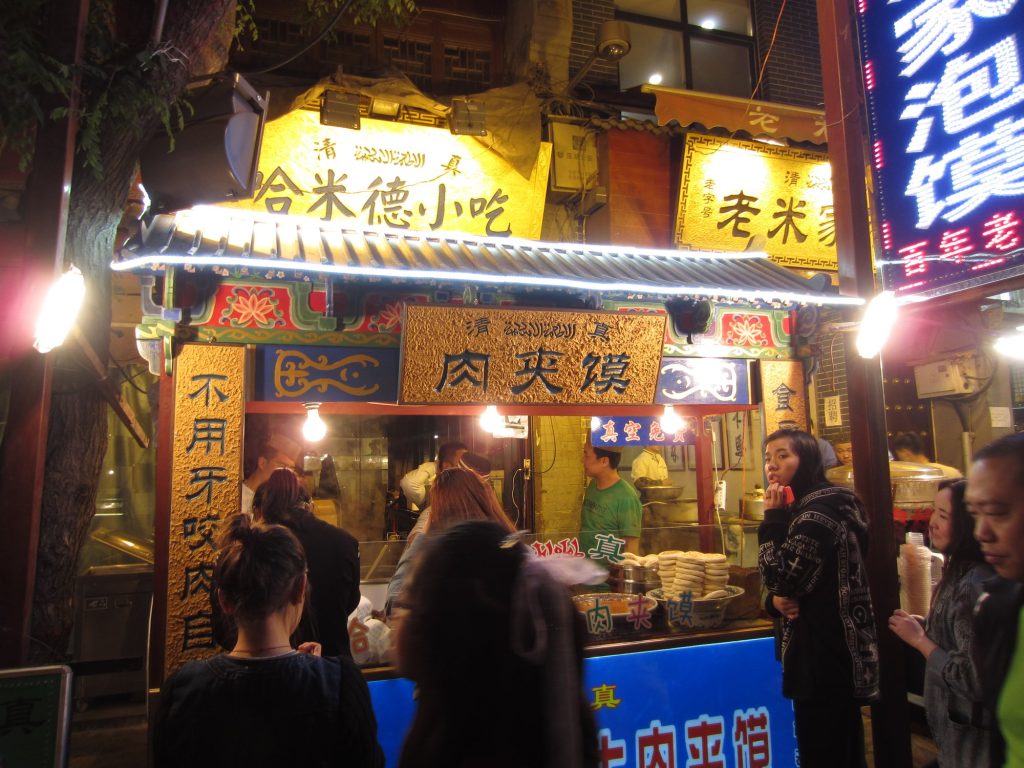
You will meet it first in Xi’an and across Shaanxi, then in specialty shops in Beijing, Shanghai, Chengdu, and almost any city with a migrant food street. Chains and mall counters exist; so do one-window stalls where the bread comes off a griddle and the meat comes from a simmering pot you can smell from the alley.
This guide is for first-timers who want a calm script: how bread styles differ, what meat and spice mean on the counter, how to order in Chinese-friendly phrases, and how to eat without turning lunch into a laundry problem.
Why it is a good first regional lunch
Roujiamo sits in a sweet spot between street snack and proper meal. It is more filling than a single skewer, less intimidating than a full hotpot table, and usually ready in minutes. If you already like sandwiches, wraps, or pulled-pork buns, the learning curve is mostly vocabulary—not courage.
Pair it with cold liangpi (凉皮) or a soy milk if the shop offers sides. In Xi’an food streets, many visitors treat roujiamo as the protein core of a short grazing walk rather than a sit-down banquet. For a broader Xi’an day plan that nests food stops between walls and museums, see our Xi’an first-visit early autumn guide.
Bread styles you will see
Not every mo is the same. Ask with your eyes first, then confirm with a word.
Baijimo / white crispy mo
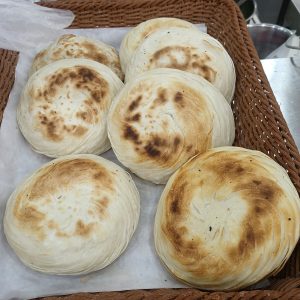
Many classic pork shops use a white, slightly puffy flatbread that is baked or griddled until the crust crackles. Staff often split it open like a pita pocket and pack meat inside. The crust should crack; the inside should still be soft enough to catch juices.
Clay-oven or “pot helmet” styles
Some shops bake denser, rounder breads with a firmer chew. These travel well in a bag and feel heartier. If the bread looks dark and thick, expect more chew and less shatter.
Sesame or layered versions
Occasional counters offer sesame-topped or multi-layer breads. Sesame adds aroma; layers change how juices move. Neither is “wrong”—just different textures.
Soft steamed-style breads (less classic)
A few modern or northern-leaning shops use softer steamed buns. Delicious, but closer to a bao experience than the crackly Xi’an street classic. If you specifically want the shatter-and-steam contrast, look for the crusty white mo.
First-timer tip: if two breads are on display, point and say 这个馍 (zhège mó — “this bread”). Staff almost always understand pointing.
Meat choices without panic
The iconic filling is braised pork cut from a long-simmered pot—often called lazhi rou (腊汁肉) in Shaanxi marketing, meaning meat cooked in a seasoned master broth. Expect soft shreds, not steak slices. Fat and lean are usually mixed on purpose; that mix keeps the sandwich moist.
Other common options:
- Beef — common in Muslim Quarter contexts and many northern shops; clearer, less sweet profile than pork.
- Lamb — available in some Xi’an and northwest-leaning stalls; richer and more aromatic.
- Chicken — increasingly common in chains as a lighter default.
- Vegetarian “meat” or egg options — rare at traditional stalls, more likely at modern counters; ask before assuming.
If you do not eat pork, say so early: 我不吃猪肉 (wǒ bù chī zhūròu). Point at beef or lamb if those trays are visible. Do not rely only on English menu icons; a quick Chinese phrase plus pointing prevents the default pork pack.
Spice, cilantro, and “how wet” you want it
Roujiamo spice is usually not Sichuan-numbing heat. You are more likely to meet chili flakes, chili oil, or a spicy paste offered as an add-on. Staff may ask whether you want it spicy (辣 là) or not (不辣 bú là).
Cilantro (香菜 xiāngcài) is a frequent default. If you dislike it, say 不要香菜. Green peppers, pickled vegetables, or a spoon of broth juices may appear depending on the shop’s style.
Juiciness varies. Some sandwiches are relatively dry and tidy; others drip. If you are wearing a pale shirt, ask for a paper wrap or eat over the counter ledge. Nobody awards style points for a heroic grease stain.
A calm first-timer ordering script
You do not need a speech. A short loop works in both traditional stalls and mall chains:
1. Catch the server’s eye or wait for the “next” nod in a queue.
2. Hold up fingers for quantity: 一个 (yí ge — one) or 两个 (liǎng ge — two).
3. Name the meat if choices exist: 猪肉 / 牛肉 / 羊肉 (pork / beef / lamb).
4. Add spice preference: 微辣 (wēi là — mild) or 不辣.
5. Add cilantro preference if relevant: 要香菜 or 不要香菜.
6. Pay when asked—often before the sandwich is handed over at busy counters.
If the board is only Chinese, photograph it and use on-device translation, then point to the line you want. For the wider phone-scan culture at sit-down restaurants (different from a counter shout), see Chinese restaurant QR menus for foreigners. Keep payment apps ready via Alipay and WeChat Pay for foreign visitors.
Useful pocket phrases:
- 老板,来一个肉夹馍 — “Boss, one roujiamo.”
- 猪肉的,不辣 — “Pork, not spicy.”
- 牛肉的,微辣,不要香菜 — “Beef, mild spice, no cilantro.”
- 打包 (dǎbāo) — “Takeaway / pack it.”
Chain shop vs street stall: what changes
Street stall / specialty window: faster verbal ordering, meat cut in front of you, bread often fresher by the batch. English is optional; pointing is normal. Seating may be stools, a ledge, or nowhere.
Chain / mall counter: lighted menu boards, sometimes pictures, sometimes a ticket machine or QR order screen. Portions and spice levels are more standardized. You may order on a screen, pay, and wait for a number.
Neither is automatically “more authentic.” A clean chain can teach you the default build; a busy Xi’an window can teach you the sound and smell of the craft. If the queue is long but moving, stay—roujiamo lines often move faster than full-service restaurants.
How to eat it without chaos
Eat sooner rather than later. The magic is the contrast between hot meat and still-crisp bread. Waiting too long softens the crust.
Bite from the edge, not the center, so filling does not avalanche. If the sandwich was packed aggressively, squeeze gently over the paper wrap for the first bites. Keep napkins in your non-sandwich hand.
Many people finish one sandwich as a mid-walk meal; hungrier travelers order two or add noodles/liangpi. There is no etiquette prize for forcing a single sandwich to be your only calories until dinner.
Timing around Mid-Autumn and Golden Week
Food streets near major sights get busier on holiday eves and during national holidays. Mid-Autumn Festival in 2026 falls Friday 25 September (holiday roughly 25–27 September). National Day Golden Week runs 1–7 October 2026 per the State Council holiday notice (国办发明电〔2025〕7号), with adjusted workdays on 20 September and 10 October.
If your Xi’an or city-center food walk lands inside those windows, go earlier in the day, accept short queues, and keep a backup shop two blocks off the main photo street. The sandwich itself does not change for the holiday—the sidewalk density does.
What to drink beside it
Local defaults include bottled tea, soy milk, yogurt drinks, or a simple soft drink from a fridge case. Some visitors like a light broth on the side if the shop sells soup. Alcohol is not the classic pairing for a quick counter lunch.
If you are sensitive to spice, drink first, then adjust chili on later bites—not the reverse.
Common first-timer mistakes
- Assuming every roujiamo is pork. Ask or read the tray labels.
- Ordering three “just to try” when one is huge. Start with one; reorder if needed.
- Skipping the “no cilantro” line when you hate cilantro. It is often automatic.
- Treating it like a delicate tea snack. It is a working lunch food—hold it firmly.
- Comparing it only to a Western burger. The bread and cut are different on purpose; judge it as braised meat in crackly mo.
A simple tasting path if you have two days in Xi’an
Day one: one classic pork roujiamo near a busy food street at an off-peak hour. Day two: try beef or a different bread style in another neighborhood so you learn the range. In between, walk off the salt and starch on the city wall or through a quieter park lane.
If your wider China food tour also includes Shanghai soup dumplings or Chengdu heat, keep each city’s “handheld classic” separate in your memory: roujiamo is Shaanxi’s contribution to the easy-lunch hall of fame, not a variation of xiaolongbao.
Bottom line
Order with fingers, meat word, and spice word. Prefer a crusty mo if you want the classic contrast. Eat it hot. Say no to cilantro if you need to. With that script, China’s meat sandwich stops being a mystery board and becomes what locals already know it is: a dependable, fragrant, one-hand meal you can finish before your next metro stop.