The metro does not announce Mid-Autumn with a special chime. It announces it with luggage. On the evenings before a short festival break, rolling bags appear beside office shoes, children cling to parents’ coats, and the platform edge fills with people who are not commuting home so much as leaving the city for home. In 2026, Mid-Autumn falls on Friday 25 September, with a mainland holiday window through Sunday the 27th. The “last metro before leave” feeling often starts earlier—Wednesday or Thursday night—when soft sleeper plans, high-speed tickets, and family group chats finally force a decision: stay for the moon in this city, or squeeze onto a train toward reunion.
This is a practical story piece. It stays grounded in how stations feel before festival leave. No invented quotes, no fake crowd statistics, no cinematic strangers confessing their life stories between stops. Just the textures you can use.
The week the calendar gets loud
By early September, mooncake towers already occupy supermarket endcaps. Teachers’ Day on Thursday 10 September reminds schools that the month is ceremonial. Then the Mid-Autumn countdown becomes transport math. Colleagues compare ticket statuses the way other months they compare lunch. Someone has a seat on the 24th. Someone else is waitlisted. Someone will drive overnight. Someone will stay and host.
If you are foreign and still learning the rhythm, the useful comparison is not “Christmas Eve flights” in every detail—it is any short holiday that pulls people along family lines. Mid-Autumn is reunion-shaped. The metro becomes a funnel toward railway stations and airports more than toward bars.
For the logistics layer—what stays open, what pauses—see Mid-Autumn Holiday 2026: What Is Open, Closed, and Crowded. For how the break sits beside Golden Week, see Golden Week 2026 vs Mid-Autumn.
What you notice on the platform
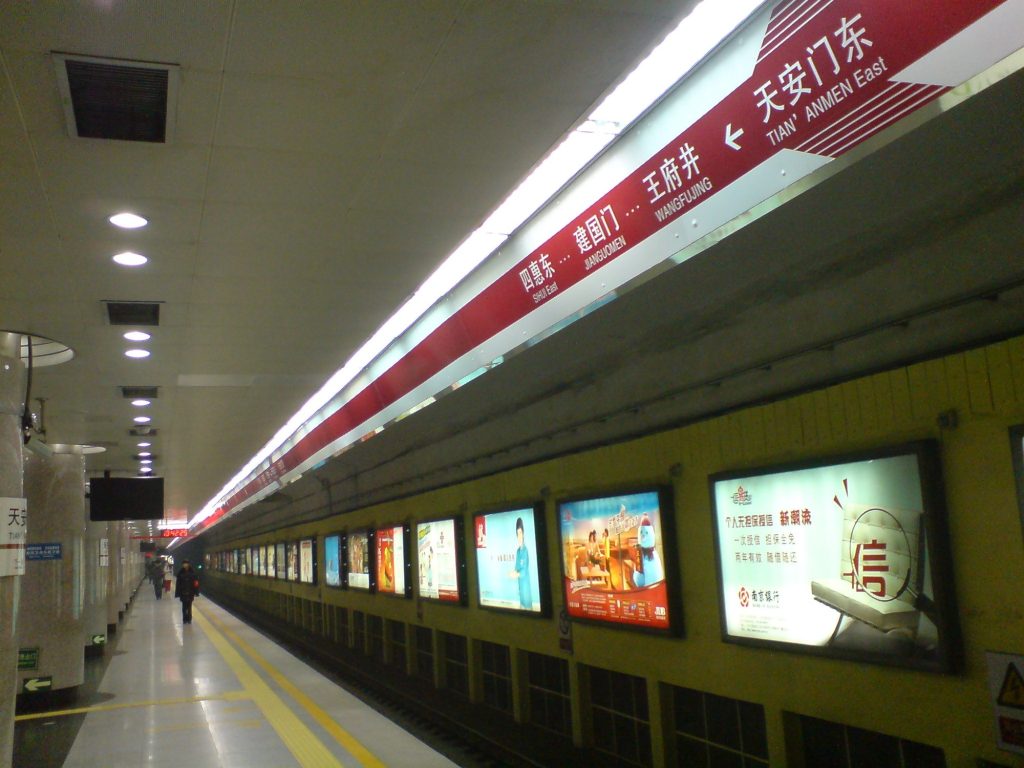
Suitcases with destination tags. Folded coats because air-conditioned cars run cold even in early autumn. Plastic bags of fruit and boxed pastry—gifts traveling faster than people. A quiet increase in bilingual announcements near major transfer stations. Security lines that move in pulses when a long-distance train’s departure time approaches upstairs or next door.
People stand differently when they are leaving. Commuters know the door positions; festival travelers watch the route map like it might change. You will see someone count stops aloud. You will see someone re-check a 12306 QR code that does not need re-checking. That nervous repetition is part of the season.
If you are heading to a railway station yourself, build extra transfer time. Metro frequency stays high; the friction is volume at exits, luggage elevators, and the walk from subway gate to train gate. Book trains early when you can; 12306 booking for visitors is the dry skill behind the romantic leave-taking.
Staying versus going
Not everyone leaves. Plenty of people remain in Beijing, Shanghai, Shenzhen, Chengdu, and every other city that runs on migrants and contracts. Staying can mean hosting a small dinner, buying one modest mooncake assortment, and walking to a river or park when the moon clears the buildings. It can also mean a quiet night alone that still feels like part of the festival rather than exclusion from it. That emotional map lives in First Mid-Autumn Night Alone in a Chinese City.
If you stay, the metro after the outbound rush can feel oddly spacious on the holiday itself—office lines thin, tourist lines thicken toward popular night views. If you go, your last urban metro ride is a hinge: city self on one side, family role on the other.
The gift bag problem
Festival leave multiplies objects. Mooncake tins are heavy and sharp-cornered. Fruit bruises. Tea sets need upright handling. On a crowded car, keep gifts at your feet rather than on the seat if seats are scarce, and do not block the door while rearranging ribbons. Soft tote bags behave better than rigid boxes in a squeeze.
If you are bringing something for hosts, choose travel-tolerant gifts and finish shopping before you enter the station complex. For what travels socially—not only physically—skim Mid-Autumn gift giving in China.
A foreigner’s small etiquette on the leave trains of the mind
You do not need a poetic speech about Chinese family values. You need situational awareness:
- Offer seats to elders and to adults managing children plus luggage when you can.
- Keep phone calls short in quiet cars; festival stress already raises voices.
- Stand clear of doorways at every stop even when your suitcase makes you want to “just stay near the exit.”
- Screenshot tickets and hotel addresses while you still have reliable signal underground between stations—connectivity varies.
- Eat odor-light food if you must eat; the car is shared air.
None of this is unique to Mid-Autumn. Festival leave simply raises the density of moments where courtesy is visible.
Night of the 24th, morning of the 25th
In 2026, Thursday 24 September will feel like the practical peak for many departures: last full workday energy colliding with Friday’s festival day. Friday morning metros toward stations will carry another wave. By Friday evening, some cities turn toward reunion dinners and moon-watching rather than long-distance boarding—though night trains still move people who could not leave earlier.
If your job is teaching, remember Teachers’ Day already asked for emotional labor on the 10th; do not demand of yourself a perfect Mid-Autumn performance two weeks later. Colleagues understand leave. What they notice is whether you communicate your plan clearly: last lesson dates, substitute materials, return date after the 27th, and any Golden Week plans that follow in early October.
Using the metro story as a planning tool
Treat the “last metro before leave” as a checklist disguised as a mood:
- Ticket secured—or honest backup plan if not.
- Gift decided and packed.
- Phone charged; payment apps working.
- Address of first family meal or hotel saved offline.
- Buffer time between office exit and train gate.
- Decision made about whether you watch the moon here or elsewhere—so you stop oscillating in the aisle.
The metro ride itself becomes calmer when those six are done. The anxiety people wear on platforms is often unfinished logistics, not a failure to feel festive.
Phone battery, SIM, and the underground gap
Festival leave is when phones die at the worst moment: between a metro transfer and a railway ID check. Charge before you leave the office. Carry a small power bank if you have one. If you are a visitor still relying on travel data, confirm your SIM or eSIM plan before the holiday week thickens—see China SIM and eSIM for foreign visitors. Offline maps of your station exit and the walk to the train gate are worth saving when the concourse crowds absorb your attention.
After the doors close
When the train leaves the platform—metro or high-speed—the city you work in keeps humming without you. That is ordinary and a little strange. Mid-Autumn makes the strangeness seasonal: millions perform the same hinge in the same week. You are not inventing the feeling. You are riding a known pattern.
If you watch the tunnel lights flicker and think about the moon tomorrow night, you are already inside the festival. Reunion is one ending of the ride. A quiet city night is another. Both start with the same practical act: stand behind the yellow line, let the people with suitcases board without theater, and take the car that matches your ticket—not the car that matches a story you wish you were in.
The last metro before Mid-Autumn leave is not a legend. It is a Thursday or Friday evening with extra luggage and clearer priorities. Handle the priorities, and the legend takes care of itself.