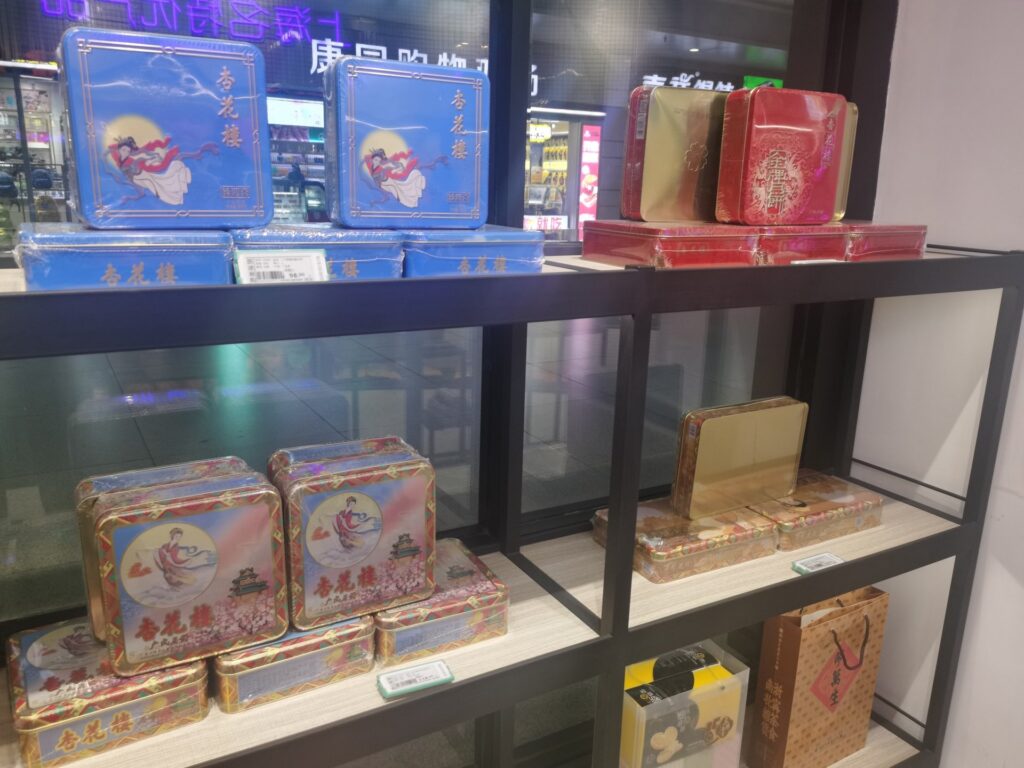
Mid-Autumn in China is a reunion festival, and reunion has a logistics department: gifts. In 2026 the festival falls on Friday, 25 September, with a mainland holiday window roughly 25–27 September. That means gift season starts earlier—often one to two weeks before—when office desks sprout ribboned boxes and supermarket aisles turn into fortress walls of mooncake tins.
This piece is about giving, not about how to eat the pastry or how to behave at a family table. For fillings, brands, and tasting strategy, use the mooncakes food guide. For what to do if you are invited to dinner, use the guest etiquette guide. Here, the question is simpler and more socially loaded: what do you hand over, to whom, and what should you leave on the shelf?
Why a box is doing social work
A Mid-Autumn gift is rarely “just dessert.” It signals that you noticed the season, that you value the relationship, and—especially at work—that you understand the rhythm of Chinese professional courtesy. The box’s appearance often matters as much as what is inside. Red and gold packaging reads festive. Overly plain white or black wrapping can feel cold or funerary in traditional settings. Fancy does not automatically mean better; mismatched extravagance can embarrass a colleague who cannot reciprocate.
You will see mooncakes given between relatives, neighbors, teachers and parents (context matters), business partners, and friends who will not share a dinner but still want to mark the moon. Foreign visitors and expats are not expected to master every nuance on day one. You are expected not to blunder into the famous taboos if a small amount of attention can prevent it.
Timing: when to give
Aim for the week before the festival, not the evening of 25 September when kitchens are already busy and hosts are mid-prep. Too early in August can feel disconnected from the holiday; the sweet spot for many urban givers is roughly seven to fourteen days prior, adjusting for shipping and your own schedule.
If you are traveling and will only see someone on the festival day itself, a modest gift still works—especially fruit or tea that can be used that night—but arrive early enough that you are not interrupting plating. If you cannot meet in person, ask whether delivery to the office or home is welcome; do not surprise someone with a perishable box to a closed building over the holiday.
Mooncake boxes without the panic
Choose for the relationship, not the internet hype
For a first gift to a host family, a well-regarded local bakery box or a supermarket premium tin is enough if it looks cared for and is clearly Mid-Autumn themed. For a close friend, homemade is rarely expected of foreigners; thoughtful store-bought is fine. For a manager or client, follow your company’s compliance rules first—some workplaces restrict gifts—and keep the gesture proportionate.
Skip inventing brand hierarchies. Taste and packaging change yearly. Read the label for fillings (lotus seed paste, red bean, nuts, egg yolk, snow-skin, and so on), check the production and expiry dates, and match richness to the recipient. Older relatives may prefer classic styles; younger colleagues may prefer lighter snow-skin or fruit collaborations. When unsure, a mixed box beats a monologue about your research.
Numbers and presentation
Even numbers are generally safer in Chinese gift culture; four is the number many people avoid because it sounds like death. Six and eight are commonly liked. Do not overthink a sealed commercial box that happens to contain a standard count—the manufacturer already designed it as a gift unit. What you should avoid is deliberately assembling an awkward “four-only” present when you have a choice.
Give and receive with both hands when you can. Offer a short line—“一点小意思,中秋快乐” (a small token—happy Mid-Autumn)—and do not narrate the price. Recipients often set the box aside rather than opening it on the spot; that is manners, not rejection. You should usually do the same when you receive one.
What if you cannot eat them?
Many foreigners end up with more mooncakes than appetite. That is normal. You can share pieces with coworkers after the holiday, freeze some styles if appropriate, or quietly pass a sealed box along to another household—without making the original giver feel discarded. The gift’s job was the giving.
Fruit, tea, and non-cake options
Mooncakes dominate, but they are not mandatory in every relationship.
Fruit — Pomelo and other round, seasonal fruits appear in festival settings because roundness echoes reunion. A quality fruit box can feel fresh and less heavy than pastry. Avoid pears as a pointed gift in traditional contexts; the word plays on separation. If fruit is your main gift, keep it abundant-looking and neatly packed.
Tea — A tin of good tea pairs naturally with mooncakes and works for colleagues who already have three pastry boxes. Choose reputable packaging; loose mystery bags look careless.
Specialty regional snacks — Osmanthus sweets, quality nuts, or a hometown specialty can personalize the season if you know the person’s tastes. Keep alcohol gifts cautious unless you know preferences and workplace rules.
For hosts who invited you to dinner — Arrive with something easy to set down: fruit, tea, or a sealed mooncake box. Do not bring a complicated dish unless asked. Details of table behavior belong in the etiquette guide; your gift should reduce the host’s load, not create a plating puzzle.
What to skip
Classic gift taboos still matter enough to respect:
- Clocks and watches (funeral associations in the language of gifting)
- Sharp objects such as knives or scissors (cutting ties)
- Umbrellas in some interpretations (separation sounds)
- Handkerchiefs associated with farewells and tears
- Chrysanthemums and other funeral-coded flowers
- Empty decorative boxes as the “gift”
- Packaging that looks like mourning colors when festive options exist
Also skip anything that creates compliance trouble: cash stuffed awkwardly into a pastry box for a public-school teacher, luxury goods that force reciprocity, or gifts that ignore a company’s no-gift policy. In 2026, as in other recent years, schools and workplaces may emphasize restraint around teacher gifting; when in doubt, a handwritten card beats an expensive tin.
Do not give a single pear as a cute joke. Do not weaponize “cultural tips” to lecture your hosts. And do not open someone else’s gift in front of them unless they invite you to share it together.
Workplace and apartment-building realities
Offices often run informal exchanges: team leaders distribute company boxes, sales teams send client gifts, desks trade leftovers after the holiday. Ask a trusted colleague what is normal in your company before you overspend. In apartment buildings, a small gift for a neighbor who helps with parcels can be a fruit bag rather than a corporate tower of pastry.
If you live alone and receive multiple boxes, thank people promptly—WeChat is fine—and store what you will not eat soon according to the package instructions. Sharing later is part of urban Mid-Autumn ecology.
A simple decision tree for 2026
- Are you invited to a family dinner on or near 25 September? Bring a host gift (fruit, tea, or a decent mooncake box) and read the dinner etiquette piece.
- Is this a colleague or client? Check policy, keep it proportionate, prefer tea or a standard box, give before the holiday rush peaks.
- Is this a close friend? Match their taste; snow-skin or a bakery they already like beats a famous tin they will re-gift.
- Are you leaving town for Golden Week right after? See the calendar comparison and give before you disappear onto a train.
Prices change by city, brand, and week. Read the shelf tag in front of you; do not trust remembered numbers from a blog. The best Mid-Autumn gift is the one that arrives on time, looks intentional, avoids taboos, and lets the other person feel seen—without forcing them to stage a performance about how expensive you were.