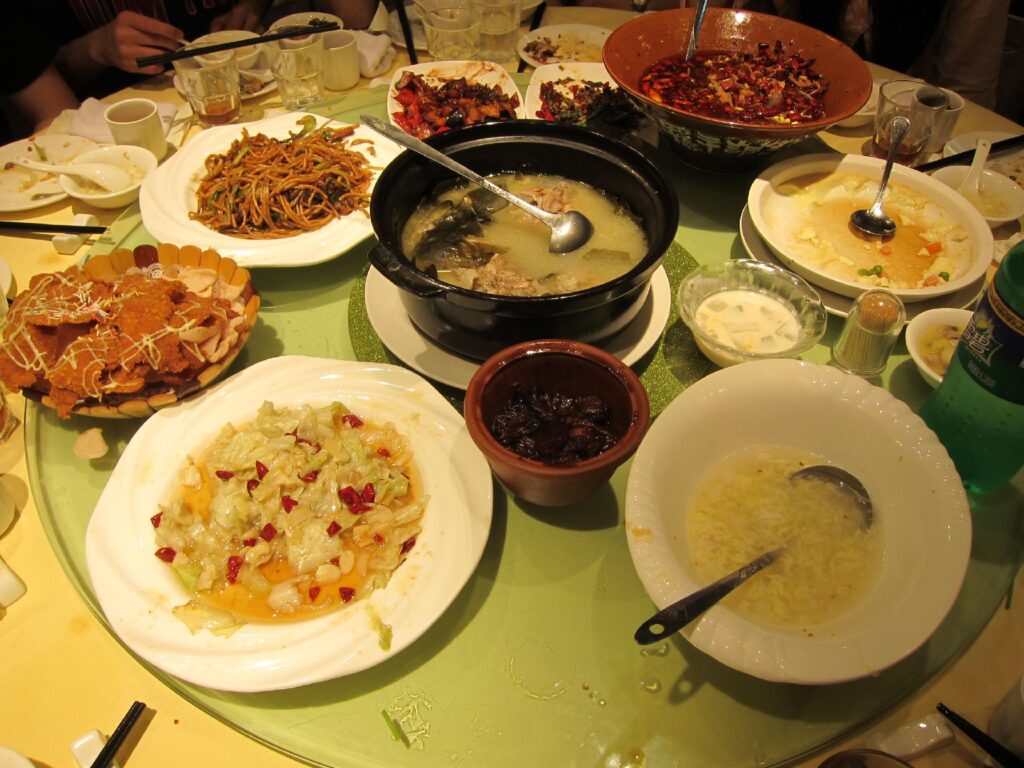
An invitation to a Mid-Autumn family dinner is warmer than a restaurant booking and quieter than Spring Festival. On Friday 25 September 2026 the fifteenth night of the eighth lunar month falls, and households across China will try to put the same people around the same table, or at least under the same moon. If you are the foreign guest at that table, your job is not to perform a ceremony. It is to arrive on time, bring something thoughtful, eat what is offered, and let the family lead.
This piece is about guest behaviour: gifts, timing, seating, toasts, leftovers, and how to leave gracefully. For pastry types, yolk lore, and festival calendar detail, use our food guide Mooncakes and a Friday Night Moon: Mid-Autumn Festival 2026 and come back here for manners.
What kind of evening is this?
Mid-Autumn is a reunion festival. It is not as formal as a wedding banquet and not as explosive as Lunar New Year’s Eve. Many families cook at home. Others book a private room because the kitchen is small and the guest list grew. Either way, the emotional centre is completeness: round moon, round cakes, people who made it home.
You will probably see mooncakes, seasonal fruit, and whatever the household cooks well in early autumn, crab in some Jiangnan homes, duck or pork elsewhere, plenty of tea. Do not expect a single national menu. Expect a host who keeps refilling your bowl.
If your invitation sits beside the National Day travel crush, remember the two holidays are neighbours, not twins. Our note on Golden Week 2026 versus Mid-Autumn helps you see why trains fill on different days. Your host may be tired from travel even before dinner starts. Be easy company.
What should you bring as a guest?
Bring a gift. Arrive with it in hand, not as an afterthought in a rideshare boot.
Safe, welcome choices
- A box of mooncakes from a bakery people recognise, bought close to the day so it tastes fresh. Regional houses matter more than a flashy tin from an unknown brand. If you are unsure which shop is “the” shop, ask a local colleague quietly the day before.
- Good fruit, neatly packed, pomelo, grapes, pears, or whatever looks best at a reputable fruit counter that week.
- Tea from a proper tea shop, or a small specialty from your own country that is easy to share and not alcohol-forward unless you already know the family’s drinking habits.
Usually better to avoid
- Clocks, watches as primary gifts, sharp knives, and umbrellas, classic Chinese gift taboos tied to funerals, cutting ties, or breakup homophones.
- Chrysanthemums as a cheerful “just because” bouquet in many mainland contexts (they appear at funerals and at other memorial moments; Teachers’ Day flower culture is a different calendar day with its own habits).
- A single huge mooncake meant to be eaten alone. The pastry is for sharing; our mooncakes guide explains why wedges and tea beat solitary heroics.
- Cash in a red envelope unless the family has already made clear that this gathering works that way. Mid-Autumn is not automatically a red-envelope festival the way Spring Festival can be for children and elders.
Present the gift when you enter, with both hands if you can manage it naturally. A short line is enough: thank you for inviting me; these are for the family. If they open the box immediately, smile. If they set it aside unopened, that is also normal; many hosts prefer not to make a show while guests are still standing in the hallway.
When should you arrive?
Ask for the time, then arrive on time or five to ten minutes late, not half an hour early. Chinese home kitchens are busy in the last stretch; early guests become an extra station to manage.
If the invitation says “around six,” clarify whether that means sit-down at six or arrive at six. A quick message the morning of, “Shall I come at 18:00?”, saves everyone.
For restaurant private rooms, being punctual matters more: the room is booked, cold dishes may already be on the turntable, and elders often arrive first. Do not make grandparents wait while you finish a work call in the lobby.
Mid-Autumn night also includes moon-watching. Some families eat early and go outside; some eat late after children nap. Follow the household’s clock, not a guidebook’s romance about “the exact minute of fullness.”
Where do you sit, and who starts?
Wait to be seated. In many homes the seat facing the door or the most comfortable place goes to the senior person or the guest of honour. Family dinners are softer than business banquets, but the instinct remains: the host places you.
Once seated:
- Let elders pick up chopsticks first, or wait for an explicit “eat, eat” from the host.
- Use serving chopsticks or the clean ends if the table provides them; if not, be tidy when you take food from shared plates.
- Try a little of each dish you can eat. Refusing everything reads as distance; explaining an allergy reads as care. Say it early, before the host orders or cooks more.
- Leave a little on your plate if the host keeps adding food, constant empty plates can signal you are still starving. Constant refusals can signal the opposite problem. Mirror the people beside you.
Children may be told to invite grandparents to the table before anyone starts. If that ritual happens, stand or pause with everyone else. You are watching a family practice, not a tourist show.
How do toasts work at a family Mid-Autumn table?
Not every Mid-Autumn dinner is a drinking dinner. Some tables pour baijiu; some pour beer; some stay with tea and soft drinks because parents and kids share the room. Watch the first five minutes.
If a toast happens:
- Raise your glass when others do.
- Hold your rim slightly lower than a senior person’s when you clink, a small respect gesture, not a performance.
- “Ganbei” can mean drain the glass. If you cannot, say you will drink as you are able (随意) and take a sip.
- If you do not drink alcohol, toast with tea or a soft drink and say you are using tea in place of wine (以茶代酒). Joining the gesture matters more than the liquid.
You do not need a speech. A short thank-you for the invitation, praise for a dish, and a wish that the family stay well through autumn is plenty. Keep politics and salary talk off the turntable unless they start it.
What about mooncakes at the table?
Mooncakes often appear after the savoury courses, or as a gift that later becomes dessert. They are dense. Hosts commonly cut them into quarters or eighths. Take a wedge, not a whole cake, unless they insist.
Tea is the partner, not ice water if you can help it. Comment on flavour if you like it; do not grade the brand out loud. If the family gifted you a tin to take home, accept it. Reciprocity can wait for another small kindness later in the season, another box, help with an errand, or a meal you host when the calendar is calmer.
Again, pastry taxonomy lives in the mooncakes post. Your manners post ends at: share, thank, do not treat it like a cupcake contest.
Phones, photos, and the moon
Ask before you photograph people, especially elders and children. Food photos are usually fine if you are quick and put the phone away. A Mid-Autumn table is not a content set.
If the family goes to a balcony, courtyard, or nearby park for the moon, go with them. You do not need poetry. Looking up together is the point. Lanterns appear more in some southern neighbourhoods and parks than in every mainland stairwell; do not be disappointed if your evening is mostly kitchen light and a bright window.
Who pays, and how do you leave?
If you are invited to a home, you do not pay. Your gift and your appetite are the return. If you are invited to a restaurant and the host said “I invite you” (我请客), let them pay after a brief, sincere protest if that is the local choreography, then thank them properly. Do not stage a long fight over the bill at a family festival table; it steals air from the elders.
Leave when others begin to leave, or a little before if you have a long ride, with a clear goodbye to the oldest people present. Message thanks the next day. A photo of the moon from your own window is a sweet follow-up; a critique of the menu is not.
If you cannot eat much, drink, or stay late
Say so early and kindly. Medication, pregnancy, religious diet, recovery from illness, and driving are all understood reasons. Offer to help clear dishes if you are in a home and the host allows it; in many households guests are waved back to the sofa. Accept the wave.
If work or a train forces an early exit, tell the host when you arrive, not when you are already standing with one arm in a coat. Autumn rail traffic around Mid-Autumn and the approach to Golden Week is real, book your return with the same care you would for any busy weekend, using 12306 visitor booking steps if you are on the mainland network.
A short guest checklist for 25 September 2026
1. Confirm time and address; ask about parking or the right gate.
2. Buy a fresh, reputable gift (mooncakes, fruit, or tea).
3. Arrive near the stated time; wait to be seated.
4. Follow elders on when to eat and when to toast.
5. Share mooncake wedges; drink tea; look at the moon if invited outside.
6. Thank the hosts that night and again the next day.
You were not invited to be perfect. You were invited to be present. On Mid-Autumn night, that is the etiquette that travels.