On Thursday 10 September 2026, Chinese schools will be open. That is the point. Teachers’ Day, 教师节, is not a day off. It is a day in the classroom, with a bow at the start of it.
The date does not move. It is not tied to a full moon or to a solstice. It sits, every year, in the second week of the new term, before Mid-Autumn Festival and well before National Day, while the seating plan is still new. If you are an expat parent, an English teacher, or a visitor walking past a school gate, this is the Thursday to understand — and the Thursday not to treat as a holiday.
Why is Teachers’ Day on 10 September?
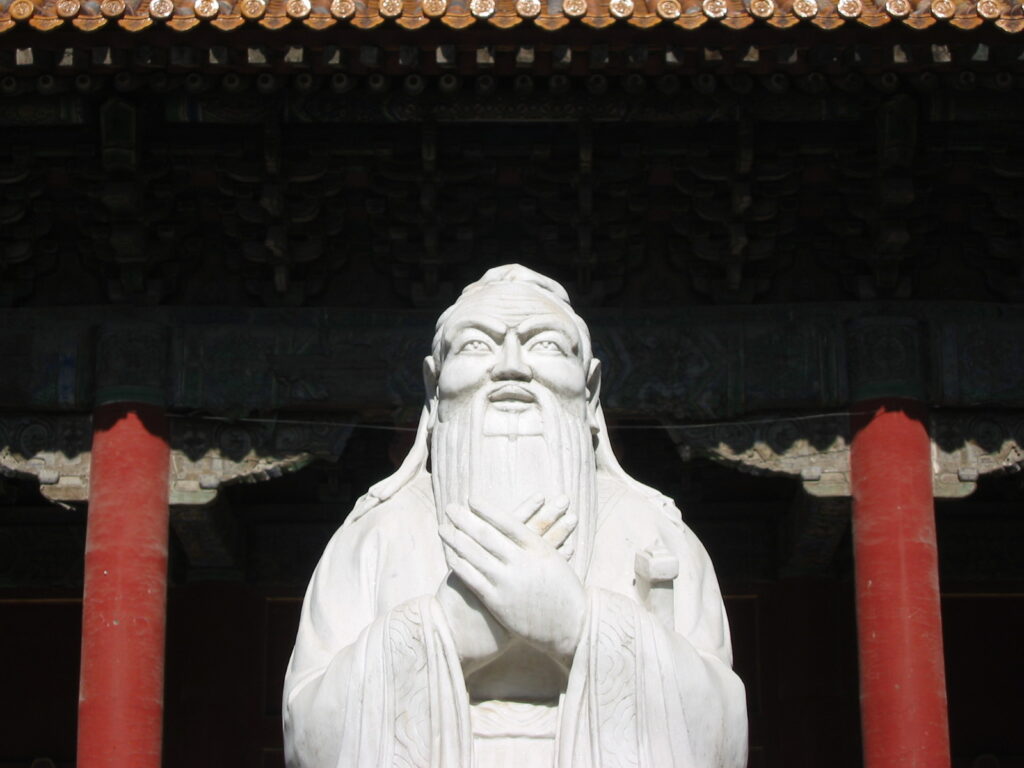
China has been honouring teachers for a very long time. The model is Confucius, who taught in the State of Lu more than two thousand years ago and who is still called the exemplary teacher, 至圣先师. The modern holiday is much younger.
On 21 January 1985, the ninth session of the Standing Committee of the Sixth National People’s Congress approved a State Council proposal and named 10 September as Teachers’ Day. The first observance in the People’s Republic followed that autumn. The Teachers Law, adopted on 31 October 1993 and in force from 1 January 1994, put the date into statute. Article 6 is a single sentence: “Teacher’s Day shall be marked every year on September 10.”
The choice was practical, and it was also a restoration of status. After 1949 the older Republican date of 6 June had been dropped, and Teachers’ Day was folded, without much ceremony, into 1 May. The 1985 decision gave teachers a day of their own again, early in the academic year, when schools could still set a tone: teach well, learn well, and let the rest of society watch. The Ministry of Education’s own account still frames it that way — raising the prestige of the profession, valuing knowledge, building a culture of respect.
Confucius’s birthday, by the calendar now used in Qufu, is 28 September. That date was among those canvassed before 1985. It was not the one chosen. Taiwan marks 28 September as Teachers’ Day. Hong Kong, after 1997, aligned its Respect-the-Teacher Day, 敬师日, with the mainland’s 10 September. UNESCO’s World Teachers’ Day is 5 October. China kept its own morning in September.
Proposals to move the mainland date to Confucius’s birthday have returned from time to time. They have not become law. In 2026 the two days still sit eighteen days apart, with a full moon between them.
Is Teachers’ Day a public holiday in China?
No. The national holiday regulations are unambiguous. Teachers’ Day is listed among the memorial days that do not carry leave, in the same article as Nurses’ Day and Journalists’ Day. The State Council’s 2026 holiday notice names New Year, Spring Festival, Qingming, Labour Day, Dragon Boat, Mid-Autumn and National Day. 10 September is not on that list.
So the Thursday will look like a school Thursday, with extra flowers at the gate.
Shops. Ordinary opening hours. Bakeries may sell more cakes than usual. Florists are the businesses that actually feel the day: carnations, chrysanthemums and sunflowers move in the morning, then the street returns to itself.
Trains and the metro. No Teachers’ Day peak. China Railway does not add holiday trains for 10 September. If you are booking 12306, treat the day as an ordinary Thursday. The Mid-Autumn crush is still two weeks away; National Day rest runs 1–7 October. Makeup workdays on Sunday 20 September and Saturday 10 October belong to National Day, not to this commemoration.
Offices. Open. Some companies send a group message or a boxed pastry to the training desk. That is courtesy, not a shutdown.
Schools. In session. A few may shorten a lesson for an assembly. That is a campus decision, not a national closure. If you need to know whether your child’s class is singing in the yard at 7:50, read the class WeChat, not a holiday calendar.
TimeandDate and every official list mark the day as an observance. Businesses have normal opening hours. Plan around that fact, not around a forwarded poster that says 放假.
What actually happens in Chinese schools on Teachers’ Day
The pattern is familiar across primary and secondary schools, with local variations and a good deal of student labour.
There is often a morning assembly or a flag-raising. Teachers are named, thanked, and sometimes given certificates. Class representatives read letters. Younger children perform songs and dances they have been rehearsing since late August. In some schools, especially in Shandong and in places that keep a Confucius statue in the courtyard, students bow first to the sage and then present flowers to their own teachers. Tea, offered with both hands, has become a favoured gesture: inexpensive, old-fashioned, and hard to mistake for a bribe.
Homeroom teachers, 班主任, feel the day most. They are the adults who have the WeChat group, the seating plan, and the parents at the gate. Subject teachers get cards too, but the bouquet usually finds the person who calls home when homework disappears.
Universities are quieter. A notice on a department board, a message on WeChat, a short internal ceremony for teaching awards — the temperature drops as the students get older. Kindergartens, by contrast, can look like a florist’s shop for an hour after drop-off.
Outside the school wall the day is smaller. Former students send a text. Parents stand at the gate with a bouquet. Local governments visit a campus. National leaders have, in some years, done the same. None of this closes a city. It colours a morning.
The greeting is simple: 教师节快乐. Thank you, teacher. You have worked hard — 您辛苦了. The language is the ceremony for anyone who is not on a stage.
If you teach English in China, expect a card, a small performance, and a photograph you did not pose for. Reciprocate with thanks, not with an envelope. If you studied Chinese with a tutor, Thursday is the day to send the message you have been meaning to send.
What to give — and what the rules already forbade
A handmade card, a bunch of ordinary flowers, a bag of fruit, a book: these are the gifts the day was designed around. Carnations appear. So do chrysanthemums. So do drawings that will live on a staff-room cabinet until winter.
Expensive presents are another matter. In July 2014 the Ministry of Education issued a six-point ban on teachers accepting gift money, securities, payment vouchers and other property from students and parents, along with paid banquets, trips and similar favours. The same circular told schools to watch Teachers’ Day, the start of term, and graduation as pressure points, and it asked families to find “civilised and healthy” ways of saying thank you. A later reminder, timed for Mid-Autumn, National Day and the opening of school, repeated the point about vouchers, delivery parcels and electronic red packets.
The rule is not that gratitude is suspect. It is that gratitude should not look like a transaction. A crab voucher, a cosmetics bag, or a transfer that arrives as “tea money” does not belong to 10 September. The card in a child’s handwriting does.
If you are a parent standing at a school gate on Thursday, keep it small and keep it visible: flowers the child can carry, fruit the class can share, a letter the teacher can pin up. Do not ask the guard to pass in a box. Do not put cash in a card. International-school practice varies by campus; follow the parent handbook, which is usually stricter than the national minimum.
How a visitor might see Teachers’ Day in China
You do not need a ticket. You will not find a parade that fills a city square. What you might see, if you are paying attention:
Walk past a primary school at drop-off. Children in uniform will be carrying sunflowers or a paper envelope. Parents will linger longer than on a normal Thursday. A loudspeaker may be doing its best with a song. By mid-morning the gate will look ordinary again.
If you are in Beijing, the Confucius Temple and the adjacent Imperial Academy, 国子监, on Guozijian Street are open as heritage sites on an ordinary Thursday. They are the right place to remember that the profession the day honours is older than 1985. They are not a Teachers’ Day venue in the school sense. The birthday rites belong to 28 September in Qufu, not to this morning in the capital.
If you have a Chinese teacher — a tutor, a classmate’s parent, a colleague who has explained a form to you more than once — send the greeting. If you have no such person, you can still notice the flowers and leave them be. Photographing children at a school gate is a poor way to mark the day.
The week around Thursday is still the start of term. Mid-Autumn follows on 25 September, a Friday, with a three-day mainland holiday through 27 September; mooncakes and that Friday night moon are the next marker on the same autumn calendar. Teachers’ Day is the pause before that. It gives the profession a morning of its own before autumn turns into a string of family holidays.
You do not need a special invitation. If you have a teacher to thank, Thursday is the day. If you are only passing a school, you may see sunflowers at the gate. The classrooms will be in use. That, more than any parade, is the respect the day was written to show.
FAQ
Is 10 September 2026 a public holiday in China?
No. Teachers’ Day is a Thursday observance, not a statutory holiday. Shops, offices and trains run as on any other Thursday. Schools are in session.
Do schools close on Teachers’ Day?
Generally no. Many hold an assembly, a performance or a flower ceremony before or instead of the first lesson. Any change to the timetable comes from the school, not from the State Council holiday notice.
What should I give a teacher in China?
A card, ordinary flowers, fruit or a book. The Ministry of Education’s 2014 rules bar gift money, vouchers, paid meals and similar favours. Keep it small, visible and something a child could have chosen.