Introduction: Navigating Chinese Temple Incense Etiquette
Visiting a historic Buddhist or Taoist temple is one of the most culturally enriching experiences on any trip to China. From the sprawling architectural complexes of Beijing’s Lama Temple to mist-shrouded hillside sanctuaries in southern provinces, these sacred spaces offer a profound window into traditional philosophy, art, and daily spiritual life. However, for foreign visitors stepping onto temple grounds for the first time, local customs can feel mysterious or intimidating—especially when it comes to lighting and offering incense.
What are the rules for buying sticks? How many should you offer, and which direction should you bow? Can you take photos inside the main prayer halls?
In this comprehensive, practical guide, we break down everything you need to know about Chinese temple incense etiquette. By following these respectful steps, you will ensure a meaningful, stress-for-free visit that honors local traditions while deepening your cultural appreciation.
—
Quick Summary: Essential Temple Etiquette at a Glance
If you are short on time or standing right outside the temple gates, here are the absolute core rules to keep in mind:
* Buy only what you need: Many major temples now provide free incense at the entrance or restrict large quantities for fire safety and environmental reasons. Avoid buying massive, overpriced bundles from outside vendors.
* Light with intention: Light your sticks using designated candles or burners, then gently extinguish open flames by waving your hand (never blow on them with your breath, which is considered unclean).
* Hold correctly: Hold the incense sticks with both hands at chest level, facing outward toward the shrine.
* Bow in cardinal directions: Typically, traditional practice involves bowing three times facing outward, or bowing toward the four cardinal directions depending on the temple layout.
* Respect photography rules: Never take photos of altars, statues, or monks inside the main halls. Always check signs before pulling out your camera.
—
Before You Go: Practical Tips, Payments, and Connectivity
Planning a temple visit in China requires a small amount of digital and logistical preparation. Many historic sites, especially major tourist destinations and museums, have shifted toward digital reservations and cashless transactions.
1. Securing Tickets and Digital Access
While many local temples can still be entered by paying a small cash fee or scanning a QR code on-site, major religious-cultural complexes and museums often require advance online reservations. If you are pairing your temple tour with a trip to a nearby cultural repository, be sure to check China museum ticket reservations 2026 to avoid long lines or sold-out slots.
2. Digital Payments and Connectivity
Temple gift shops, vegetarian restaurants on-site, and ticketing booths frequently rely entirely on mobile payments. Having your digital wallet fully funded and connected is essential. We recommend reviewing our guide on Alipay and WeChat Pay for foreign visitors before you depart. Additionally, to look up temple opening hours, translate signage, or navigate transit on the fly, secure reliable data connectivity by reviewing China SIM and eSIM for foreign visitors 2026. (Note: Ensure your eSIM data package is active before arriving at remote mountain temples where Wi-Fi is scarce.)
3. What to Wear
Temples are active places of worship. Dress modestly out of respect:
* Cover your shoulders and knees.
* Avoid wearing hats inside indoor prayer halls.
* Wear comfortable slip-on shoes, as you will frequently remove them or walk across expansive stone courtyards.
—
Step-by-Step Incense Rituals: How to Offer Incense Correctly
The practice of offering incense (xiang) is an act of mindfulness, purification, and communication with the divine or ancestral spirits. Follow this step-by-step framework to participate respectfully.
Step 1: Acquiring Incense
When you arrive, look for the official temple stall or designated distribution point.
* Eco-Friendly Trends: Many urban and heavily visited temples have banned giant incense sticks or restricted visitors to a maximum of three small sticks per person to reduce smoke and fire hazards.
* Avoid Street Vendors: Aggressive vendors outside temple gates often try to sell tourists oversized, expensive bundles of incense by claiming they bring special luck. We recommend politely declining and purchasing standard, modest portions inside the temple grounds if they are not provided for free.
Step 2: Lighting the Incense
1. Approach the designated lighting station (usually located outdoors near the giant bronze censer).
2. Light your incense sticks using the oil lamps or candles provided.
3. Crucial Rule: Never blow out the flame with your mouth. In Buddhist and Taoist traditions, human breath is considered “impure” due to eating meat or speaking harsh words. Instead, gently fan the flame out with your hand or wave the sticks downward in the air until the fire extinguishes and only glowing embers remain.
Step 3: Holding and Bowing
1. Hold the incense sticks firmly with both hands, keeping your fingers clean and your palms together in a prayer position (anjali mudra).
2. Raise the sticks to your forehead, aligning them roughly with your eyebrows.
3. Stand facing the main altar or the giant outdoor burner.
4. Bow deeply three times. Each bow represents a different facet of respect—often paying homage to the Three Jewels (Buddha, Dharma, and Sangha) in Buddhism, or the cosmic harmony of heaven, earth, and humanity.
Step 4: Placing the Incense in the Censer
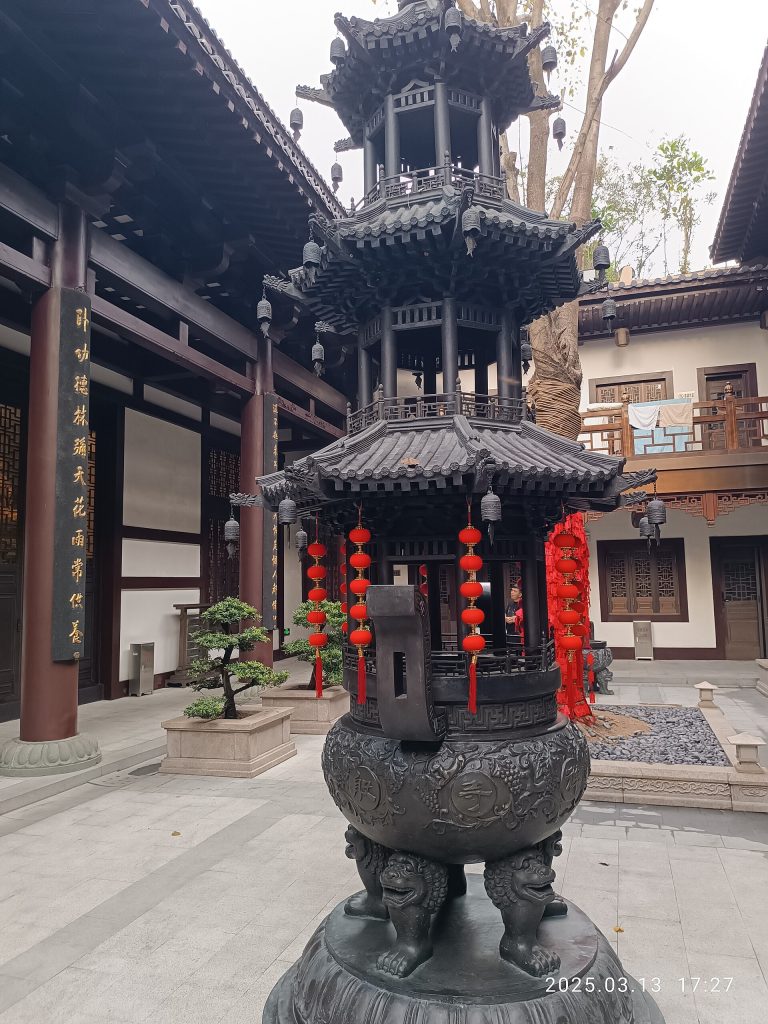
1. Walk calmly to the large bronze or iron incense burner (xianglu) in the courtyard.
2. Place the sticks upright into the sand or ashes with both hands.
3. If the censer is crowded, step back politely to allow others space. Do not shove or push to reach the front.
—
Temple Etiquette Beyond Incense: Behavior, Photos, and Quiet Spaces
Incense is only one part of the temple experience. To ensure you remain a courteous guest, keep these behavioral guidelines in mind throughout your visit.
Moving Through Thresholds and Courtyards
* Watch Your Step: Traditional Chinese temple architecture features raised wooden thresholds at the entrance of every hall. Never step on the wooden beam. Lift your foot high and step cleanly over it. Stepping on the threshold is traditionally considered disrespectful to the spirits guarding the doorway.
* Mind the Center: In many imperial or historic temples, the central pathway was historically reserved for emperors or deities. While modern tourist traffic makes strict adherence difficult, try to walk along the sides of the pathways rather than marching directly down the dead center.
Photography and Noise Rules
* No Photos of Altars: Always look for signage near doorways. As a general rule, photography and videography are strictly prohibited inside halls containing Buddha statues, altars, or active worship ceremonies. Outside in the courtyards and gardens, taking photos of architecture is usually permitted.
* Keep Your Voice Low: Temples are sanctuaries of peace. Keep your conversations subdued, silence your mobile phones, and avoid loud laughing or running.
* Interacting with Monks: If you wish to photograph or speak with a monk or nun, always ask for polite permission first. Never touch a monk casually on the shoulder or back.
—
Deepening Your Cultural Journey in China
Once you have experienced the serene atmosphere of a Chinese temple, you will likely find yourself drawn to other pillars of traditional Chinese culture. To continue your exploration after your temple visit, consider exploring these complementary experiences:
* Step into a classical scholar’s world by learning the rules of tranquility and harmony outlined in our guide on Chinese garden etiquette for visitors.
* Experience the meditative art of breath and brushwork detailed in Chinese calligraphy for visitors.
* Understand the social graces of hospitality through our comprehensive overview of Chinese gift-giving etiquette.
—
Frequently Asked Questions
1. Is it mandatory for foreign visitors to burn incense?
Not at all. Burning incense is entirely optional. Many visitors—whether due to allergies, personal beliefs, or preference—choose simply to observe the rituals, bow respectfully with hands pressed together, and appreciate the architecture and atmosphere without handling incense.
2. Why can’t I blow out the incense flame with my mouth?
In traditional Chinese belief systems, human breath is considered tainted by worldly consumption and speech. Using your breath to extinguish a sacred flame is seen as disrespectful to the sacred purity of the offerings. Waving the flame out with your hand is the accepted standard.
3. What should I do with my old incense if the main burner is completely full?
Most popular temples have staff constantly clearing burners or managing multiple receptacles. If the primary outdoor censer is overflowing, look for secondary smaller burners nearby, or ask a temple attendant where surplus incense should be safely placed. Never force sticks into unstable or overcrowded spots where they might start a localized flare-up.
4. Can I wear shorts or short skirts inside a Chinese temple?
While security at some tourist-heavy temples may be lenient, dressing modestly is strongly encouraged. Wearing clothing that covers your shoulders and knees shows proper respect for a sacred religious site and prevents discomfort when entering more conservative monastic zones.
5. Are donations expected when visiting Chinese temples?
Small entrance fees are common at historic or state-managed temples. Once inside, you will often see donation boxes near altars. Dropping a small cash contribution or scanning a QR code to donate a few yuan is entirely voluntary, though it is a kind gesture if you appreciate the upkeep of the grounds.
—
<ElicitationsGroup message=”To explore more of China’s rich cultural traditions:”>
<Elicitation label=”Discover how to participate in a traditional Chinese tea ceremony” query=”What are the essential steps and etiquette rules for attending a traditional Chinese tea ceremony as a visitor?”/>
<Elicitation label=”Learn the rules of Chinese garden etiquette” query=”What are the key etiquette rules and historical concepts to know when visiting classical Chinese gardens?”/>
<!–
title: Chinese Temple Incense Etiquette for Foreign Visitors
slug: chinese-temple-incense-etiquette-visitors
category: Culture
focus: Temple incense etiquette foreign visitors
meta: Visiting a Chinese temple? Practical incense etiquette for foreign visitors: where to buy, how many sticks, bowing basics, photo rules, and respectful behavior.
cover_alt: Incense smoke rising from a burner in a Chinese temple courtyard
cover_credit: Photo: FONG Yueamopea SaWusa / Wikimedia Commons (CC0)
–>
</ElicitationsGroup>