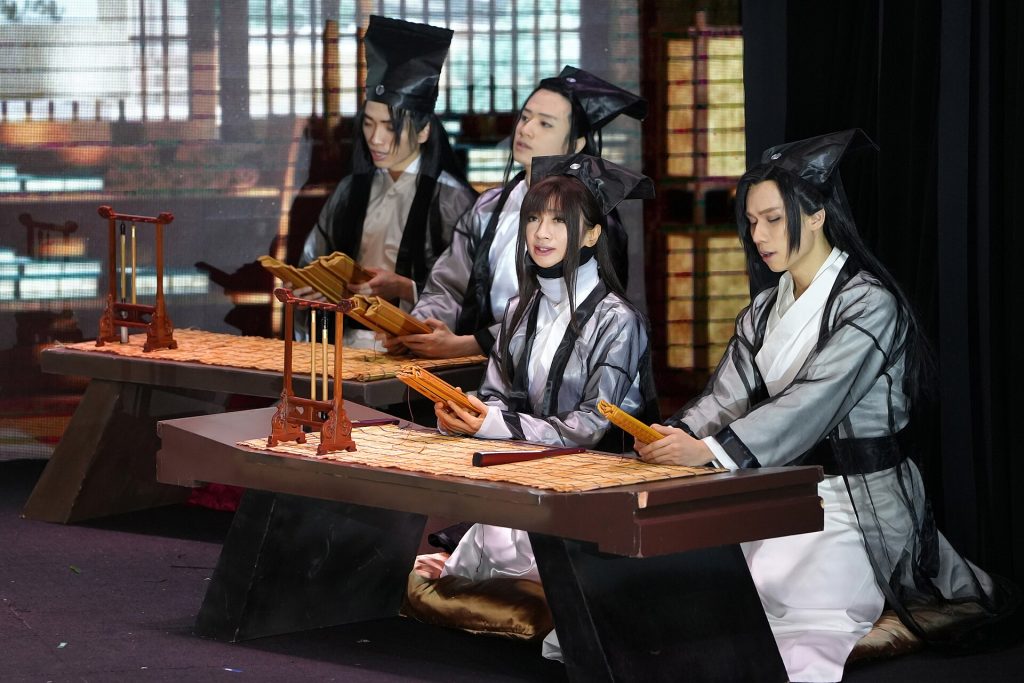
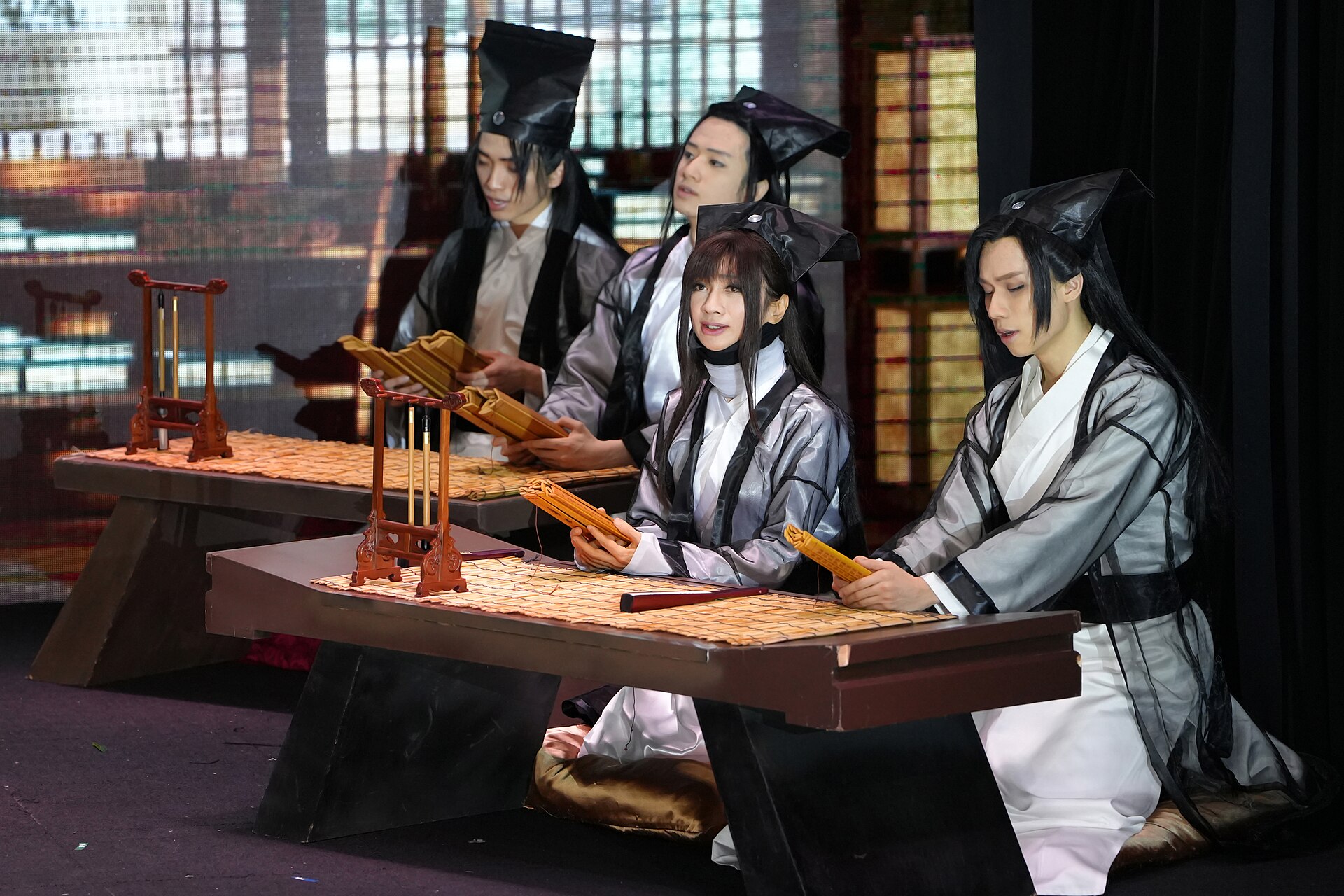
The mist over West Lake clung to the willows at 6 a.m., thick enough to swallow the pagoda roofs. I stood on the Broken Bridge with a thermos of Longjing tea, watching an elderly man in a Mao suit practice sword forms — slow, deliberate arcs that made the air hiss. A tour group arrived, flags snapping, and the guide launched into the standard spiel: Liang Shanbo and Zhu Yingtai, the Chinese Romeo and Juliet, studied together at an academy nearby, fell in love, died, turned into butterflies. The tourists nodded, snapped photos, moved on. The swordsman never broke form.
The academy that isn’t there
Most visitors head straight for the Liang Zhu Memorial Hall near the lake’s north shore — a 1980s reconstruction with wax figures and a gift shop selling butterfly keychains. The actual study site? Gone. The original Wansong Academy, where the fictional pair supposedly shared a desk for three years, burned during the Taiping Rebellion. What remains is a stone tablet half-swallowed by a camphor tree behind the Zhejiang Provincial Museum. I found it by accident while looking for a bathroom. An old caretaker sweeping leaves told me the real scholars studied under that same tree species, not in any hall. “The building is dead wood,” he said. “The tree remembers.”
Reading the fan, not the plaque
Inside the memorial hall, a glass case holds a replica of the famous “Eighteen Farewells” fan painting — Zhu Yingtai’s coded message to Liang Shanbo. The guide reads the placard: “Each scene represents a month of longing.” But the painting speaks differently if you know the visual puns. The lone wild goose? Not just loneliness — it’s gu yan, a homophone for “orphaned words,” the letters Liang never received. The plum blossoms blooming in snow? Mei hua sounds like “no matchmaker,” her refusal of the Ma family proposal. The cracked pavilion? Po ting — “broken pavilion” and “broken engagement” share the same sound. I watched a local grandmother trace the cracks with her fingertip, mouthing the puns. She didn’t need the audio guide.
The tomb that moves
Liang Shanbo’s tomb sits on Phoenix Hill, twenty minutes by bus from the lake. The current structure dates to the Southern Song — the third relocation. First burial was in Ningbo. Then Hangzhou. Then here. Each dynasty moved the bones to suit their feng shui or political narrative. The Ming added the stone archway. The Qing rebuilt the spirit path. In 1958, Red Guards smashed the stele; villagers buried the fragments and reassembled them in 1982. Now the tomb faces due south, aligned with the Zhu family ancestral hall in Shangyu, thirty kilometers away. On Qingming Festival, you’ll find two incense burners: one for Liang, one empty for Zhu. Her body was never recovered — the legend says she threw herself into his open grave during the wedding procession to Ma Wencai. The earth swallowed her. The butterflies emerged three days later.
What the violin doesn’t tell you
He Zhanhao and Chen Gang wrote the Butterfly Lovers Violin Concerto in 1959, conservatory students in Shanghai. It’s the version most foreigners know — lush, romantic, Western orchestration wrapping a pentatonic skeleton. But the original Yue opera aria “Resistance to the Marriage” carries a different weight. I heard it in a teahouse on Hefang Street, sung by a woman in her seventies with a voice like frayed silk. No violin. Just a pipa and a erhu. She sang Zhu Yingtai’s confrontation with her father: “You sold me for a title / You bought me a coffin / The academy was my only sky / And you burned it.” The audience — mostly locals over sixty — wept openly. The concerto makes it a love story. The opera makes it a crime story.
The butterfly release at Twin Peaks
Every March 3rd on the lunar calendar — usually early April — a crowd gathers at Twin Peaks Pier. Not tourists. Families from Shangyu and Shaoxing. They carry paper boxes from the same print shop on Zhongshan Road: fifty yuan for a hundred painted lady butterflies, wings folded like origami. At noon, a Taoist priest in faded red chants the Liang Zhu Sutra, a text that didn’t exist before 2006 when the UNESCO application needed “living heritage.” The boxes open. Wings catch light. Most butterflies die within hours — wrong species, wrong altitude, wrong season. But the ritual isn’t about survival. It’s about the moment the lid lifts: two hundred people holding their breath, watching orange wings rise against the grey lake, pretending for three seconds that love outlasts the grave.
What newcomers miss
They photograph the statue of the butterflies embracing on the Su Causeway — installed in 2004, fiberglass painted bronze. They skip the stone tablet under the camphor tree. They buy the violin concerto CD at the museum shop but never hear the Yue opera in the teahouse. They visit the tomb on a sunny Tuesday and wonder why it feels like a park. Come on Qingming. Come on March 3rd. Stand in the rain with the Shangyu families. Smell the incense and the wet earth. Let the swordsman on Broken Bridge show you how the story lives in the wrist, not the plaque. The legend isn’t in the memorial hall. It’s in the hands that reassembled the stele. It’s in the voice that cracks on “You bought me a coffin.” It’s in the butterflies that die before they reach the far shore.