The invitation arrived as a calendar conflict
It was a Tuesday afternoon when my teammate pinged me on WeChat: “Mid-Autumn dinner Thursday — can you come? Not formal. Just the team.” My calendar already held a language class and a vague plan to eat fruit alone while pretending that counted as a festival. I typed “sure,” then immediately searched what I had just agreed to.
Mid-Autumn 2026 falls on Friday 25 September (roughly 25–27 September), with makeup work on 20 September, Golden Week 1–7 October, and another makeup on 10 October (国办发明电〔2025〕7号). Office dinners often slide to the nearest workable evening. Mine did. This Stories piece is what that night taught me — first-person, practical, and still useful if your invitation is still unopened.
I overpacked manners and underpacked questions
I spent Wednesday evening reading etiquette threads and our own site’s calmer guides — especially Mid-Autumn family reunion dinner etiquette for foreign guests and office gift etiquette for foreign colleagues. Useful. Also slightly paralysing.
What I actually needed were three questions answered in private chat:
1. Restaurant or someone’s home?
2. Should I bring anything?
3. Exact time — and did “6:30” mean “arrive 6:30” or “arrive 6:50”?
My colleague answered: restaurant near the office, fruit would be kind if I wanted, arrive on time. I bought pears. Not a luxury tower of mooncakes. Pears.
The round table did the teaching
We had a private room and a lazy Susan. I hovered one beat too long choosing a seat until someone waved me toward a chair that was clearly not the host’s. I sat. Nobody announced a seating chart. The hierarchy was quiet: older colleagues and the manager-ish host took the “better” sightlines without a speech.
Takeaway I still use: if nobody points, wait one second, accept a gesture, and do not dive for the seat facing the door like you are starring in a period drama.
Toasts arrived before I finished translating the menu
Someone poured tea into my glass first — kindness, and also a hint that this table was not hunting for a foreigner-baijiu legend. Later a beer appeared for those who wanted it. When a light toast happened — “happy Mid-Autumn, thanks for the quarter” — I lifted my glass with both hands-ish awkwardness, sipped, and smiled. I did not drain anything. I did not refuse so hard that the moment froze.
If your table is heavier on spirits, you need different tactics — but inventing a medical crisis mid-toast is worse than a calm “I will take tea tonight.” Soft honesty travels.
The food was a team sport
Dishes kept landing: something seasonal with hairy crab energy in the conversation even when crab was not on the plate; greens; a fish; a soup; a mountain of rice I almost treated like a Western main. I learned again to take small portions early, let the turntable spin, and not stack my plate like a buffet raid.
When a colleague put a choice piece on my plate, I said thank you and ate it. Declining that kindness repeatedly can feel colder than you intend. If you have allergies, say them early — not after three “just try” moments.
Mooncakes were dessert and diplomacy
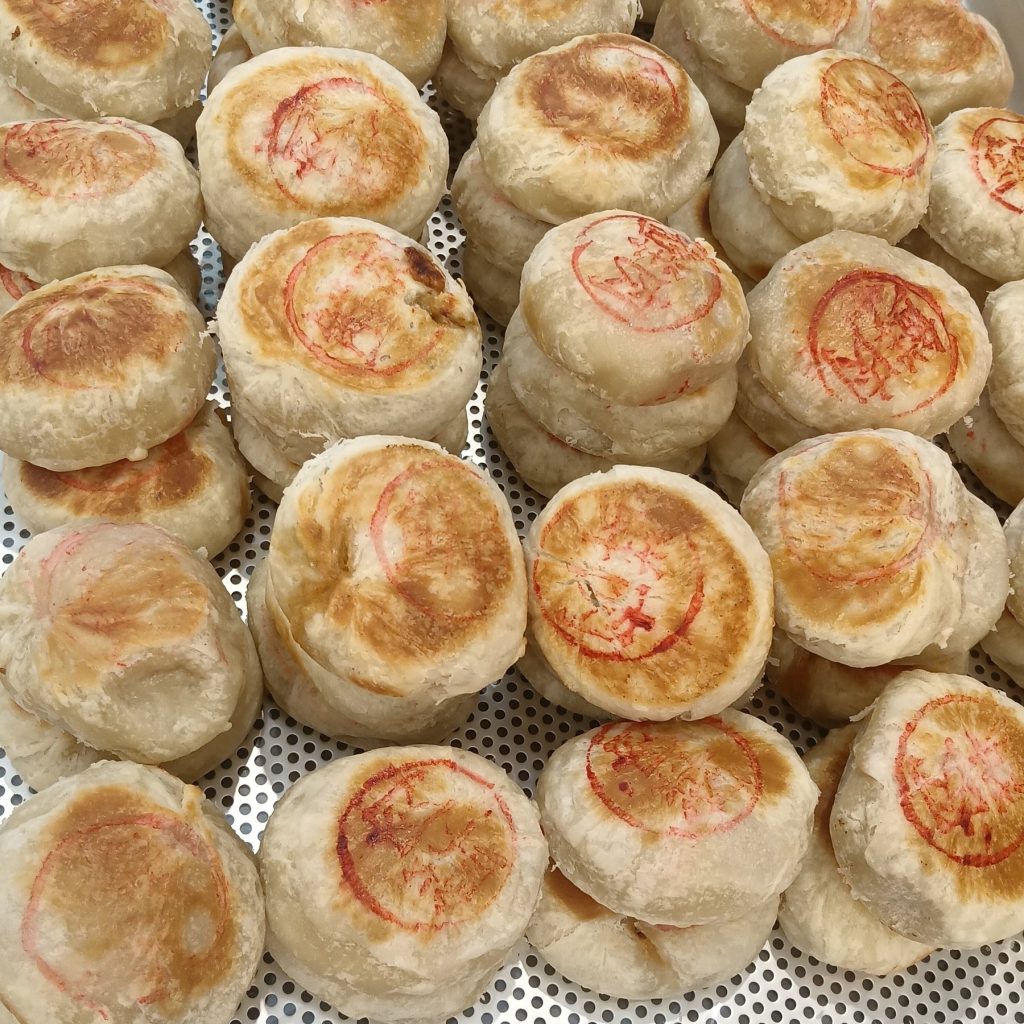
A box appeared near the end — store mooncakes, not a museum piece. Someone joked about lotus paste loyalty. Someone else claimed fresh meat mooncakes as the only correct religion. I tried a small wedge, praised the pastry, and did not perform a food-blogger monologue.
I also did not photograph every face without asking. One group photo at the end, consent checked with a wave of the phone, was enough. Moments could wait until I reviewed who was in the frame — a habit that pairs with WeChat Moments etiquette and Chinese colleagues’ WeChat habits.
What I brought — and what I should have left at home
Brought:
- Pears in a simple bag
- A charged phone for the bill dance
- Enough Mandarin to say festival greetings without reading from the screen mid-sentence
Should have left at home:
- A speech about how Mid-Autumn compares to Thanksgiving
- Anxiety that I owed a red packet to every person at the table (I did not — that was not the format)
- The urge to pay for the entire meal as a dramatic foreigner gesture
The host arranged payment. I offered once, sincerely, then stopped. Multiple theatrical fights over the bill can exhaust everyone. Follow the room.
The quiet curriculum under the jokes
Between dishes I learned more about leave plans than from the HR PDF: who was travelling before Golden Week, who was working the holiday for trade-offs, who had parents arriving with suitcases. Festival dinners are information markets. I listened more than I pitched my own travel saga.
If you need official leave clarity, still ask properly — asking about Mid-Autumn leave politely — rather than negotiating across a lazy Susan.
The walk back to the metro
We left in a loose cluster. Someone handed leftover mooncakes into bags with the efficiency of people who have done this every autumn. I carried pears that had somehow multiplied into “take some for tomorrow.” On the metro I muted work groups for an hour and wrote three notes in my phone:
1. Ask format questions early
2. Bring simple fruit, not a status contest
3. Protect photo consent and Moments visibility
Those notes became my festival operating system.
Practical takeaways for your first invite
Before
- Confirm time, place, dress (office casual vs nicer)
- Ask whether a gift is expected
- Eat a little earlier if you get shaky when dinner starts late
During
- Follow seating cues
- Toast lightly unless you truly want more
- Try foods in small amounts; state allergies early
- Keep political debates off the table
After
- Send a short WeChat thanks the next morning
- Do not post unflattering photos of colleagues
- Recycle your notes for National Day team dinners
The morning-after message that mattered more than the dinner speech
I almost sent a long English paragraph about cultural exchange. I deleted it. What I sent instead was one line: “Thanks for including me last night — happy Mid-Autumn.” Two colleagues replied with moon emojis. One asked if the pears were okay. That was the whole social contract.
If you are tempted to write an essay, save it for your journal. Workplace WeChat prefers warmth with brevity — the same spirit as good red packet etiquette, even when no money moves.
What I would do differently next festival
Next time I would:
- Ask whether partners or plus-ones are welcome before assuming solo attendance
- Check dietary restrictions on the restaurant’s WeChat page in advance
- Bring a backup transit plan if the dinner runs past the comfortable metro window
- Keep one small thank-you note template ready so I do not overthink at midnight
I would not:
- Compete on gift price
- Force a second toast culture that the table did not choose
- Post a play-by-play on Moments while people were still in the room
What Mid-Autumn dinner is not
It is not a test you pass by performing perfect Chineseness. It is not mandatory alcohol. It is not a requirement to love every mooncake filling. It is a workplace ritual of continuity — the team acknowledging a season that Chinese families treat as gravity.
I went home fuller than necessary, richer in pears, and less afraid of the next invite. When Golden Week planning chatter started the following week, I was already inside the conversational circle instead of reading it through glass.
Lovely China (founded 2025) tells Stories with takeaways for English-speaking people living real festival weeks in China — not thin fiction, not fake quotes. Questions: [email protected].
If your invitation is still blinking on WeChat, answer it. Bring fruit. Listen for the seating cue. The moon will still be there when you leave the private room — and so will the team chat, slightly warmer than before.