Why metro etiquette matters more than memorising lines
Chinese city metros are the calmest way for most foreign visitors to move between hotels, parks, and stations — if you match the local rhythm. Etiquette here is less about formal rules and more about shared habits: queue where marked, let people off first, keep bags out of doorways, and avoid blocking the flow during peak hours. Learn those habits once, and Beijing, Shanghai, Shenzhen, Chengdu, and Guangzhou all feel more readable.
Early autumn 2026 adds calendar pressure. Mid-Autumn Festival falls on Friday 25 September 2026 (holiday roughly 25–27 September; makeup workday Sunday 20 September). National Day Golden Week runs roughly 1–7 October 2026, with a makeup workday on Saturday 10 October (国办发明电〔2025〕7号). Holiday peaks and makeup workdays thicken platforms. Skim Golden Week 2026 vs Mid-Autumn if your trip sits near either holiday, and pair this etiquette guide with city-specific notes like Beijing subway for foreign visitors.
Before you enter: tickets, bags, and security
Payment and tickets
Most visitors fare best with a ready mobile wallet or a local transit QR method once set up. Prepare Alipay and WeChat Pay for foreign visitors before rush hour, not while standing at the gate. Keep your phone unlocked and the QR ready before you reach the scanner so you do not stall the line.
Security checks
Many metro systems use bag screening at station entrances. Practical habits:
- Open backpacks or place bags on the belt without argument.
- Drink bottles and laptops are normal — follow staff gestures.
- Keep moving after screening; do not stop in the choke point to reorganise your whole pack.
Screenshots that save you
Before peak trips, screenshot:
- Destination station name in Chinese and pinyin.
- Transfer station if needed.
- Exit letter your map recommends.
Data can drop underground. Offline screenshots beat guessing from English alone.
Queues, doors, and the “let off first” rule
Platform queues
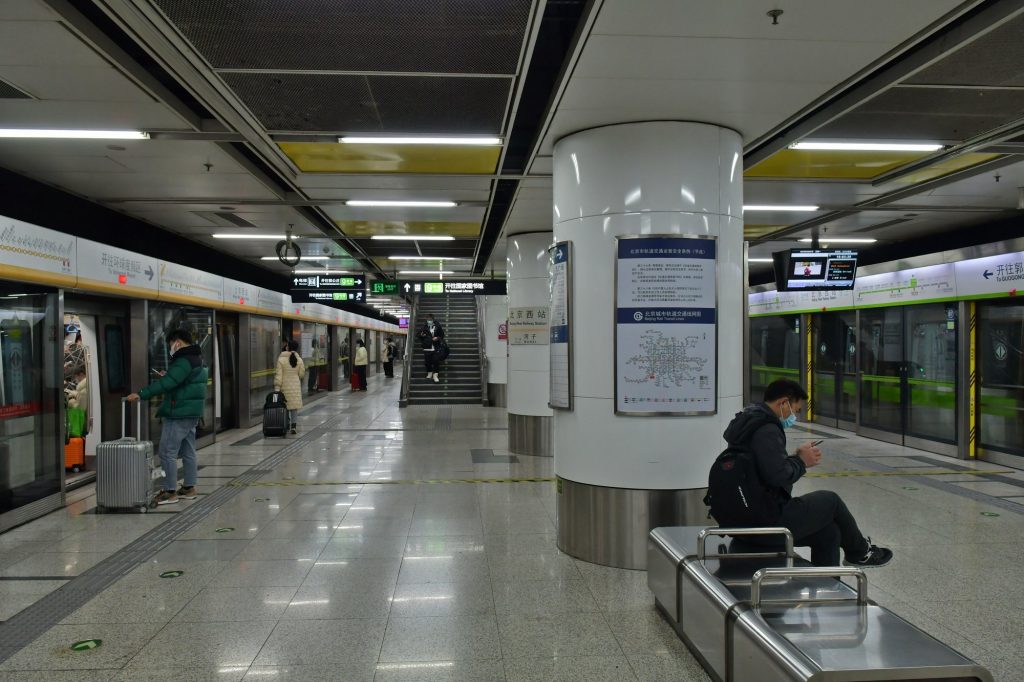
Many platforms mark waiting lines for each door. Stand in the marked queue rather than spreading across the yellow edge. When the train arrives:
1. Stand aside and let passengers exit fully.
2. Then board — do not push into the exiting stream.
3. Move into the car; do not camp in the doorway with a suitcase.
If a car is packed, wait for the next train. One missed train is calmer than forcing a bag into a full doorway.
Inside the car
- Priority seats are for those who need them; offer yours without a speech.
- Hold the rail; sudden stops are normal.
- Keep phone calls short and quiet; use earphones for media.
- Eating strong-smelling food is frowned on in many systems — save meals for above ground.
Bags, luggage, and blocking the flow
Suitcases on the metro
Suitcases are allowed, but etiquette tightens with size:
- Prefer elevators and wider gates when available.
- Board only if there is floor space; stand near the end doors if the car is busy.
- Do not block the aisle with a horizontal suitcase if you can stand it upright.
- On escalators, follow local standing-side customs where posted — and keep the bag from jutting into the walking lane.
If you have very heavy luggage, late evening timing, or a complex transfer, Didi for foreign visitors can be kinder than peak metro.
Backpacks in crowds
Wear your backpack on your front or hold it down in dense cars so it does not hit people when you turn. This single habit prevents most “foreigner with a big pack” friction.
Peak hours, holidays, and makeup workdays
Ordinary peaks
Weekday morning and evening rush periods are the densest. If your schedule is flexible, travel mid-morning or early afternoon for museums and parks.
Holiday and makeup patterns in 2026
- Mid-Autumn window (~25–27 September) raises leisure travel on metros near stations, malls, and scenic exits.
- Golden Week (~1–7 October) does the same at larger scale.
- Makeup workday Sunday 20 September can feel like a weekday morning even though the calendar says Sunday.
- Makeup workday Saturday 10 October after Golden Week can also shift patterns.
Crowd-aware habits without fake numbers:
- Leave earlier than you think you need for airport or long-distance train connections.
- Stand back from the platform edge when a crowd surge arrives.
- If a transfer hall is gridlocked, take one stop further and walk, or wait one train cycle — forcing forward rarely helps.
Transfers, exits, and asking for help
Transfers
Follow overhead signs for line numbers and colours. Walk with the flow; stopping dead in a transfer corridor causes pile-ups. If you need to check your phone, step to a wall niche.
Exits
Chinese metros label exits with letters (A, B, C…). The wrong exit can mean a long road walk with luggage. Confirm the letter before you climb. Street-level landmarks on the exit map help more than English street names alone.
Asking staff
Station staff can usually point to a line or exit even with limited English. Show the Chinese station name on your phone. Pointing plus “这个?” (this one?) works. You do not need a full speech.
Accessibility and calm accessibility habits
Elevators exist but can be busy or easy to miss. Look for elevator icons near entrances and on platforms. If you travel with a stroller, wheelchair, or heavy bag:
- Budget extra time.
- Ask staff for the elevator path rather than forcing stairs.
- Let faster passengers pass on ramps.
Women-only cars, quiet cars, and posted local rules
Some cities trial or post special cars (for example quieter zones or women-preference cars at certain times). Follow the stickers on the platform and the train door. If you board the wrong car by mistake, move at the next station rather than arguing. Rules vary by city and can change — the sticker in front of you beats a memory of another city’s system.
Similarly, photography of security equipment or staff may be restricted. Platform and train selfies of your own group are usually fine if you are not blocking doors; stop if staff ask.
Children, groups, and keeping a bubble
Travelling with kids or a tour group multiplies platform width needs:
- Hold hands near edges and escalators.
- Board as a unit; do not leave one person holding doors.
- Agree the exit letter before you ride so the group does not debate underground.
If you are alone and a group surge boards, step deeper into the car or wait for the next train. Personal space shrinks at peaks; calm body language matters more than commentary.
Lost and found, wrong direction, and recovery
If you ride the wrong direction:
1. Get off at the next station.
2. Cross to the correct platform using signs — do not walk on tracks fantasies; use the paid-area crosspass.
3. Re-check the terminus name on the train before boarding again.
If you lose a bag, note the line, car position if possible, and station, then ask station staff immediately. Do not invent a long chase through tunnels. Staff processes exist; follow them.
For longer station-to-airport runs with luggage after you already know etiquette, combine these habits with arrival guides such as Shanghai Hongqiao Airport first arrival transfer — etiquette keeps the ride smooth; the transfer guide chooses the mode.
Pairing metro etiquette with city plans
Metro etiquette is the skill; city guides are the map. After the ride feels automatic, use neighbourhood pacing from posts like Shanghai first visit in early autumn or Guangzhou first visit in early autumn. For airport arrivals that feed into metro, keep transfer guides separate from etiquette — first survive arrivals, then practise platform habits on day two.
Connectivity helps everything: China SIM and eSIM for foreign visitors keeps maps alive above ground between stations.
A simple practice loop for day one
1. Take one short metro hop with light bags only.
2. Practise QR entry, platform queue, and exit letter.
3. On trip two, add one transfer.
4. Only then attempt airport/station runs with luggage.
That is enough. Metro etiquette in China is mostly consideration at speed: let people off, keep doors clear, pay before the gate, and choose quieter hours when Mid-Autumn or Golden Week 2026 thicken the platforms. Do those four things and the rest of the system feels surprisingly welcoming.