Why lockers matter on a China rail day
Chinese train stations are cities inside cities: security lanes, ticket gates, waiting halls, metro links, and food courts. Dragging a hard-shell suitcase through all of that — then onward into a lunch district — burns time and goodwill. Luggage lockers and staffed left-luggage counters exist to solve a simple problem: you arrive hours early, or you have a long layover, and you want your hands free.
This guide explains how station luggage storage typically works for foreign visitors in 2026, what to expect with ID and payment, and when lockers beat ride-hailing with bags. Pair it with how visitors book mainland trains on 12306 if your layover sits between two tickets.
Where to find lockers and left-luggage
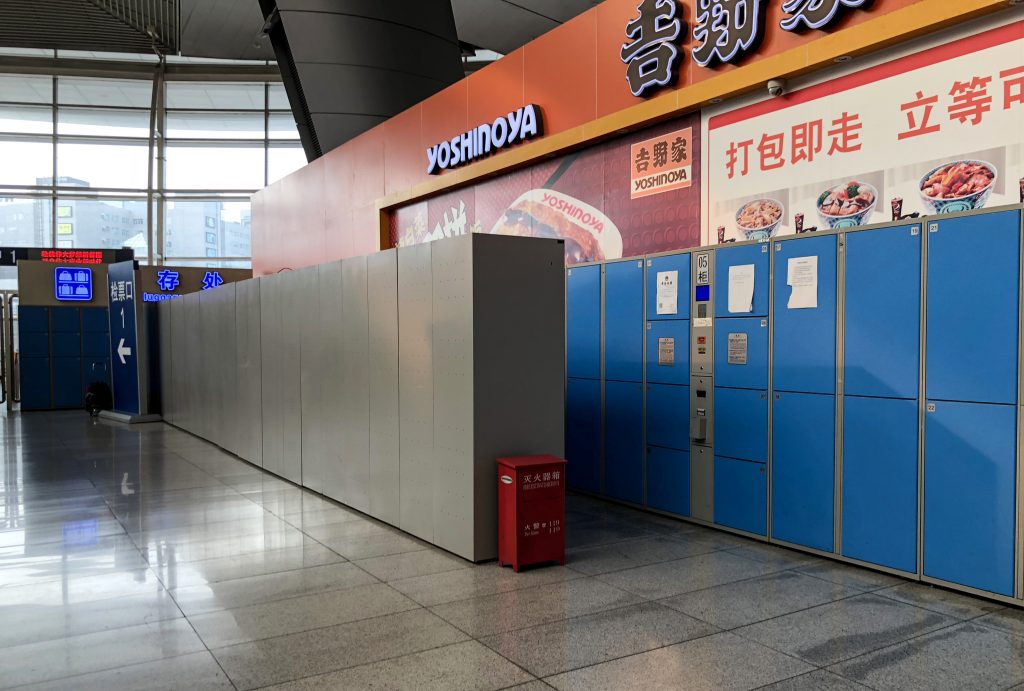
Look for signs that say 行李寄存 (luggage deposit / left luggage) or locker icons near arrivals, exits, or metro transfer corridors. Large hubs — provincial capitals and major high-speed stations — are more likely to offer electronic locker banks plus a staffed counter. Smaller stations may offer only a counter, only lockers, or neither.
Practical search pattern after you exit the train:
1. Follow exit signs to the main arrivals hall.
2. Scan for locker walls or a “left luggage” desk near information.
3. Ask station staff by showing a translation note: “行李寄存在哪里?”
4. Check both arrivals and departures sides — some facilities sit before security, some after.
Do not assume the locker bank you used last year is still in the same corner after a renovation.
Locker banks vs staffed left-luggage
Electronic lockers
Locker banks assign a compartment size, take payment, and issue a code, QR, or printed ticket. You place the bag, close the door, and keep the retrieval credential safe. These suit standard suitcases that fit the posted dimensions.
Staffed counters
A counter takes your bag, tags it, and returns it against ID and receipt. Staffed storage can handle odd shapes better and may feel calmer if you distrust remembering a code. It can also mean a short queue at peak train banks.
Choose lockers for speed when sizes match. Choose staffed storage when your bag is oversized, fragile, or awkwardly shaped.
ID, tickets, and what you may be asked to show
Expect real-name habits around rail property. Foreign visitors should carry their passport. Staff may ask to see passport details when depositing or retrieving bags, especially at counters. Keep your train ticket or itinerary screenshot handy if asked why you are storing luggage during a layover.
Never store your only copy of critical documents inside the locker. Keep passport, phone, medications, and one payment method on your body.
Payment: mobile first, cash as backup
Most modern locker screens prefer WeChat Pay or Alipay QR payment. Set these up before a multi-city rail week — Alipay and WeChat Pay for foreign visitors. Some machines still accept cards or cash; do not bet your layover on a single method.
Fees usually scale by size and duration (hours or calendar days). Exact prices vary by station and vendor — read the on-screen tariff rather than trusting a remembered blog number. If a machine fails mid-payment, do not walk away without checking whether a locker was assigned; ask staff to help release or retry.
Size limits and packing honesty
Locker doors are honest: if the suitcase does not fit, it does not fit. Soft bags compress better than hard shells. Remove external hook-on tote bags that add width. Ski bags, oversized instrument cases, and overflowing cardboard boxes may need the staffed counter — or may be refused.
Before you commit:
- Weigh whether you truly need everything downtown
- Consolidate into one storage unit when possible
- Photograph the locker number and instructions
- Note the latest retrieval time if overnight rules differ
Overnight storage is often possible at major stations, but rules differ. Confirm closing hours and overnight fees on the machine or with staff before you leave for a distant hotel.
When lockers beat dragging bags (and when they do not)
Lockers win when:
- You have 3+ hours between trains in the same station city
- You want a museum or lunch without suitcase theatre
- Metro stairs would otherwise dominate your layover
- You are meeting a friend near the station and want free hands
Skip lockers when:
- Your connection is tight and security lines are unknown
- The only storage sits far from your next departure wing
- Your bag contains valuables you refuse to leave anywhere
- Station storage is full (holiday peaks) and the queue threatens your boarding time
Near Mid-Autumn (~25–27 September 2026) and Golden Week (~1–7 October 2026), expect more travellers with big bags. Arrive earlier for storage, or keep a plan B: store at a hotel desk if you have a same-day late check-in, or take a short Didi with luggage instead of fighting a full locker wall — Didi for foreign visitors.
Soft sleeper and overnight layover logic
If you just left an overnight soft sleeper and have a morning to kill before a hotel opens, lockers can rescue the day. Shower plans and breakfast become easier without rolling bags through every doorway. For context on overnight berths themselves, see soft-sleeper first-timer guidance already on Lovely China if you are chaining night trains into day layovers.
Conversely, if you will board a night train late, avoid retrieving bags at the last possible minute — station crowds thicken before departure banks.
Security sense without paranoia
Use official station facilities over random street “watch your bag” offers. Lock zippers when possible. Do not advertise camera bags as you load the locker. Keep the receipt/code private — treat it like a house key.
If a locker jams, find station staff or the vendor service number on the cabinet. Do not force doors. Do not abandon payment evidence.
Sample layover playbook
1. Arrive, exit, locate storage before you leave the station complex.
2. Store bags; keep passport and phone.
3. Clear exit security as needed for the city side.
4. Do one focused activity (lunch, short walk, one museum wing).
5. Return with 60–90 minutes more buffer than you think you need before the next train.
6. Retrieve bags, re-clear entry security, reach the waiting hall early.
That buffer matters more during makeup workdays and holiday weeks — Sunday 20 September 2026 (makeup before Mid-Autumn) and Saturday 10 October 2026 (makeup after Golden Week) can shift crowd patterns on work corridors even when tourist areas feel different.
Common mistakes
- Storing bags, then discovering your next train departs from a different station across town
- Forgetting the locker code screenshot when phone battery dies
- Choosing the smallest door to save a little money and failing to close it
- Leaving medication or power adapters inside
- Assuming every station has storage open 24 hours
A calmer rail journey is a lighter one
Luggage lockers will not make China travel glamorous. They make it humane. Free hands turn a four-hour layover into a neighbourhood lunch instead of a suitcase picnic on the concourse floor. Learn the 行李寄存 signs, keep your passport with you, pay with a wallet that works, and give yourself boarding buffer. The train will leave with or without your calm — lockers help you keep it.