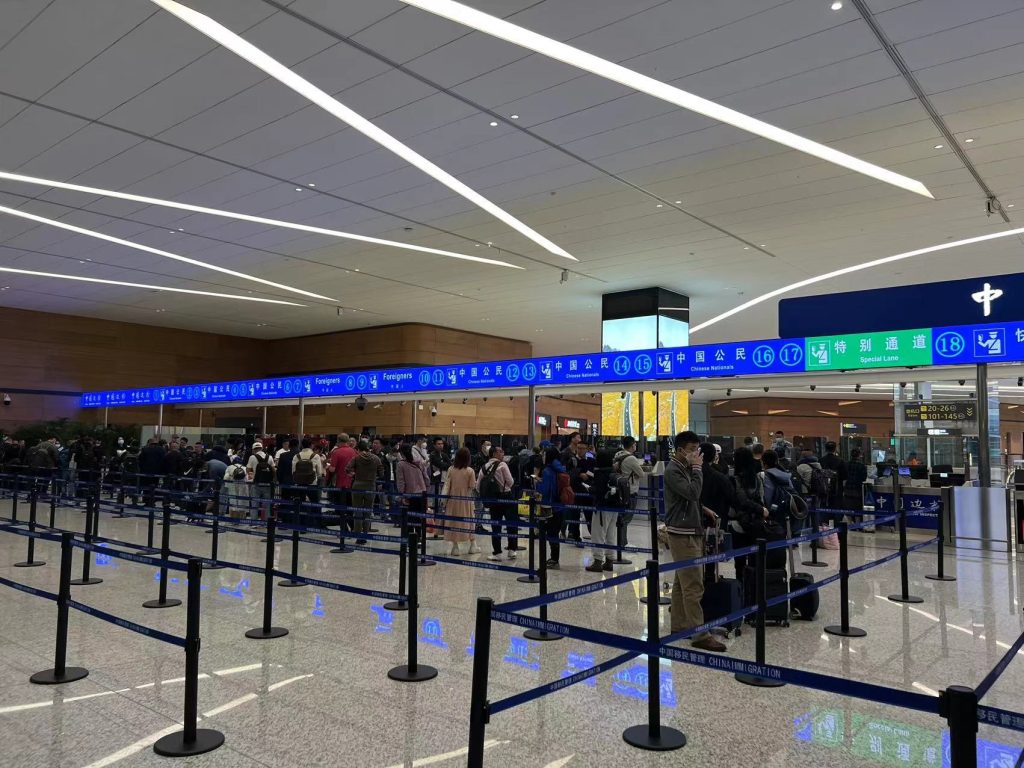
Holding two passports can make a China trip feel more complicated than it is. The calm habit is simple: choose one booklet for this entry, make the airline ticket and any visa or visa-free eligibility line up with that same booklet, and hand that same booklet to Chinese immigration. This article cannot tell you which nationality to travel on. That choice sits with you, your other country’s rules, and the entry programme you actually qualify for.
Eligibility, tickets, and stamps must belong to the document you present. If the name or passport number on the booking does not match the booklet on the counter, check-in staff and border officers have every reason to pause. Switching mid-inspection because a second booklet “might be easier” is how a straightforward arrival becomes a long conversation.
Pick one booklet for this entry and keep using it
Before you buy the ticket, decide which passport you intend to present on this journey into China. Then book in that name and document number. If you already hold a Chinese visa, it lives in a specific booklet; that is usually the booklet this trip must follow. If you plan to use a visa-free programme, confirm that the nationality of the booklet in your hand is actually covered, and for how long, using official National Immigration Administration pages (nia.gov.cn or en.nia.gov.cn) and our guide to how to check 15-day vs 30-day visa-free nationality. Programmes differ by nationality and can change. Do not assume that holding two passports automatically improves your entry options.
The same booklet should be the one you show at airline check-in, at departure immigration in the country you leave, and at Chinese border inspection on arrival. Keep the other booklet accessible but not in the way of the inspection tray. Officers may ask what other documents you are carrying. Answer straightforwardly. Do not hide a second passport in a deceptive way, and do not invent a story about why you have it. A second booklet is a document, not a secret.
This is not legal advice about how China recognises dual nationality, and it is not a guide to another country’s exit-permit or tax-residency rules. Those rules are not universal, and a blog cannot give you a single “always use X” instruction.
Make the ticket, visa, and stamp tell one story
Airline staff are checking that the passenger in front of them matches the ticket. Use the visa-free documents to show the airline checklist so biodata page, booking, and any visa or visa-free confirmation agree. If you changed passports after booking, fix the record with the airline before you reach the airport. A last-minute mismatch is harder to unwind at a busy counter.
At Chinese immigration, the officer will inspect the booklet you hand over and, if entry is granted, place the entry record on that document or in the system linked to it. Later you will need to read that record to know your allowed stay; keep how to read your entry stamp and allowed stay for that step. If you later try to leave on a different booklet than the one used to enter, you can create a problem that a hotel desk cannot solve. Plan to exit on the same documentary trail you used to enter, unless an official instruction on the day tells you otherwise.
Hotel registration, train ticket windows, and some scenic-area checks will also ask for a passport. Show the same booklet you used to enter, unless staff clearly ask for something else and you understand why. Consistency is easier to explain than a mid-trip switch.
What to confirm in the week before you fly
Check official NIA guidance for the entry programme you intend to use, and confirm any visa pages are still valid for the dates and ports you have booked. Confirm the airline record shows the correct passport number. Photograph the biodata pages of both booklets and store the images somewhere you can reach if a bag is delayed—without posting those photos in a public chat.
If one booklet is close to expiry, check both the airline rule and the entry rule. Many destinations ask for a minimum remaining validity; China-specific requirements should be read on official pages near travel week, not memorised from an old forum post. If you are transiting or using a short visa-free stay, make sure the booklet you present is the one that actually qualifies.
Pack both booklets in a place you can reach during inspection, not in checked luggage. If you lose the booklet you entered on, the recovery path is slower; see lost passport steps in China and follow official consular and exit-document steps rather than improvising with the unused passport.
At the counter and at the immigration desk
Place the chosen passport, open to the biodata page, on the tray with the boarding pass if asked. Wait for instructions. If an officer asks whether you have another passport, say yes if you do, and produce it if asked. If they ask why you used this booklet, a short, accurate answer is enough: this is the document that matches the ticket and the visa or visa-free programme you are using.
Do not slide a second booklet across mid-interview because the queue next to you seems faster, or because a fellow passenger offered advice. If there is a genuine problem—a damaged page, a visa in the other book, a name that does not match—ask what they need you to do, and follow that instruction. Invented processing times do not help here. Officers work from official rules and the documents in front of them.
When you are through, put the stamped or recorded booklet back in the same place you will look for it at the hotel and on departure. The unused booklet can stay zipped away. For the rest of the arrival day, China travel tools page will point you to hotels, payments, and transport so the documentary choice you already made can stay boring.
The aim is not to be clever with nationality. It is to make one clear, consistent presentation: one booklet, one ticket, one entry record, and no mid-inspection improvisation.
Related Lovely China reading
For payments, start with Alipay and WeChat Pay hub and WeChat Pay vs Alipay for tourists. For trains, keep high-speed rail first-timers guide and 12306 passport signup for foreigners handy. City hubs: Beijing first-visit guide, Shanghai first-visit guide. Connectivity: roaming vs local SIM honest guide, pocket Wi-Fi vs eSIM for China, offline maps for foreigners. Bookmark China travel tools page.
Practical checklist
- Confirm official rules on the relevant government, park, airline, or bank page near your travel week
- Screenshot bookings, tickets, and QR codes while you still have stable Wi-Fi
- Save hotel and attraction names in Chinese characters in your phone notes
- Carry passport, a backup payment method, and a small cash float (why cash is still needed)
- Test one small mobile payment before you rely on wallets at a gate or taxi
- Keep China travel tools page bookmarked for related Lovely China hubs
FAQ
Can you tell me which passport I should use to enter China?
No. This guide cannot tell you which nationality to travel on. Choose one booklet for this entry, match the ticket and any visa or visa-free eligibility to that booklet, and present the same one at check-in and at Chinese immigration. Confirm official National Immigration Administration guidance (nia.gov.cn or en.nia.gov.cn) for the programme you intend to use.
Should I hide my second passport from Chinese immigration officers?
No. If officers ask what other documents you are carrying, answer straightforwardly and produce the second booklet if asked. Do not switch mid-inspection, and do not invent a story about why you hold two passports.
What if I lose the passport I used to enter China?
Follow official consular and exit-document steps for a lost passport rather than improvising with the unused booklet. See our lost-passport guide, and keep photos of both biodata pages somewhere you can reach if a bag is delayed.
Notes for late 2026 travellers
Late December 2026 and the New Year week into 2027 bring colder mornings, earlier sunsets, and holiday crowds in many city hubs. Pack real winter layers in the north, and leave extra time on weekends and around 1 January.
This article does not invent ticket prices, opening hours, processing times, consular fees, or official statistics. When a number matters, verify it on the official site, app screen, or ticket board near your travel week.
If an official rule page disagrees with this guide, follow the official page. Lovely China orients English-speaking travellers; we are not an immigration, banking, or medical authority.