The minibus bucked over a pothole just past the Baoguo Temple ticket gate, spilling cold tea onto my plastic sleeve. Through the window, the mountain didn’t look like a peak so much as a wall of wet green rising straight up from the Sichuan basin. Mist clung to the ridgeline at 3,099 meters, and the air already tasted of pine resin and diesel exhaust. A monk in saffron robes tapped his phone screen beside me, while a woman across the aisle adjusted a hiking pole with a practiced twist. This was not the silent sanctuary I had imagined. It was a working pilgrimage route with a highway running through its ribs.
Getting There Without Losing a Morning
Most foreigners arrive from Chengdu. The fastest route is the high-speed train from Chengdu East or Chengdu South to Emeishan Station — about 70 minutes. From the station forecourt, green public buses numbered 5A or 8 run every 15 minutes to the Baoguo Temple entrance (the main park gate). Cost is a few yuan, payable by transit card or exact change. Taxis cluster outside the station too; a ride to the gate should take ten minutes and cost roughly ¥30–40. If you are coming from Leshan, the local train takes 20 minutes, or buses leave from Xiaoba Station every half hour. Drivers sometimes claim the bus “doesn’t run today” to push a private car hire. Ignore them. The bus runs.
Tickets, Cards, and the Cable Car Decision
At the gate you buy two things: the park entry ticket (valid for two days) and a sightseeing bus ticket. The bus ticket is mandatory — private cars are not allowed past the first checkpoint. The bus runs in two segments: lower mountain (Baoguo to Leidongping) and upper mountain (Leidongping to the Golden Summit cable car station). You can buy a through-ticket or just the lower segment if you plan to hike the whole way. A plastic IC card on a lanyard serves as both tickets; tap it at every bus door and gate. Keep the lanyard around your neck. I watched a tourist drop his in a squat toilet at Qingyin Pavilion. The replacement queue took 40 minutes.
- Park entry: ~¥160 (off-season ~¥100)
- Sightseeing bus full route: ~¥90
- Golden Summit cable car (round trip): ~¥120; one-way down: ~¥65
- Wannian Temple cable car (round trip): ~¥65
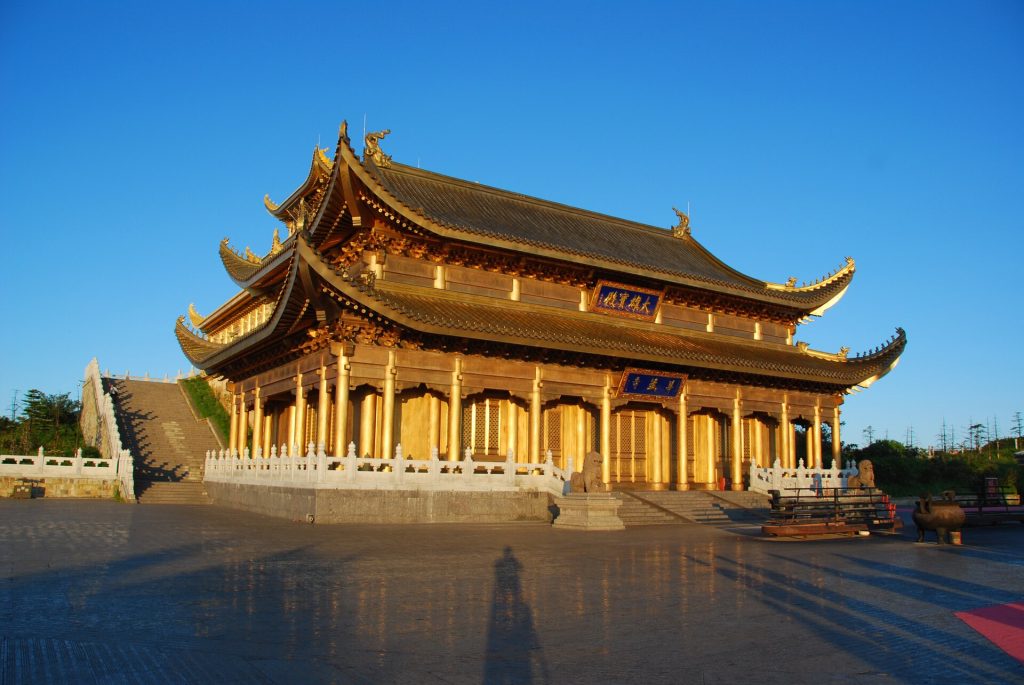
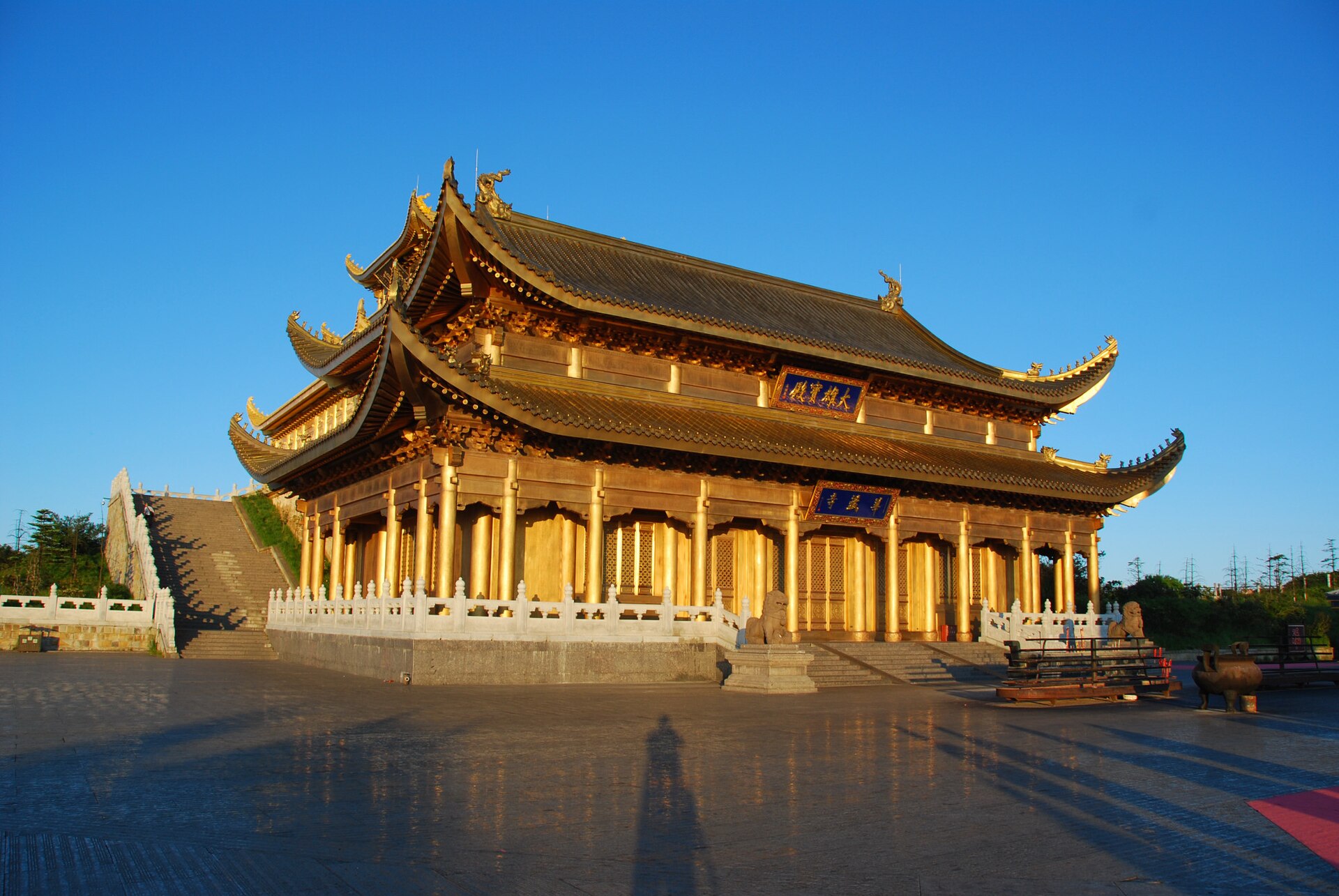
The cable car decision defines your day. The Golden Summit gondola climbs from 2,400 meters to 3,077 meters in five minutes. It saves three hours of stone steps but deposits you into a crowd the size of a stadium concourse. If you want the sunrise — and you should — take the first bus to Leidongping (departs 6:30 am in summer, 7:00 am in winter), ride the gondola up, and walk the final 20 minutes to the summit platform. The alternative: hike from Wannian Temple to the summit, six to eight hours of flagstone stairs through cloud forest. I did it once in October. My quads ached for three days. The views were worth it, but only because the clouds cleared for exactly 12 minutes at noon.
Where to Sleep: Monastery Guesthouse or Tourist Hotel
Staying on the mountain lets you catch the light without the 4:00 am bus scramble. Two practical tiers exist. Monastery guesthouses (like those at Wannian Temple or Fuhu Temple) offer clean rooms with shared bathrooms, vegetarian meals, and a 9:00 pm lights-out bell. Cost runs ¥150–300 per bed. You register with your passport at the temple office; they keep it overnight. No alcohol, no loud talk after dark. The tourist hotels at Leidongping and near the Golden Summit cable car station have private baths, heating, and minibars — ¥500–1,200 a night. Book through a Chinese travel app (Ctrip, Meituan) a week ahead during Golden Week or the lunar seventh month. Walk-ins in shoulder season are fine. I once slept in a monastery dorm while rain hammered the tin roof. The abbot brought steamed buns and pickled mustard greens at 5:30 am. No menu, no bill, just a bow.
Food on the Trail: What Arrives in the Bowl
Every temple kitchen serves a variation of the same vegetarian set: rice, braised tofu, seasonal greens, pickled radish, and a clear soup with wood ear fungus. At Wannian Temple the tofu comes pressed into sheets, fried golden, then stewed with shiitake and bamboo shoots until the sauce clings like lacquer. The greens are usually qingcai (Chinese chard) blanched and dressed with garlic oil and a splash of aged vinegar. Portions are generous. A bowl of rice is bottomless — hold your empty bowl out and the server will refill it without a word. Snack stalls along the steps sell roasted corn on the cob (¥10), vacuum-packed spicy bean curd sticks (¥8), and thermos cups of hot soy milk (¥5). Carry a small pack of tissues and a zip-lock bag for trash; bins are rare past the halfway pavilions.
- Monastery lunch set: rice, braised tofu, seasonal greens, pickled radish, wood ear soup
- Trail snacks: roasted corn, spicy bean curd sticks, hot soy milk
- Water: buy 1.5 L bottles at Baoguo gate (¥5); refill at temple kettles (bring your own bottle)
Monkeys, Mist, and the Mistakes Newcomers Make
The Tibetan macaques at Qingyin Pavilion and Hongchunping are the park’s most famous residents. They are not cute. They unzip backpacks, snatch sunglasses, and bite if you stare. Keep food inside a sealed pack, not in outer pockets. Do not feed them. Do not smile showing teeth — they read it as aggression. If one approaches, stand still, look down, and back away slowly. I watched a teenager lose a smartphone to a juvenile monkey in three seconds. The park staff shrugged.
Weather changes every 300 meters. At the gate it can be 25°C and sunny; at the summit, 5°C with horizontal rain. Pack a windproof shell, a fleece, and a hat with a brim. Umbrellas are useless on narrow steps with 2,000 other people. Wear broken-in trail shoes with grip — the flagstones are polished slick by millions of soles. Trekking poles help on the descent; rent a pair at the gate for ¥10 if you didn’t bring your own.
Common beginner errors: buying a one-way bus ticket up and realizing the last bus down left 20 minutes ago (check the posted timetable at Leidongping shelter); forgetting passport for ticket purchase (they scan it at the gate); assuming the cable car runs in high wind (it shuts down at Force 7, stranding hundreds); and trying to hike the full 50 km loop in one day without training. The loop is doable, but you will miss the temples, the tea, and the quiet moments when the tour groups have passed.
A Rhythm That Works
Day one: early bus to Wannian Temple cable car, ride up, visit the brick hall and the sleeping Buddha, then hike down the flagstone path to Qingyin Pavilion (two hours). Lunch at the monastery. Continue down to Baoguo Temple if your legs hold, or bus back. Stay overnight at a monastery guesthouse. Day two: 5:30 am bus to Leidongping, cable car to Golden Summit, wait for sunrise over the sea of clouds. Walk the cliffside plank road to the Ten Thousand Buddha Pagoda. Descend by cable car, bus to gate, train to Chengdu by noon. You leave with mud on your calves, incense in your sleeves, and the sound of the evening bell still ringing in your ears.