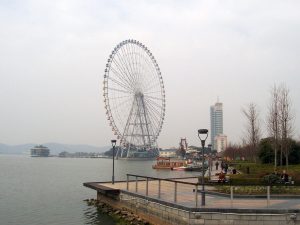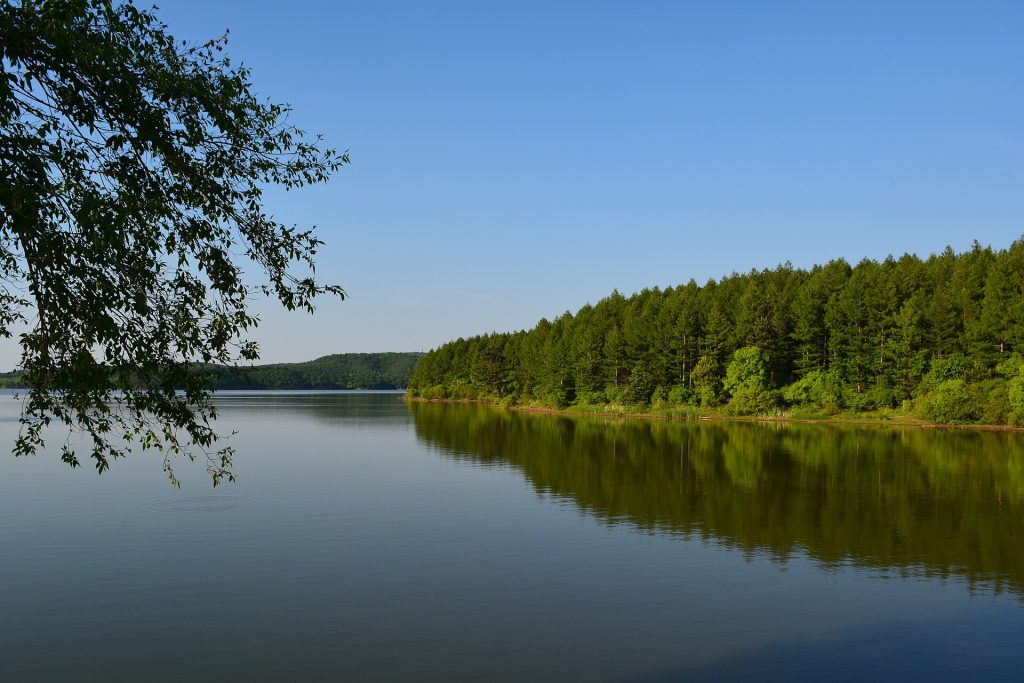
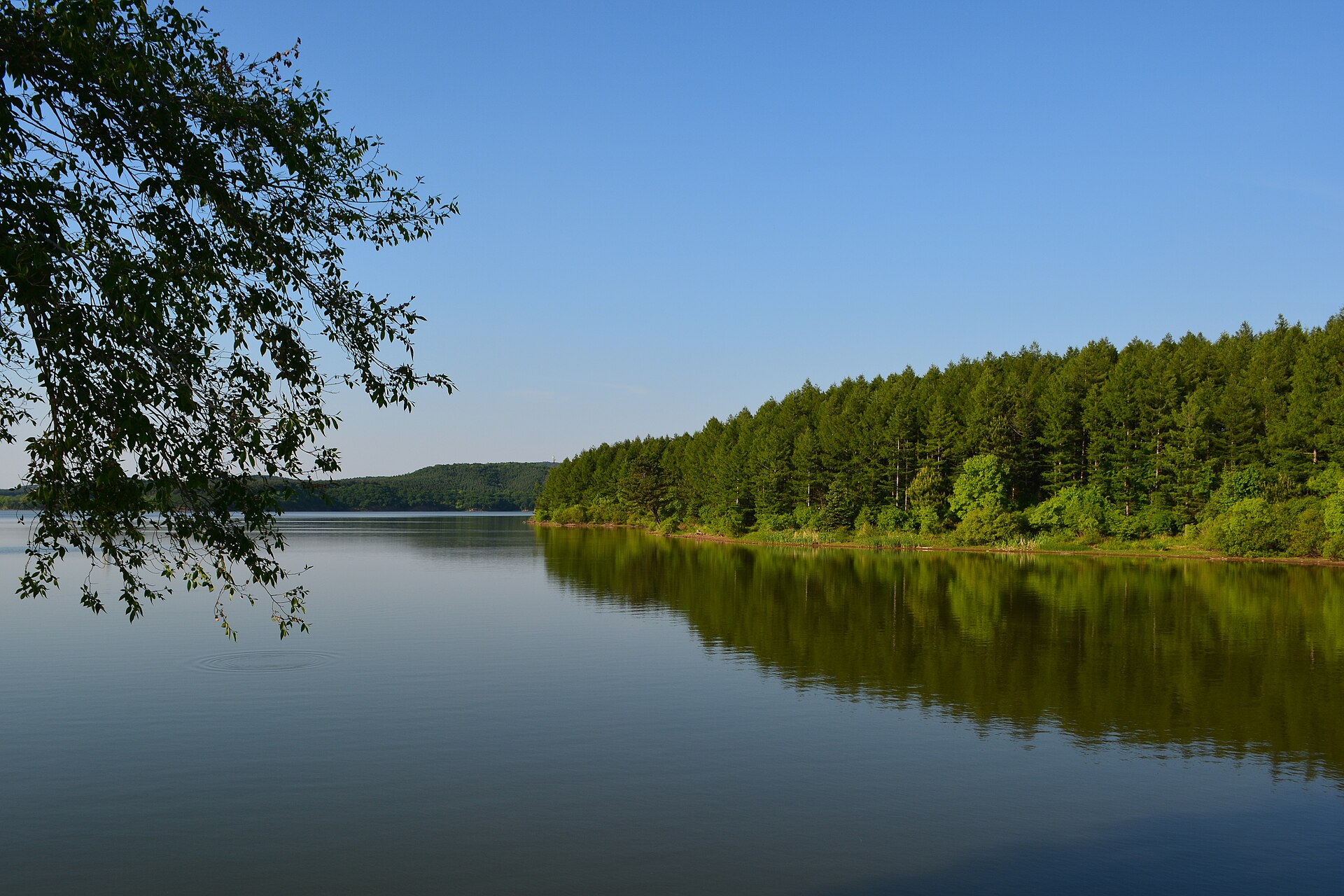
The minibus rattles over a frost-heaved stretch of asphalt, pine branches scraping the roof as we climb toward the main gate. Outside the window, the lake lies flat and pale under a sky the color of brushed steel, its crescent horns tucked into the hills. A few early walkers are already on the boardwalk, breath pluming, the only sound the crunch of gravel and the occasional crack of ice shifting offshore. This is Jingyuetan in deep winter — quiet, cold, and entirely itself.
Getting There Without a Car
Most visitors base themselves in Changchun, about eighteen kilometers west. The simplest route is Metro Line 3 to Jingyuetan Station, then a ten-minute walk south to the visitor center. Trains run every eight minutes during peak season; the ride from downtown takes forty minutes and costs a few yuan. If you land at Longjia Airport, the airport express bus drops at the railway station where you transfer to the metro — allow ninety minutes door to gate. Taxis and ride-hail apps work, but surge pricing hits hard on powder days when the ski field opens.
- Take Metro Line 3 to Jingyuetan Station (Exit B).
- Follow signs for “Forest Park Main Entrance” — about 800 meters on foot.
- Buy tickets at the window or scan the park’s WeChat mini-program.
- Grab a park map; the trail network is larger than it looks on a phone screen.
Tickets, Seasons, and the Ski Field
The park sells a general entry ticket that covers the lake loop, forest trails, and Northern Putuo Temple. Winter adds a separate ski-field pass; summer adds boat rentals and the water-side amusement area. Prices shift by season — expect the winter ski bundle to cost roughly three times the basic summer entry. Buy online the night before if you visit during the Lunar New Year holiday; the ticket hall queue can stretch an hour. A single-day ski pass includes lift access and magic carpet, but equipment rental is extra and lines for boards build fast after 10 a.m.
- General entry: spring through autumn, lower price.
- Winter combo: entry plus ski field, higher price.
- Student and senior discounts with valid ID at the window only.
- Annual pass makes sense if you live in Changchun and hike weekly.
Walking the Lake Loop and Forest Trails
The full crescent circuit is twenty-two kilometers — too far for most day trippers. Locals pick a quadrant. The northern shore from the main gate to the wetland boardwalk is six kilometers of packed gravel, flat enough for a stroller, with pine windbreaks that mute the wind. In the fourth lunar month, wild azaleas bloom pink along the ridge; in the ninth, maple leaves turn the canopy into a ceiling of flame. The southern shore is steeper, dirt-rooted, and sees fewer feet. Bring water; the only vendors cluster near the temple and the ski base lodge.
- North shore loop (gate → wetland → gate): 12 km, 3 hours easy pace.
- South ridge traverse: 8 km, 4 hours, knee-high roots and stone steps.
- Boardwalk shortcut across the wetland: 1.2 km, bird hides every 300 meters.
- Bike rental at the gate: single-speed cruisers, deposit required.
Northern Putuo Temple: Incense and Silence
The temple sits on a knoll above the western horn of the lake, reached by a flight of 108 stone steps. Built in the mid-1990s, it lacks the patina of ancient monasteries, but the layout follows classic northern Chan halls: Heavenly King Hall, Mahavira Hall, Sutra Library. Monks chant at 5:30 a.m. and 4:30 p.m.; visitors are welcome to sit at the back if they remove hats and silence phones. The vegetarian canteen serves a simple lunch — rice, braised tofu, seasonal greens, pickled radish — for a modest donation. Queue forms at 11:30; bowls run out by 12:15.
- Dress: shoulders covered, no shorts above the knee.
- Photography: allowed in courtyards, forbidden inside halls.
- Incense: buy bundles at the kiosk, three sticks per person.
- Best light for photos: late afternoon, sun hitting the yellow glazed tiles.
Winter Sports and the Ice Lantern Festival
When the lake freezes solid — usually the eleventh lunar month through the second — the ski field opens with six runs, two magic carpets, and a terrain park. Night skiing runs until 9 p.m. under floodlights; the air stays dry, so powder holds. The ice lantern festival starts around the Lantern Festival (fifteenth day of the first lunar month). Artisans carve blocks from the lake into dragons, pagodas, and zodiac animals, then backlight them with LEDs. Crowds peak on the festival weekend; go on a weekday evening if you want space to photograph the sculptures without elbows in your frame.
- Ski rental shop opens 8 a.m.; arrive by 7:30 for first pick of boards.
- Lockers: coin-operated, bring 1-yuan coins — change machines jam.
- Warm-up hut sells instant noodles, roasted sweet potato, hot soy milk.
- Ice lantern tickets separate from park entry; buy at the festival gate.
Food, Rest, and What Newcomers Get Wrong
Inside the park, food options are limited to the temple canteen, the ski lodge cafeteria, and a handful of kiosks selling grilled sausage on a stick, corn cobs, and vacuum-packed pickled vegetables. Pack a thermos and sandwiches if you plan a long hike. Restrooms are squat toilets at the trailheads; the visitor center and temple have Western-style stalls. Two mistakes I see every season: visitors wearing city sneakers on the south ridge — roots and ice will twist an ankle — and day-trippers who skip the wetland boardwalk because it looks short on the map. That shortcut is where the mandarin ducks winter and the bitterns nest; skip it and you miss the park’s quiet heart.
- Footwear: waterproof hiking boots with grip, not fashion sneakers.
- Layers: wind cuts across the lake; a shell jacket saves the day.
- Cash: some kiosks still don’t take WeChat Pay.
- Trash: carry out what you carry in; bins are only at major nodes.