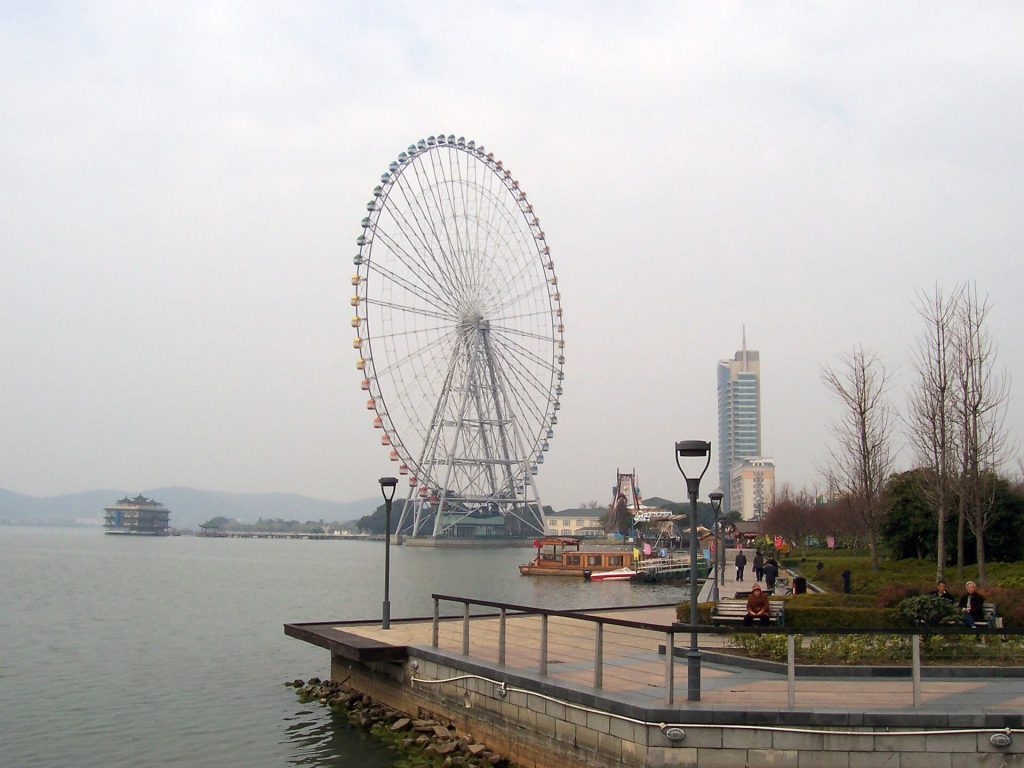
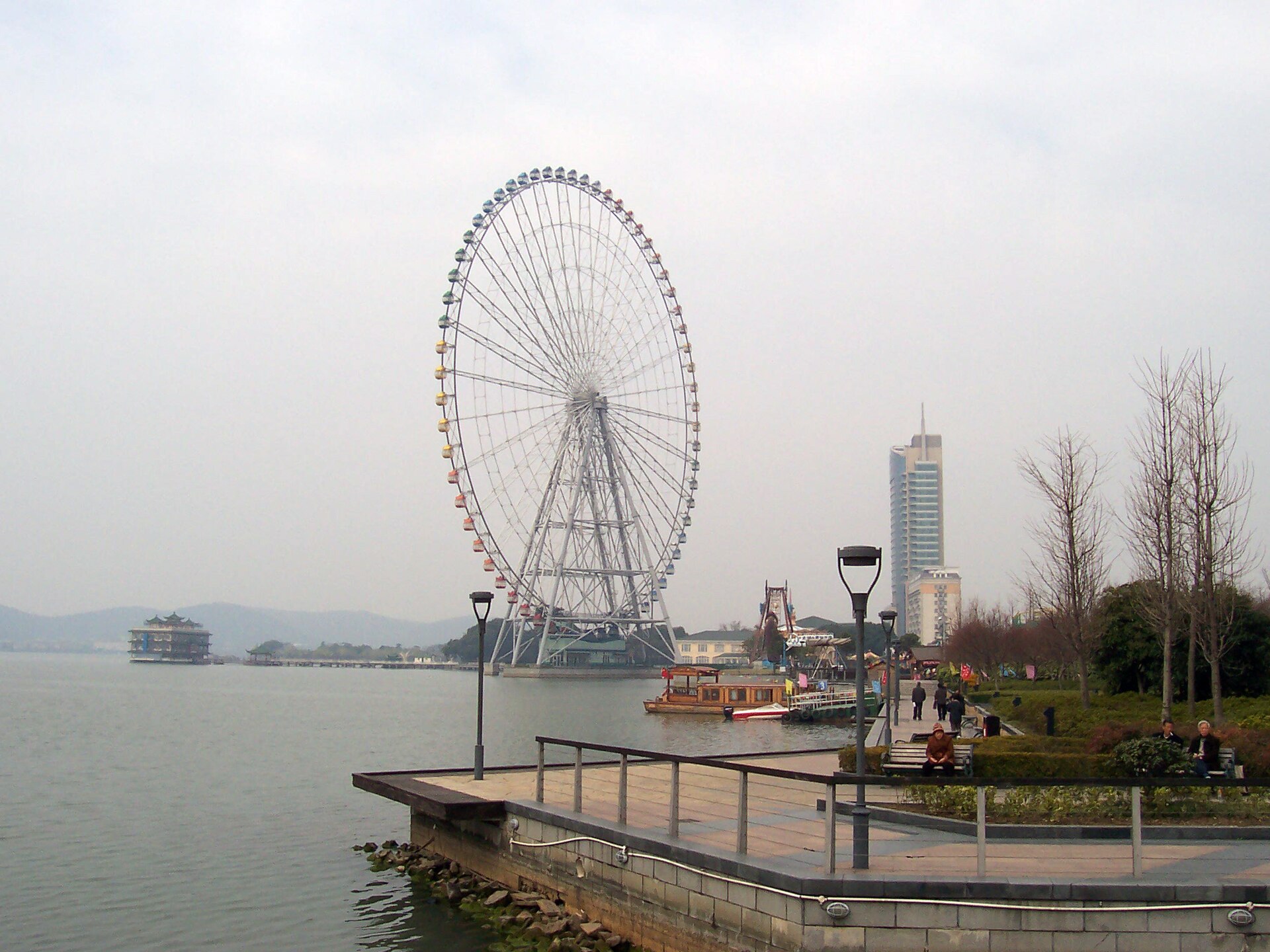
The motor coughed once, caught, and the bow lifted. We slid away from the concrete pier at Liyuan Garden into a sheet of water so flat it reflected the willow fronds upside down. Ahead, the shoreline dissolved into mist where the lake meets the sky, and the only sound was the propeller churning a thin wake. This is Lake Tai in early autumn — wide, shallow, and quiet enough that you can hear a heron take flight two hundred meters off.
Choosing a departure point
Most visitors arrive through Wuxi or Suzhou. Wuxi puts you closest to the classic islands — Yuantouzhu, Sanshan, and the cluster around Meiliang Bay. The ferry terminal at Liyuan runs boats every twenty minutes during the season; tickets are sold at a window beside the parking lot, cash or QR code. Suzhou’s Wujiang side feels less staged. Boats leave from the old canal wharf near the Grand Canal intersection, and the captains there are more likely to cut the engine and let you drift past fishing stakes if you ask. If you are based in Shanghai, the high‑speed train to Wuxi takes fifty minutes; a taxi from the station to Liyuan is another fifteen. From Hangzhou, the ride to Huzhou is slightly longer but the roads along the southern shore are lined with tea villages worth a stop.
Island hopping: what each one actually feels like
Yuantouzhu — Turtle Head Isle — is the busiest. The peninsula curls into the lake like a thumb, and the paths are paved with stone slabs worn smooth by tour groups. Cherry blossoms in the third lunar month turn the slopes pink, but by the fifth month the crowds thin and the lotus ponds near the west gate open. Walk past the main pavilion, keep left at the stone bridge, and you reach a quiet jetty where elderly men practice tai chi at dawn. Sanshan Islands sit farther out, three humps rising from the water. The largest, Dajishan, has a single temple and a footpath that circles the summit in forty minutes. No vendors, no snack bars — bring water. Meiliang Bay’s smaller islets are where the cormorant fishermen still work at dusk; their lanterns flicker like fireflies against the reeds. If you have a full day, hire a private launch from the Meiliang wharf and ask the captain to circle the outer ring. He will know which sandbars are exposed at low tide.
Boat tours: public ferry versus chartered launch
The public ferry follows a fixed loop: Liyuan → Yuantouzhu → Sanshan → back. It runs on the hour, costs roughly the price of a bowl of noodles, and carries a mix of commuters, students, and tourists with selfie sticks. The ride is efficient but you cannot linger. A chartered wooden launch, usually moored near the same pier, costs about ten times as much for a half day but lets you decide the rhythm. Most captains are former fishermen; they speak dialect, not Mandarin, so carry a translation app or a scribbled list of island names. Negotiate the route before you step aboard — specify “outer islands” and “no shopping stops.” The best ones will kill the engine near a reed bed and hand you a thermos of hot tea while egrets stalk the shallows.
Day trips from Wuxi: beyond the water
Wuxi itself sits on the northeast shore, and the lake is only half the reason to stay. Rent a bicycle at the hotel — most front desks have a contact — and ride the greenway that hugs the shoreline for thirty kilometers. The path passes through wetland parks where lotus roots are harvested in the eighth lunar month; you will see farmers waist‑deep in mud, pulling the white segments by hand. Stop at a roadside stall for a bowl of taihu silverfish soup: transparent noodles, a splash of rice vinegar, ginger threads, and the tiny fish that taste of the lake’s mineral bottom. In the afternoon, slip into the Huishan Ancient Town on the city’s western edge. The alleyways here still smell of woodsmoke and fermented tofu. Climb the stone steps behind the ancestral hall for a view of the lake framed by tiled roofs — no guardrail, just a low wall and the wind.
Food on the shore and on the boat
Lake Tai cuisine revolves around the “three whites” — white fish, white shrimp, whitebait — and the seasonal harvest of water chestnuts and lotus seeds. At a family‑run restaurant in Mashan, order the steamed white fish with scallion and ham. The fish arrives whole, skin glistening, flesh peeling off the bone in translucent sheets. The broth at the bottom of the plate is sipped, not poured. White shrimp are best stir‑fried with garlic and a pinch of sugar; they turn coral in seconds and must be eaten shell‑on, sucking the sweet juice from the heads. For a boat picnic, ask the captain to stop at a floating market near Xishan. Vendors sell cold dishes in foam boxes: lotus root slices dressed with chili oil, marinated water chestnuts, and jars of fermented rice wine. Bring your own chopsticks and a trash bag — leave nothing on the water.
- Steamed white fish: whole lake fish (about 500 g), 3 cm ginger matchsticks, 2 scallions knotted, 20 g cured ham slivers, 2 Tbsp Shaoxing wine, 1 Tbsp light soy, 1 tsp sugar. Steam over high heat 12 minutes. Top with hot oil and fresh coriander.
- Stir‑fried white shrimp: 300 g live shrimp, 4 garlic cloves smashed, 1 tsp sugar, 1 Tbsp oil, splash of rice wine. High heat, ninety seconds. Serve immediately.
- Lotus root cold salad: 200 g lotus root, peeled and sliced 2 mm thick, blanched 30 seconds, shocked in ice water. Toss with 1 Tbsp chili oil, 1 tsp black vinegar, ½ tsp salt, toasted sesame seeds.
Mistakes that waste a day
First, assuming the lake is swimmable. The average depth is two meters, the bottom is soft silt, and algae blooms turn the water pea‑green in the sixth lunar month. Locals do not swim here; they fish or paddle small boats. Second, booking a “lake tour” through a hotel concierge without asking the boat type. You may end up on a double‑decker with a karaoke system blasting pop songs. Third, ignoring the tide schedule. The lake has no ocean tide, but wind‑driven seiches shift water levels by thirty centimeters. A sandbar that is dry at noon can be submerged by late afternoon, stranding a launch. Ask the captain for the “wind calendar” — a folded paper chart he keeps in the wheelhouse. Fourth, skipping the southern shore. Huzhou’s Anji bamboo forest and the tea terraces of Changxing are an hour’s drive from the lake edge and see a fraction of the visitors. Finally, forgetting cash. Many island temples, snack stalls, and even some ferry windows still prefer paper yuan; QR codes fail when the signal drops behind the reeds.
When the sun drops behind the western hills, the lake turns the color of cold tea. The last ferry chugs past, its deck lights painting yellow ribbons on the water. You stand on the pier at Liyuan, the willows brushing your shoulders, and the motor’s echo fades into the reeds. That silence — broad, shallow, patient — is what you came for.