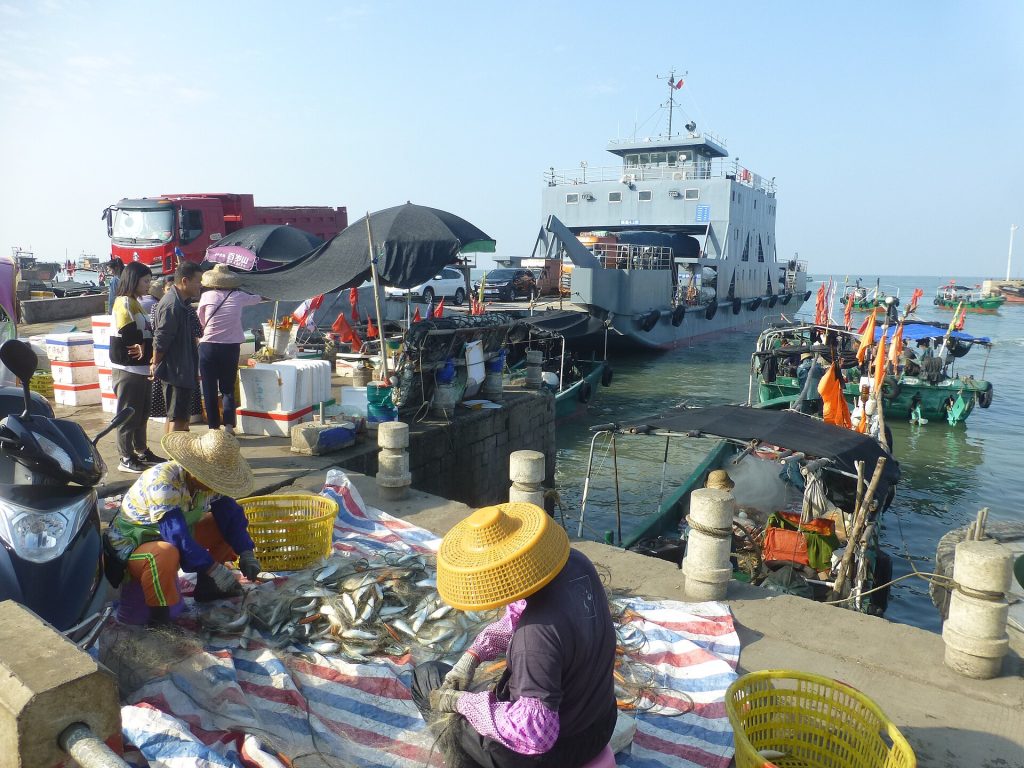
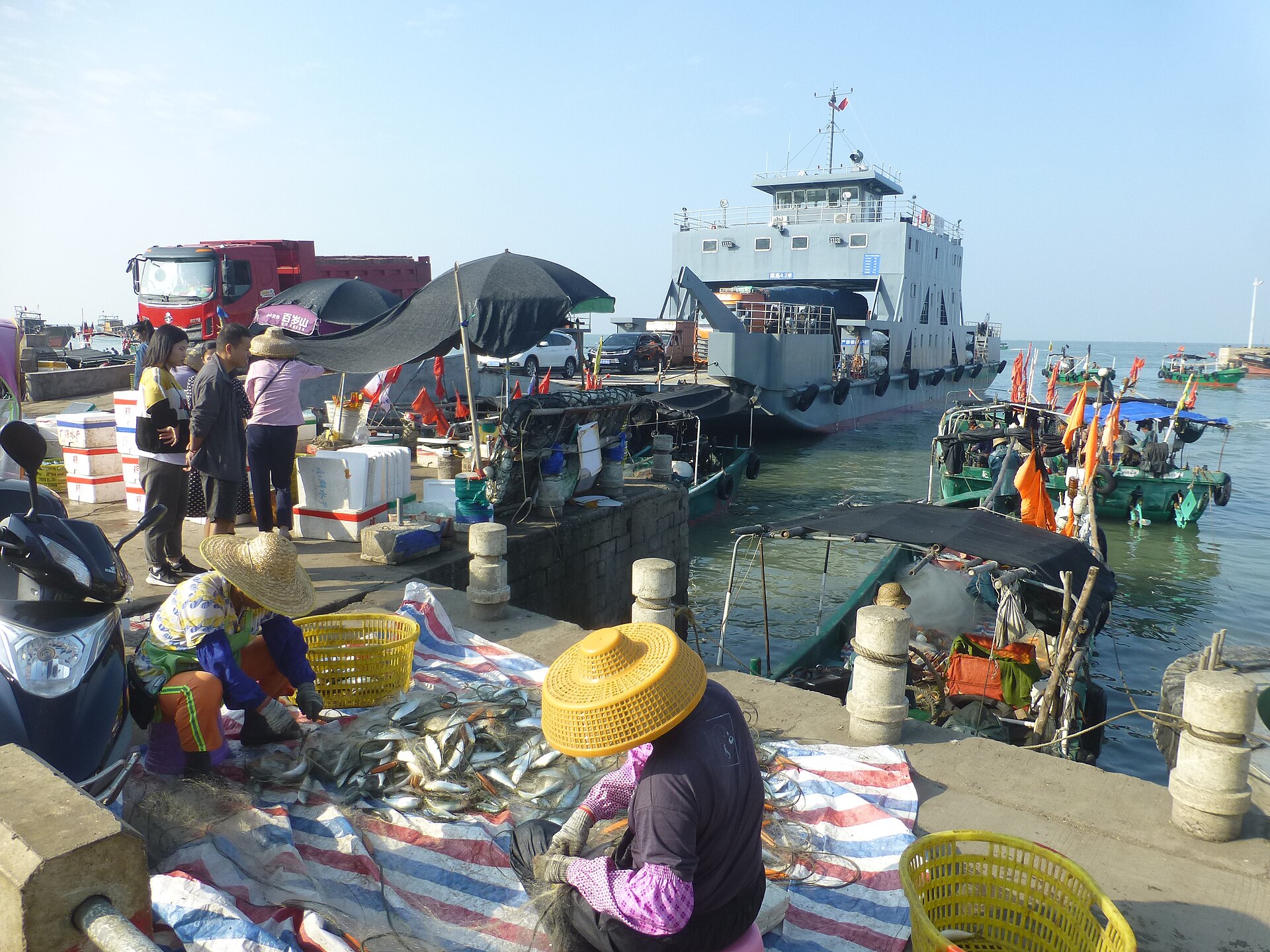
The ferry cuts through the Naozhou Channel just after dawn, the diesel engine a steady thrum beneath the deck. To starboard, Donghai Island’s mangrove fringe slips by; to port, the dark volcanic rock of Naozhou rises from water the color of bruised jade. A handful of fishermen in blue overalls sort nets near the bow, ignoring the spray. When the ramp lowers at Naozhou Town’s concrete pier, the air shifts — salt, drying squid, and the faint sweetness of coconut husk burning somewhere behind the seawall.
Reaching the Island
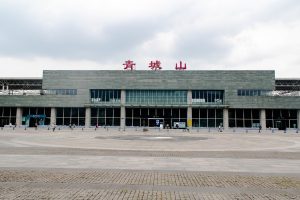
Most travelers start in Zhanjiang’s Xiashan District. Head for the Haibin Bus Station or the newer Naozhou Ferry Terminal near Donghai Bridge; minibuses and shared rides cluster there before sunrise. The crossing takes forty minutes on the fast catamaran, an hour on the older car ferry that also hauls motorbikes and produce trucks. Buy tickets at the window — cash or WeChat Pay — and keep the stub; inspectors check it again at the island gate. Services thin out after late afternoon, so if you plan a day trip, catch the 7:30 AM sailing and the 4:30 PM return. Staying overnight? The last boat often waits until the evening market crowds thin, but confirm the time with your guesthouse host the night before.
- Fast catamaran: foot passengers only, air‑conditioned cabin, roughly forty minutes.
- Car ferry: vehicles, bicycles, and foot passengers; about sixty minutes.
- Ticket window opens thirty minutes before departure; no online booking for the car ferry.
- Bring a light jacket — wind on the open deck bites even in summer.
Getting Around on Two Wheels
The island’s single loop road stretches twenty‑odd kilometers, flat along the western shore and rolling toward the lighthouse hill. Rent a electric scooter or a mountain bike from the row of shops facing the pier — daily rates hover around fifty yuan for a bike, eighty for an e‑scooter. Helmets are mandatory; the rental auntie will hand you a cracked but legal one and point out the potholes near the turtle sanctuary turnoff. Fuel stations don’t exist; e‑scooters charge at your guesthouse outlet. If you cycle, start early — midday sun on the exposed coastal stretch is relentless, and shade is scarce until the banyan grove near the lighthouse.
- Mountain bike: sturdy frame, wide tires for gravel spurs.
- Electric scooter: 60‑km range, plug into any 220 V socket overnight.
- Carry water, sunscreen, and a spare inner tube; the nearest repair shop is back in town.
- Traffic is light, but watch for three‑wheeled produce carts that drift across the lane.
Lighthouse Hill and the French Legacy
The lighthouse crowns the island’s highest knoll, a whitewashed cylinder banded in red that has guided ships since the French leased Guangzhouwan at the turn of the last century. Stone steps — 288 of them, counted by every school group — climb through a forest of wind‑twisted casuarina. Halfway up, a rusted plaque in Mandarin and faded French marks the original keeper’s quarters, now a tiny museum of yellowed charts and a Fresnel lens the size of a beer keg. At the lantern room, the view unfurls: the channel’s turquoise throat, Donghai’s sugar‑cane fields, and on a clear day, the faint smudge of Hainan’s mountains. The beam still sweeps every twelve seconds, automated now, but the old weight‑driven clockwork sits in the corner, frozen at the moment the electricity arrived.
- Open daily from sunrise to sunset; no ticket, but a donation box sits at the base.
- Wear closed shoes — steps are uneven and slick after rain.
- Bring a telephoto lens; the channel’s cargo ships make dramatic foregrounds.
- Descend via the same stairs; the rear path is overgrown and ends at a sheer drop.
Beaches: Where the Sand Stays Cool
Naozhou’s headline beach, Shark Bay (鲨鱼湾), curves around the southwestern corner. The sand is coarse, peppered with black volcanic grit that doesn’t cling to skin. Waves here are gentle in the morning, building to chest‑high rollers by afternoon when the onshore breeze freshens. A string of thatched huts rents plastic chairs and sells grilled oysters brushed with garlic‑chili paste. Locals swim near the rocky headland where a natural pool traps warm water at low tide; foreigners tend to cluster near the lifeguard flag, which is only staffed on weekends and holidays. For solitude, follow the goat track north past the turtle sanctuary to Moon Bay — a crescent of pale sand backed by dunes and a single pandanus tree. No vendors, no shade, just the hiss of surf and the occasional hermit crab scuttling over your toes.
- Shark Bay: showers, toilets, snack stalls, weekend lifeguard.
- Moon Bay: wild, no facilities, best at low tide for tide‑pooling.
- Jellyfish appear in late summer; vinegar spray sold at Shark Bay kiosks.
- Take your trash back — bins are emptied only when the ferry returns.
Sea Turtle Sanctuary and the Night Patrol
Behind a low concrete wall near the island’s eastern tip, the sanctuary’s hatchery holds sand‑filled foam boxes labeled with dates and species — mostly green turtles, the occasional hawksbill. Volunteers, mostly university students from Zhanjiang, patrol the nesting beaches from midnight to dawn during the laying season, which peaks around the seventh lunar month. They tag mothers, relocate vulnerable clutches, and release hatchlings at dusk when ghost crabs are less active. Visitors can join a patrol if they arrange it through the guesthouse a day ahead; wear dark clothes, bring a red‑filter headlamp, and prepare for sand in every pocket. The release is quiet — no flash photography, no cheering — just tiny flippers churning wet sand until the first wave takes them.
- Contact the sanctuary office via the town’s tourism WeChat account for patrol slots.
- Season runs roughly from the fifth to the ninth lunar month.
- No guarantee of sightings; nature dictates the schedule.
- Donations of AA batteries and fresh fruit are welcomed by the student crew.
Eating, Sleeping, and the Rhythm of the Port
Naozhou Town wakes with the first ferry. Breakfast stalls steam rice noodle rolls stuffed with dried shrimp and chives, served in chipped porcelain bowls with a ladle of bone broth. Lunch is simple: steamed grouper with ginger‑scallion oil, stir‑fried water spinach, and a mound of pearl rice. Dinner shifts to the open‑air square behind the pier — charcoal grills sizzle squid, mantis shrimp, and corn brushed with fermented bean sauce. Guesthouses cluster in converted shophouses; a double room with a balcony overlooking the harbor runs 150‑200 yuan, fan only, shared bathroom down the hall. The owner will wake you at 5 AM if you ask, so you can catch the sunrise from the lighthouse before the day‑trippers arrive. Power cuts happen during typhoon warnings; keep a power bank charged and a paper map folded in your bag.
- Breakfast: rice noodle rolls, soy milk, pickled radish — 8 yuan.
- Lunch: steamed fish, seasonal greens, rice — 35 yuan per person.
- Dinner: grilled seafood platter, beer — 80 yuan for two.
- Guesthouse check‑in after 2 PM; luggage storage at the pier office if you arrive early.
What Trips Up First‑Timers
Assuming the island is a half‑day checkbox. The ferry schedule, the slow pace, and the lure of an empty beach at dusk all conspire to stretch a visit into a night. Forgetting cash — mobile signal drops in the lighthouse grove and at Moon Bay, and the smaller vendors don’t scan QR codes. Packing only flip‑flops; the volcanic rock shreds soft soles, and the lighthouse steps demand grip. Ignoring the tide table — Moon Bay vanishes at high water, and the turtle sanctuary’s access road floods during spring tides. And expecting English menus; point, smile, and learn the characters for “steamed” (清蒸) and “grilled” (烧烤). The island rewards patience. Stay long enough to hear the lighthouse’s foghorn vibrate in your chest at midnight, and you’ll understand why the keepers never left.