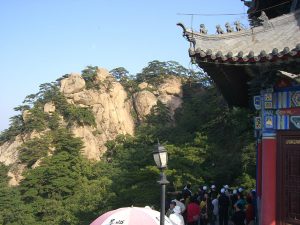
The minibus from Shijiazhuang’s north station rattles past the last ring of apartment blocks and into a valley where the road climbs in tight switchbacks. By the time the driver kills the engine at the Hongya Valley ticket gate, the air has lost the city’s diesel tang and smells of pine needles and damp stone. A vendor at the curb is already slicing steamed corn on the cob, brushing it with chili oil and sprinkling cumin. That first bite — sweet kernels, smoke, heat — sets the pace for a day that will swing between vertigo and quiet revolutionary history.
Getting There Without a Car
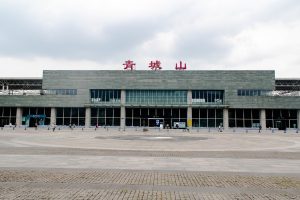
Trains stop at Pingshan station, a modest hall on the Shijiazhuang–Taiyuan high‑speed line. From the forecourt, shared minivans labeled “红崖谷” or “西柏坡” wait until they fill; the ride to the valley entrance takes forty minutes, to the memorial another twenty. If you arrive on a slower conventional service, city bus 318 runs from the station square to the county bus hub, where you can transfer to the same tourist shuttles. Buses from Shijiazhuang’s main long‑distance terminal (near the railway station) leave roughly every hour; the journey stretches to two and a half hours when traffic backs up at the mountain toll plaza.
- High‑speed train to Pingshan station → shared van to Hongya Valley (¥25 per seat) or Xibaipo (¥15).
- Direct long‑distance bus from Shijiazhuang North Terminal → county bus station → local shuttle.
- Taxi from the station to either site costs ¥80–100; negotiate before the meter starts.
Moving Around the County
Once you’re in the valley or at the memorial, your feet do most of the work. Hongya Valley’s scenic bus shuttles between the gate, the glass bridge platform, and the ice‑waterfall boardwalk; a wristband lets you hop on and off all day. Xibaipo’s exhibition halls sit along a paved loop — flat, wheelchair‑friendly, and shaded by mature locust trees. For the villages tucked into the folds beyond the main sites (like Tuoliang or the old Great Wall fragments at Guguan), you’ll need a hired driver or a sturdy bike; the county’s ride‑hailing apps work, but drivers often cancel if the destination is off the mapped grid.
- Hongya Valley wristband: one price covers all internal shuttles.
- Xibaipo loop: 2.3 km, allow ninety minutes at a slow pace.
- Off‑the‑beaten‑track: book a driver the night before through your guesthouse.
Hongya Valley: Glass, Ice, and Grit
The bridge stretches 488 meters across a sheer gorge, its deck three layers of tempered glass bolted to a steel spine. Step onto the first panel and your reflection multiplies — boots, phone, the river a hundred meters below. The engineering is solid; the sway is barely perceptible unless a tour group marches in step. Mid‑span, a section of transparent flooring gives way to a “cracking glass” effect triggered by pressure sensors — harmless, but it still makes grown adults yelp. In deep winter, the valley’s waterfalls freeze into curtains of blue‑white ice. A boardwalk threads behind the largest fall; you can press a gloved hand against the wall and feel the water still moving behind the crystal. Summer brings mist and leeches on the lower trails — tuck your trouser legs into your socks.
- Bridge tickets: separate from valley entry; buy the combo online to skip the window queue.
- Wear closed shoes with grip; the glass gets slick when drizzle hits.
- Winter ice‑waterfall boardwalk opens after the first hard freeze — usually the eleventh lunar month.
- Leave the selfie stick in your bag; the railings vibrate when too many phones extend at once.
Xibaipo: Walking the Revolutionary Corridor
The memorial complex sits on the site where the Central Committee directed the final campaigns of the civil war. The original mud‑brick courtyards have been preserved under glass canopies; inside, maps still hang where generals traced arrows with charcoal. A long corridor displays telegrams — terse, coded, some smudged by rain. You’ll see the chair Mao Zedong used at the September 1948 meeting, its cane seat worn smooth. The new exhibition hall adds multimedia, but the quiet power remains in the low rooms where leaders slept on kang beds heated by straw fires. Reserve your free entry slot on the official mini‑program the night before; the QR code scanner at the gate rejects screenshots.
- Reserve via “西柏坡纪念馆” WeChat mini‑program; morning slots fill by 9 a.m. in peak season.
- Bring your passport; the ID check is strict.
- Allow two hours for the main site, plus thirty minutes for the sculpture plaza.
- Photography is permitted, no flash in the document rooms.
Eating and Sleeping in the County Seat
Pingshan town itself is a grid of wide avenues and low‑rise shops. Dinner gravitates toward the night market behind the county government compound: hand‑pulled noodles in mutton broth, cold mung‑bean jelly tossed with garlic vinegar, and skewers of lamb fat that render into smoke. A bowl of dao xiao mian costs about the same as a bottled water. For a sit‑down meal, the family‑run place opposite the bus station serves a clay‑pot chicken stewed with chestnuts and dried red dates — sweet, savory, the meat falling off the bone. Guesthouses cluster near the station; a clean double with hot water and Wi‑Fi runs ¥150–200. Book a room with a south‑facing window if you want morning light on the mountains.
- Night market stalls: cash or Alipay; vendors understand “bu yao la” (no chili) if you gesture at your tongue.
- Clay‑pot chicken: order when you sit down; it needs forty minutes.
- Guesthouse tip: ask the owner to call a driver for the next morning’s shuttle — they know which vans actually show up.
Common Missteps
First‑timers often treat Hongya Valley and Xibaipo as a single morning trip. They’re forty minutes apart by road, and each deserves half a day. Another error: showing up at the glass bridge in sandals — staff will turn you away at the checkpoint. At Xibaipo, visitors sometimes skip the reservation, assuming the “free entry” means walk‑in; the gate scans IDs against the booked list, and the daily cap is real. Finally, don’t rely on the last return van from the valley; it leaves when the ticket office closes, not on a published timetable. Ask the driver for his WeChat and confirm the pickup time before you wander off to the ice falls.
- Split the sites across two days or start at dawn.
- Closed‑toe shoes mandatory for the bridge.
- Reserve Xibaipo the night before; screenshot won’t work.
- Secure return transport before you hike deep into the valley.